Rotating through hunt courses is a sure way to keep covey rises fresh and hunters happy.
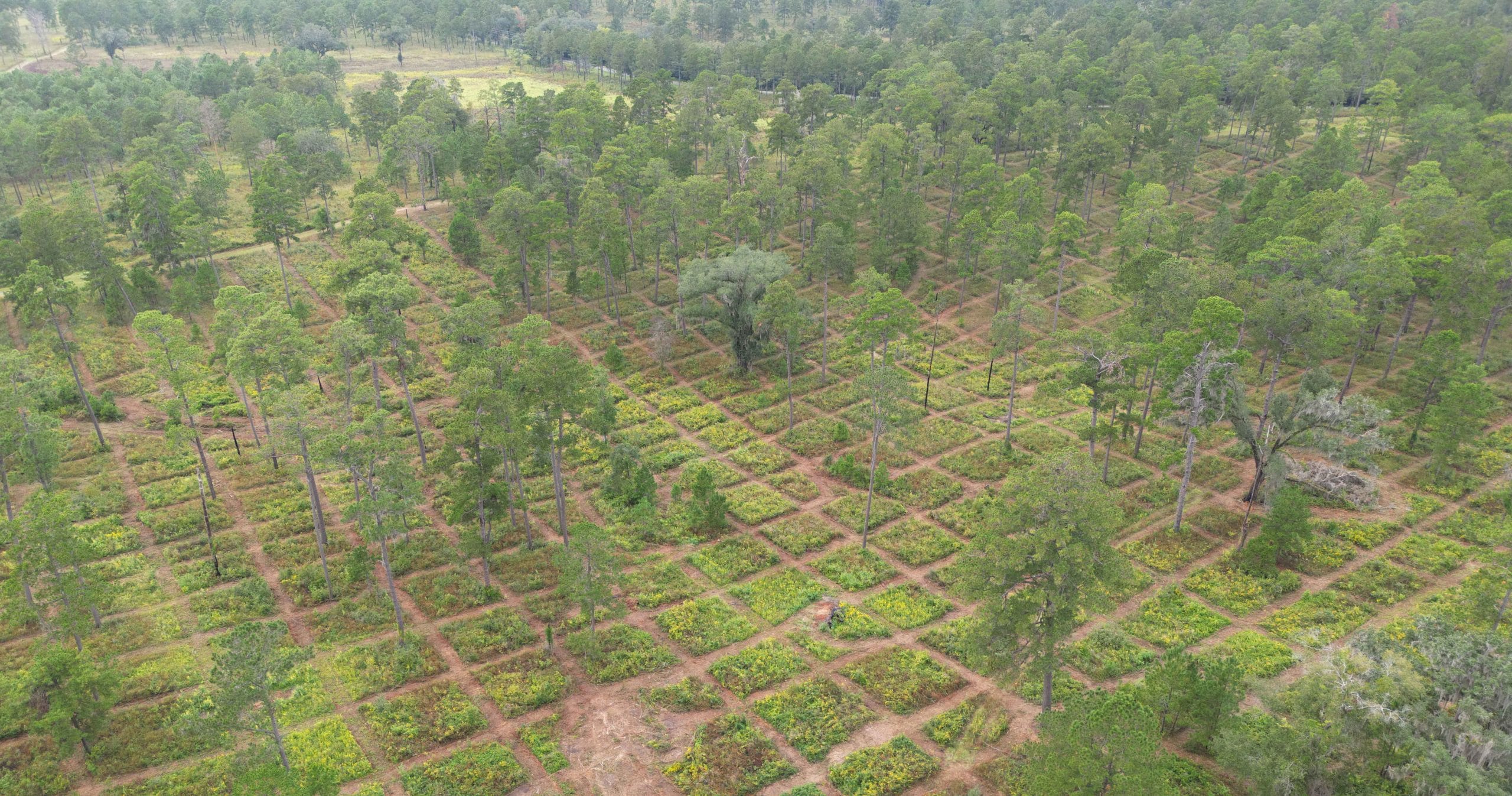
Most quail-focused properties have a cross-hatched patchwork of courses where hunters can traverse amid dense growth while dogs search for the scent of a covey.
Too much hunting pressure on a particular section of a property can reduce the quality of a day afield well into the hunting season.
So, how large should a course be, and how often should each be hunted to hit the sweet spot of a covey point every 20 minutes or so?
Grid blocking allows for accessibility and concentrates coveys into manageable sections that can be covered by the dogs and hunting party.
Studies at Tall Timbers have shown that proper hunt course blocking improves hunting efficiency and, while it may expose quail to a slightly greater risk of predation, creates a safer and more enjoyable hunt.
The average for a fixed-size hunt course is just under 5 miles of trail to cover a 300-acre hunt course in a half day. But that can vary based on the size of the property. Course of 300 acres are common but many of the larger properties have courses more like 500 acres. At Livingston Place in Jefferson County, Florida, for instance, the courses are 500 acres and the hunt trail is 7 to 8 miles per course.
This is adjusted based on the hunt manager’s style and annual changes in covey location or habitat management.
The advantage of having dedicated hunt courses and trails is that hunting can be controlled to minimize the effects of hunting pressure on hunt quality, by reducing unintentional hunting overlap.
Excessive hunting pressure is the most cited reason by hunt managers for reductions in hunt quality.
The professional standard is to hunt a course or piece of property about every two weeks, which equates to six or seven hunts per hunting course per season.
Even at this moderate hunting pressure, many have observed reduced hunt quality after repeated visits to a hunt course.
Some hunt managers, given their preference, would reduce hunting pressure to every three weeks due to the negative effect of hunting on bird behavior.
A less used, but efficient system is to follow a hunting trail start to finish, over consecutive hunts, across the whole property.
Each hunt starts where the last hunt ended. Using this system, all portions of a property are hunting at the same intensity, and all space on a property is used.
While less traditional than established courses, this system maximizes the number of hunts and adjusts for slow days, allowing more area to be covered, and vice versa on days when coveys are more available to dogs and hunters.