Tall Timbers staff leads 2011 Ochlockonee River Clean-up
By Neil Fleckenstein, TTLC Planning Coordinator
2011 marked the 10th year that Tall Timbers Land Conservancy (TTLC) staff have participated in the annual Ochlockonee River Clean-up held in Thomas County, Georgia. The TTLC has helped coordinate the last seven events, which have become highly popular with the public. This year approximately 100 volunteers, many of them kids from local schools, joined Tall Timbers, Hands on Thomas County, and Keep Thomas County Beautiful in making this event a great success.
TTLC staff Kevin McGorty, Shane Wellendorf, and Kim Sash provided outstanding support to organizer Neil Fleckenstein throughout the event. Kevin served as the event photographer. Shane rolled up his sleeves and helped Neil and volunteer David Burke sort trash and recyclable materials. Meanwhile, Kim braved teaming hordes of children as she and Pierson Hill brought a variety of snakes with them for show and tell. Never one to miss a chance to support a good cause, former TTLC administrative assistant Ofelia Sivyer showed up bright and early to help with the event.
Of course, cleaning up the Ochlockonee River is the primary focus of this event. Volunteers from all corners of the community, including Boy Scouts and Girl Scouts, school groups, and folks who just wanted to help, descended upon the broad floodplain of the Ochlockonee River near US 19 north of Thomasville (and a second site the day before the “Official” Clean-up). Volunteers removed hundreds of pounds of recyclable materials, such as glass and plastic bottles and aluminum cans as well as an assortment of car and truck tires, and a wide array of items that we will categorize using the highly technical term, “garbage.”
At the end of the day, approximately 1,800 pounds of trash and recyclables were removed. The most common item collected – discarded beer bottles – with Budweiser trouncing Busch in landslide. The most unusual item found? This was an easy call as a local Boy Scout found a pair of coconuts under an oak tree in the woods adjacent to the river.
This has proven to be one of the most popular volunteer events in Thomas County. The Ochlockonee River Clean-up has helped create community awareness and involvement in the preservation of local water resources among hundreds of people, many of them kids and young adults. This event has also provided an opportunity for the public to become more familiar with the work that Tall Timbers does to protect the natural resources of the Red Hills region.
For additional information about the Ochlockonee River Clean-up, contact Neil Fleckenstein, TTLC Planning Coordinator at 850-893-4153, ext. 335.
Georgia Governor Deal freezes state acquisition of conservation easements
By Kevin McGorty, TTLC Director
On November 10, Georgia Governor Nathan Deal submitted a letter to the Georgia State Properties Commission instructing all state agencies and entities within state government to immediately hold all pending requests for action on conservation easements. The Governor’s directive relates to easements that the State would hold (either by Georgia Department of Natural Resources, Georgia Forestry Commission, or Georgia Soil and Water Conservation Commission).
It is believed that the Governor is displeased with state agencies holding easements that could potentially be used to block highway construction planned by other state agencies. In his letter the governor stated, “…it has come to my attention that the current system that allows for real property to be placed in these public entities is open to abuse. This abuse could occur as a result of the underlying law’s lack of clarity and inconsistency in how the program is undertaken.”
The action by the governor does not affect transactions with non-profit land trusts such as Tall Timbers. In addition, the Georgia Conservation Tax Credit Program is unaffected by the governor’s action. Landowners donating conservation easements in 2011 will be eligible for State Tax Credit incentives. Tall Timbers is closing on a number of conservation easements in Georgia this year.
Regional purchasing to reduce supplemental feeding costs
By Bill Palmer, Game Bird Program Director
Supplemental feeding is critical to sustain bobwhite numbers, and especially so during periods of drought. Spikes in grain prices have recently made supplemental feeding costs skyrocket. Brad Mueller of American Wildlife Enterprises in Monticello Florida has developed a program with a regional, large-scale grain, storage facility to ultimately increase the buying power of the plantation community. By contracting with the storage facility, buyers can “book” grain for one year and lock in prices, if they choose, at the time of purchase. Or they can choose to pay as grain is delivered at market prices throughout the year. Traditionally, grain prices are lowest immediately after the harvest season and begin to climb during late winter peaking during summer.
Tall Timbers and several other properties now contract their grain through American Wildlife Enterprises and, at least the past year, saved on grain costs. While prices of grain fluctuate daily, recent prices have declined to near their lowest level is months. For more information contact Brad at 850-997-3551 or 850-508-4111.
Although we tend to think of a certain habitats as having a certain amount of annual plant productivity, that productivity can vary a great deal from year to year in response to preceding rainfall. For example, in the long-term study of the longleaf pine/wiregrass community at the Pebble Hill fire plots (near Thomasville, Georgia), biomasses of live herbs and woody plant re-sprouts measured in May, one year after burning, correspond to the amount of rain during the previous year (Fig. 1A). During the past five years, herbaceous and woody biomasses have varied by almost a factor of two between certain years in response to rainfall (Fig. 1B).
The link between precipitation and surface vegetation biomass is important in that plant productivity translates to food for wildlife through production of forage, seeds, and insects and corresponds to cover from predators. Plant productivity also predicts available fuel for the next burning season. This year’s drought and low plant productivity suggest there will be low fuel loads in the spring and the need to burn under drier conditions in areas where pine basal area is low, and fuels are mostly grass and forbs. However, for some areas slated for an annual burn, it might be best to allow a year without applying fire, to provide a better fuel bed and compensate for low plant cover.
Figure 1. A. Above-ground plant biomasses for herbs and woody surface vegetation sampled in May and the previous year’s precipitation showing A. relationship between biomass and precipitation and B. variation in biomass and precipitation from 2007-2011.
The prolonged drought could rob us of one of our most colorful winter visitors this year. Henslow’s Sparrows can usually be found in the moist pine flats of our region in areas with an open structure and ground cover species such as warty panic grass, toothache grass, and other plants associated with intermediate soil moisture. From 2006 to 2009, we banded and average of just over 3 individuals per day in areas with suitable habitat, but the drought of 2010 rendered these areas uninhabitable last year. Extensive efforts to locate sparrows kept coming up empty, and we netted about 25% of the total numbers banded in previous years. We expect to see much the same this year unless the rains start to come soon.
Prospects elsewhere in the wintering range are much better this year. Central Florida, where some of the largest wintering populations of Henslow’s Sparrows can be found, has received a fair amount of rain in recent weeks. It’s conceivable that some of our Red Hill’s birds might bypass us this year and head for areas where drought conditions are less severe. If so, our banding efforts could help yield some important information about how this migratory species finds areas with preferred combination of soil moisture and vegetation structure. With a global population less than 100,000 individuals, we hope this is the strategy that the birds we can’t find any more are using.
In other Vertebrate Ecology news, staff put together a short video segment that shows how artificial cavities for the endangered Red-cockaded Woodpecker are constructed. The video involved Tall Timbers Research Station volunteers Mike Keys and Tara Tanaka and can be found on-line. Construction of artificial cavities has helped to brighten the future for this species, and Mike Keys is one of the best practitioners anywhere.
The M-CORES program, which includes the proposed Suncoast Connector Toll Road in Jefferson County, passed through the Florida Legislature at breakneck speed with little review or analysis. Tall Timbers has a number of concerns given the potential for significant and wide spread impacts. These include fragmenting public and private conservation lands, robbing business from Main Street Monticello, impacting our rivers and other water resources, and making prescribed fire more difficult and costly.
Join us in asking the Jefferson County Board of County Commissioners to OPPOSE the Suncoast Connector toll road and its path through Jefferson County.
Take action now with our easy email form.
Send an email to all five Jefferson County Board of County Commissioners with one click!
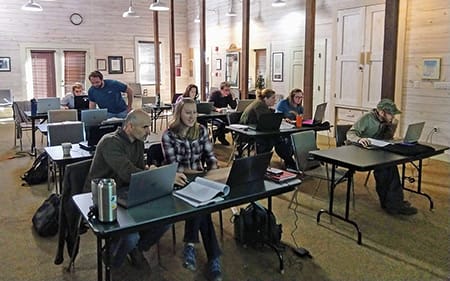
Burn prioritization modeling seminars and fire modeling tools are supported by Wildland Fire Science to train managers in the important planning stages of prescribed fires.
Educating and guiding the next generation of fire researchers and managers is a key goal of Wildland Fire Science and a resource for testing new ideas in fire research.
Tall Timbers hosts the premier fire technology transfer organization—the Southern Fire Exchange. This JFSP funded effort helps connect research to management through webinars, workshops, and support of the Prescribed Fire Science Consortium.
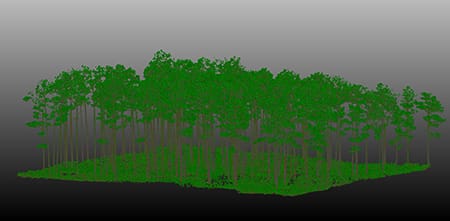
Working with partners in the Prescribed Fire Science Consortium, the program is building nexgen 3-D fuel beds using terrestrial LiDAR and novel sampling techniques to power new fire behavior models for prescribed fire managers. This work links to Tall Timbers work in wildlife habitat usage and ecological forestry.
The Longleaf Legacy landscape prescribed fire burn team arm of Wildland Fire Science works directly with landowners and partners to effectively put fire on the ground and promote prescribed fire throughout the region.
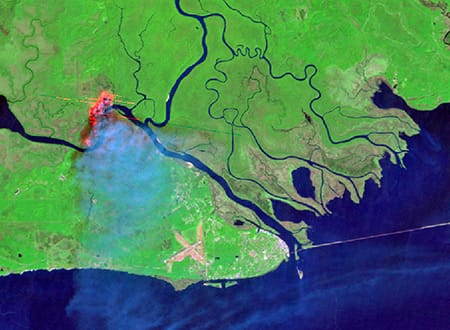
Tall Timbers is leading an effort to map fire regimes at the landscape scale. Staff work with numerous agencies to evaluate fire records and satellite imagery to build this critical conservation database. https://skfb.ly/6DqOY
Tall Timbers hosts the Prescribed Fire Science Consortium, a national network of researchers and managers who promote integrated research and management to advance next generation tools for fire practitioners. https://arcg.is/1DSjDT
We are linking physics and field observations to understand the fluid dynamics of fire behavior surface fire regimes. Our work combines field observations using advanced thermal imaging techniques, laboratory studies, and coupled fire-atmospheric modeling to help managers improve outcomes of managed fire regimes.
Selected Publications authored by Wildland Fire Science staff.
Staff and researchers support Federal fire training by serving as a cadre for NWCG training courses, ranging from basic wildland fire to advanced fire effects.
(PFTC) specializes in training fire fighters the principles and techniques of prescribed fire through practical hands-on experience. https://www.fws.gov/fire/pftc/
Private land owners are the largest source of prescribed fire in the country. These land owners and the culture of fire that was maintained by them during decades of suppression are a part of why Tall Timbers is a world-wide center for prescribed fire science. Workshops and fire training are a critical focus of the Longleaf Legacy Landscape Burn Team and our support of the Georgia Forestry Commission Prescribed Fire Center in Marion County.
The conserved lands of the Greater Red Hills region are found on working, income-producing properties that support agriculture, forestry, and recreational hunting. These properties contribute $272 million annually to local economies and support 2,300 jobs. [link to Planning & Advocacy section] The landowners’ strong stewardship ethic preserves their working lands while replenishing drinking water supplies, protecting water quality, and providing wildlife habitat for dozens of rare and endangered species. Tall Timbers’ conservation easements on these working properties encourage landowners to retain their traditional livelihood by keeping farms in family ownership.
Home to world-class wild quail populations, the Greater Red Hills region contains the largest concentration of gamebird preserves in the United States. These preserves also support the largest community of Red-cockaded woodpeckers on private lands. Indicators of high quality habitat found here include the gopher tortoise, Bachman’s sparrow, fox squirrel, and many amphibians. Tall Timbers’ conservation easements identify and protect the critical habitats of these species.
The region also boasts outstanding aquatic resources. Large river systems, like the Flint/Apalachicola, Ochlockonee, and Aucilla, flow from Georgia and feed into the Gulf of Mexico to support some of the world’s most productive estuaries. Large disappearing sinkhole lakes, like Iamonia, Miccosukee, and Jackson, provide habitat for an array of aquatic species and migratory birds. Tall Timbers’ conservation easements protect these vital watersheds and wetlands that are the lifeblood for the ecological health of the region.
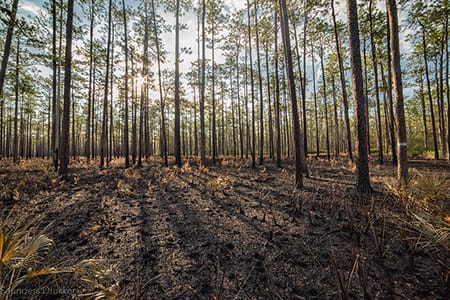
Once dominated by longleaf pine, our pine woodlands support abundant wildlife and local economies. These forests need prescribed fire to stay healthy. Herbert L. Stoddard and his associates Ed and Roy Komarek were pioneers in this emerging scientific field during the mid-20th century. Tall Timbers continues that legacy with applied research on prescribed fire and land management. Today, there is a tremendous need to expand prescribed fire use beyond the Red Hills to ensure ecosystem health and reduce wildfire risk. Additionally, Tall Timbers uses conservation easements to permanently protect private woodlands while balancing the need for economic return from selective timbering.

.jpg?strip=all&w=890 "Clean-up Volunteers")
 Of course, cleaning up the Ochlockonee River is the primary focus of this event. Volunteers from all corners of the community, including Boy Scouts and Girl Scouts, school groups, and folks who just wanted to help, descended upon the broad floodplain of the Ochlockonee River near US 19 north of Thomasville (and a second site the day before the “Official” Clean-up). Volunteers removed hundreds of pounds of recyclable materials, such as glass and plastic bottles and aluminum cans as well as an assortment of car and truck tires, and a wide array of items that we will categorize using the highly technical term, “garbage.”

 Supplemental feeding is critical to sustain bobwhite numbers, and especially so during periods of drought. Spikes in grain prices have recently made supplemental feeding costs skyrocket. Brad Mueller of American Wildlife Enterprises in Monticello Florida has developed a program with a regional, large-scale grain, storage facility to ultimately increase the buying power of the plantation community. By contracting with the storage facility, buyers can “book” grain for one year and lock in prices, if they choose, at the time of purchase. Or they can choose to pay as grain is delivered at market prices throughout the year. Traditionally, grain prices are lowest immediately after the harvest season and begin to climb during late winter peaking during summer.
 The prolonged drought could rob us of one of our most colorful winter visitors this year. Henslow’s Sparrows can usually be found in the moist pine flats of our region in areas with an open structure and ground cover species such as warty panic grass, toothache grass, and other plants associated with intermediate soil moisture. From 2006 to 2009, we banded and average of just over 3 individuals per day in areas with suitable habitat, but the drought of 2010 rendered these areas uninhabitable last year. Extensive efforts to locate sparrows kept coming up empty, and we netted about 25% of the total numbers banded in previous years. We expect to see much the same this year unless the rains start to come soon.