If moisture is sufficient, begin planting containerized pine seedlings.
Game Bird
Supplemental Feed at 1-2 bu/ac/yr
Plant longleaf or other pines where needed
Develop Burn Plans customized for weather, population size and predation risks
Land Management
Consider collecting seed from native warm season grasses to reseed other areas of your property.
Finish mowing hunting lanes
Flood moist soil management ponds for arrival of fall bird migration in November
Disk weed fields for brood habitat
Vertebrate Ecology
Wintering sparrows arrive in early November and will spend the winter in well burned pine woods. Look for rarities such as Henslow’s and Grasshopper Sparrows causing dogs to go into a point.
Bald eagles begin their nesting season in earnest over the next several weeks. Look for spectacular aerial courtship displays.
December Management Recommendations
Fire Ecology
Develop burn plans with specific objectives for Rx burns.
Evaluate last year’s burns on grass flowering and seeding.
Forestry
Plan timber harvest schedule for spring. If it will not create problems with other land use priorities this can be a good month to thin pines if needed.
Thinning your woods promotes valuable groundcover for wildlife.
Continue planting longleaf or other site-specific pine trees as needed.
This is a good month to plant native mast-producing trees for attracting wildlife.
Include snag retention in forestry harvest operations planning.
Game Bird
Supplemental Feed at 1- 2 bu/ac/yr
Develop burn plans: high quail numbers this fall indicate need for burn plans that help to maximize quail survival rates. This includes patch burning and stretching burning out from March through April.
Land Management
Mow dense hardwood encroachment areas to enhance groundcover.
Fertilize fall food plots.
Good time to work roads.
Disk weed fields for brood habitat now through February.
Vertebrate Ecology
Be on the lookout and record nesting locations for birds of prey, such as the bald eagle. Look for nestlings starting to hatch in mid to late December. Take efforts to protect nesting areas from disturbance.
Chorus Frogs, Spring Peepers, and other winter-breeding frogs may start to call as early as mid December and reach higher levels of activity in January.
Christmas bird counts are underway in mid December. The counts have provided invaluable trend information that date back to the early 1900s.
Sapsuckers arrive in big numbers and start etching away at their sap wells. Individuals can be highly territorial, and wells are passed along from generation to generation.
Clean out nest boxes in preparation for spring.
January Management Recommendations
Fire Ecology
Develop burn plans with specific objectives for Rx burns.
Evaluate fuel loads for burning.
Contact local Division of Forestry for proper burn authorizations.
Disk fire lanes and prepare all fire breaks for prescribed burning program and to protect against wildfire.
Forestry
Check timber harvest schedule for spring. Meet with consultant forester.
Include snag retention in forestry harvest operations planning.
Continue planting longleaf or other site-specific pine trees as needed.
Plant native soft and hard mast-producing trees/shrubs for attracting wildlife.
Order pine seedlings for planting next winter.
Game Bird
Supplemental Feed at 1- 2 bu/ac/yr
Prepare fire breaks to burn 50-75% of area in 25-100 acre patches, depending on weather, populations, and predation. If drought conditions persist carefully check cover conditions. If cover is sparse burn less.
Mow low areas.
Complete mowing of hunting lanes.
Land Management
Mow dense hardwood encroachment areas to enhance groundcover.
Single-drum roller-chop areas to control woody vegetation and improve herbaceous groundcover.
Take soil samples in dove fields.
Lime or bottom plow old fields as needed.
Install wood duck boxes.
Strip disk (harrow) weed fields for brood habitat now through February.
Disking now promotes legume production such as partridge pea that are valuable to many wildlife species.
This is the peak of wild hog farrowing season.
Vertebrate Ecology
Put old Christmas trees to good use by starting a brush pile near a bird feeder.
Chorus Frogs, Spring Peepers, and other winter-breeding frogs reach higher levels of activity in January.
Put out suet feeders for birds.
Clean and erect Purple Martin houses as birds send out scouts as early as January.
The South Carolina Quail Project (SCQP) held its Fall Field Day, Friday, Nov. 11 at historic Groton Plantation near Estill, South Carolina. Nearly 200 people attended the field day to hear presentations by family members Rob Winthrop and Robert Bonnie, the manager of Groton, Wes Smith, and SCQP Coordinator Jerald Sholar. One of the key points of the meeting was to demonstrate the management activities necessary to sustain high quality wild bobwhite hunting in South Carolina. Groton has more than proven that wild bobwhite hunting can succeed in South Carolina.
Through the skillful application of modern quail management techniques promoted by Tall Timbers, Groton is experiencing exceptional quail populations and hunting success. We greatly appreciate the effort put forth by the owners and staff of Groton towards making our third South Carolina Field Day a memorable one.
Fall Field Day at Pineland Plantation draws large crowd
The cold weather didn’t deter the almost 300 attendees at Tall Timbers’ 2011 Fall Field Day, held November 4, at Pineland Plantation, near Newton, Georgia.
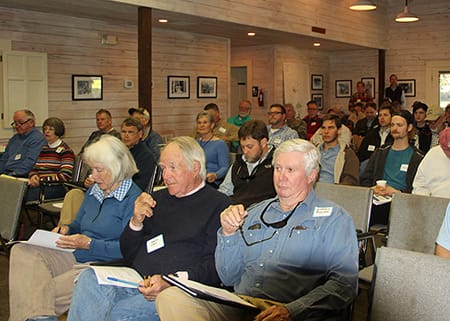
After welcoming the crowd, land manager, Aubrey Iler, discussed the history and management goals of Pineland Plantation. Pineland Plantation is one of the largest of the premier quail plantations in the Albany Area and sports some of the best quail hunting in the world. With frequently burned pine uplands and fields encompassing 20,000 acres, Pineland’s sheer size presents unique management challenges – brood habitat alone requires harrowing 3,000 acres each year! However, with a state-of-the-art management program and attention to detail, Pineland has averaged over 7 coveys per hour hunting during the last 15 years!
Pineland is also home to the Albany Quail Program, which is celebrating 20 years of research and conservation. Fall Field Day attendees heard about the knowledge gained from collaboration among researchers and managers that has helped to define modern quail management in the Southeast, resulting in dozens of publications, and producing a lot of birds.
On the wagon tour , Albany Quail Program Director, Clay Sisson discussed some of the highlights of the research conducted on Pineland; and he and Tall Timbers’ Game Bird Program Director, Bill Palmer talked about the quail hatch forecast from Albany to Tallahassee. Also on the program was Dr. Eric Altom with Eukanuba, who presented information on how nutrition, kennel management and conditioning affect bird dog performance and scenting ability.
If you have visited Tall Timbers Web site this fall, and have also visited it in the past, you will have noticed that the home page has been totally re-designed. We hope you like the new, clean look and that navigation will be even easier than before. If you haven’t visited our Web site in a while or ever, please take a look and let us know what you think: http://www.talltimbers.org/.
The top menu bar has been changed; an Outreach tab has been added to reflect Tall Timbers focus on new outreach and education activities. In the upper right corner are quick links to the Fire Research, Land Management and Quail Research sections. And, each program’s submenu (that you drop down from the menu bar) now appears on each page of its section. Each program has updated their section with the latest research findings and conservation information.
There are several new features on the home page. Next to the new slide show, there are links under the headings What We’re Learning and More to Explore. Previous links, such as the one for the E.V. Komarek Fire Ecology Database, can be found there. The Other News & Events section, will feature current news. You can now subscribe to Tall Timbers E-News from the home page, and there is an online store link and link to information on renting parts of the property for events.
Finally, new video profiles of some of our research and conservation staff have been produced a new page on the site called Stewards of Wildlife and Wildlands. The link can be found under the More to Explore heading or check them out here: http://www.talltimbers.org/stewards-video.html.
Tall Timbers thanks John E. Phipps for his generous donation that enabled us to re-design our Web site and to produce the video profiles.
A recent proposal by landowner Jeff Phipps to build a 5.3 mile, two-lane toll road through his Orchard Pond Plantation has gained financial support from the Florida Department of Transportation (DOT). The State Infrastructure Bank at Florida DOT has approved a $10.5 million loan with the remainder of the estimated $17 million project to be funded by Mr. Phipps. The toll road will connect Meridian Road and Old Bainbridge Road.
In a recent article in the Tallahassee Democrat, Mr. Phipps commented that “The reason I’m doing this is I’m afraid the county or some public agency will [build the highway] sometime down the road and it won’t be done properly; [government agencies] tend to do the bare minimum. What we’re hoping to do is put in a lot of good aesthetics and controls."
Tall Timbers shared its concerns with Mr. Phipps that this proposal could directly contribute to sprawling urban growth that could fragment portions of the Red Hills region in Leon County. Mr. Phipps expressed his personal opposition to urban sprawl and described his plan to build what he described as an environmentally friendly road.
Recently, several agencies submitted comments about the proposed toll road to the State Clearinghouse at the Florida Department of Environmental Protection. The Tallahassee-Leon County Planning Department stated that its primary concern is expanding infrastructure outside of the Urban Service Area. The Planning Department noted that the increased service provided by an improvement like the Orchard Pond Toll Road could encourage sprawling development in rural areas, which is inconsistent with the goals of the Comprehensive Plan. The Planning Department offered that this concern could be addressed by prohibiting future roadway and driveway connections to the new toll road.
Tall Timbers also submitted comments to the State Clearinghouse on the proposed road, highlighting the same concerns about the potential for the new road to encourage low density, sprawling growth in the Red Hills. Tall Timbers included suggestions for improving the existing Orchard Pond Road or constructing the new toll road and simultaneously protecting adjacent land with a conservation easement. A conservation easement would help achieve Mr. Phipps goal of an environmentally friendly roadway and would also prevent fragmentation of the landscape.
On November 8, the Leon County Board of Commissioners heard an update on the proposed Orchard Pond Toll Road. Commissioners were generally supportive of the concept. Commissioners Dozier and Maddox both commented on the importance of adhering to the Comprehensive Plan and not encouraging growth outside the Urban Service Area. Validating Tall Timbers concerns that this project could lead to sprawling growth, one commissioner commented that this was a great opportunity to open this rural area of Leon County for more residential, commercial, and school development. He noted that the new road should be four-lanes not two, should be funded in part by the extension of Blueprint 2000, and should not be a tolled facility.
Consultants for the proposed toll road will now focus on the project development and environment study, work on a detailed traffic and revenue study, and eventually move to the design phase of the project. There will be an opportunity for public comment on the project at a hearing in January, 2012.
For additional information, contact Neil Fleckenstein at 850-893-4153, ext. 335.
The M-CORES program, which includes the proposed Suncoast Connector Toll Road in Jefferson County, passed through the Florida Legislature at breakneck speed with little review or analysis. Tall Timbers has a number of concerns given the potential for significant and wide spread impacts. These include fragmenting public and private conservation lands, robbing business from Main Street Monticello, impacting our rivers and other water resources, and making prescribed fire more difficult and costly.
Join us in asking the Jefferson County Board of County Commissioners to OPPOSE the Suncoast Connector toll road and its path through Jefferson County.
Take action now with our easy email form.
Send an email to all five Jefferson County Board of County Commissioners with one click!
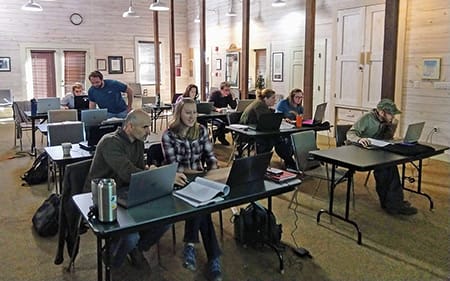
Burn prioritization modeling seminars and fire modeling tools are supported by Wildland Fire Science to train managers in the important planning stages of prescribed fires.
Educating and guiding the next generation of fire researchers and managers is a key goal of Wildland Fire Science and a resource for testing new ideas in fire research.
Tall Timbers hosts the premier fire technology transfer organization—the Southern Fire Exchange. This JFSP funded effort helps connect research to management through webinars, workshops, and support of the Prescribed Fire Science Consortium.
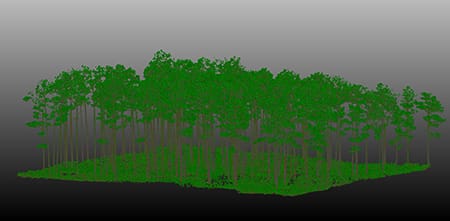
Working with partners in the Prescribed Fire Science Consortium, the program is building nexgen 3-D fuel beds using terrestrial LiDAR and novel sampling techniques to power new fire behavior models for prescribed fire managers. This work links to Tall Timbers work in wildlife habitat usage and ecological forestry.
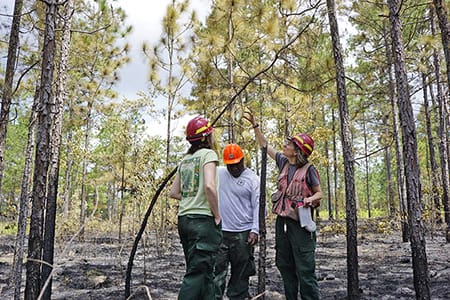
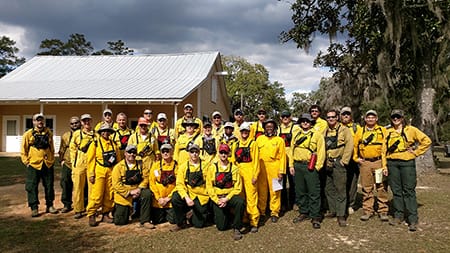
The Longleaf Legacy landscape prescribed fire burn team arm of Wildland Fire Science works directly with landowners and partners to effectively put fire on the ground and promote prescribed fire throughout the region.
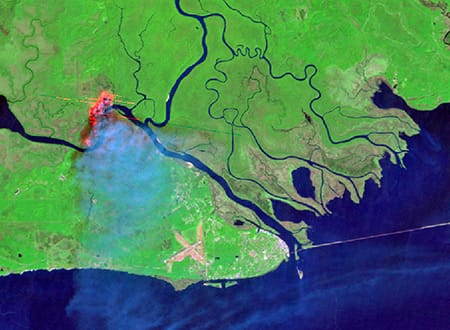
Tall Timbers is leading an effort to map fire regimes at the landscape scale. Staff work with numerous agencies to evaluate fire records and satellite imagery to build this critical conservation database. https://skfb.ly/6DqOY
Tall Timbers hosts the Prescribed Fire Science Consortium, a national network of researchers and managers who promote integrated research and management to advance next generation tools for fire practitioners. https://arcg.is/1DSjDT
We are linking physics and field observations to understand the fluid dynamics of fire behavior surface fire regimes. Our work combines field observations using advanced thermal imaging techniques, laboratory studies, and coupled fire-atmospheric modeling to help managers improve outcomes of managed fire regimes.
Selected Publications authored by Wildland Fire Science staff.
Staff and researchers support Federal fire training by serving as a cadre for NWCG training courses, ranging from basic wildland fire to advanced fire effects.
(PFTC) specializes in training fire fighters the principles and techniques of prescribed fire through practical hands-on experience. https://www.fws.gov/fire/pftc/
Private land owners are the largest source of prescribed fire in the country. These land owners and the culture of fire that was maintained by them during decades of suppression are a part of why Tall Timbers is a world-wide center for prescribed fire science. Workshops and fire training are a critical focus of the Longleaf Legacy Landscape Burn Team and our support of the Georgia Forestry Commission Prescribed Fire Center in Marion County.
The conserved lands of the Greater Red Hills region are found on working, income-producing properties that support agriculture, forestry, and recreational hunting. These properties contribute $272 million annually to local economies and support 2,300 jobs. [link to Planning & Advocacy section] The landowners’ strong stewardship ethic preserves their working lands while replenishing drinking water supplies, protecting water quality, and providing wildlife habitat for dozens of rare and endangered species. Tall Timbers’ conservation easements on these working properties encourage landowners to retain their traditional livelihood by keeping farms in family ownership.
Home to world-class wild quail populations, the Greater Red Hills region contains the largest concentration of gamebird preserves in the United States. These preserves also support the largest community of Red-cockaded woodpeckers on private lands. Indicators of high quality habitat found here include the gopher tortoise, Bachman’s sparrow, fox squirrel, and many amphibians. Tall Timbers’ conservation easements identify and protect the critical habitats of these species.
The region also boasts outstanding aquatic resources. Large river systems, like the Flint/Apalachicola, Ochlockonee, and Aucilla, flow from Georgia and feed into the Gulf of Mexico to support some of the world’s most productive estuaries. Large disappearing sinkhole lakes, like Iamonia, Miccosukee, and Jackson, provide habitat for an array of aquatic species and migratory birds. Tall Timbers’ conservation easements protect these vital watersheds and wetlands that are the lifeblood for the ecological health of the region.
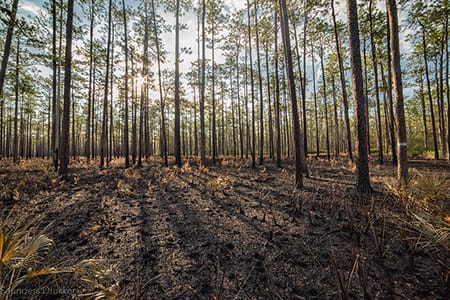
Once dominated by longleaf pine, our pine woodlands support abundant wildlife and local economies. These forests need prescribed fire to stay healthy. Herbert L. Stoddard and his associates Ed and Roy Komarek were pioneers in this emerging scientific field during the mid-20th century. Tall Timbers continues that legacy with applied research on prescribed fire and land management. Today, there is a tremendous need to expand prescribed fire use beyond the Red Hills to ensure ecosystem health and reduce wildfire risk. Additionally, Tall Timbers uses conservation easements to permanently protect private woodlands while balancing the need for economic return from selective timbering.



.jpg?strip=all&w=1080 "Aubrey Iler discusses land management at Pineland")
.jpg?strip=all&resize=300%2C225 "Clay Sisson discusses Albany Quail Program research at Pineland")