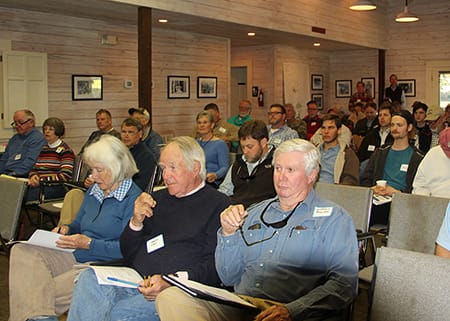
Tall Timbers will hold its next Land Managers Lunch, Friday, May 9 from 9 a.m. – 12:00 p.m. in the Komarek Science Education Center (the Barn). Please join us and learn about Feral Hog Management. Lunch will follow at noon.
The event is free for Tall Timbers members, but space is limited. The cost is $10 for non-members. To register, please contact Lisa Baggett at 850.893.4153, x241, or email lisa@ttrs.org. Please register by Monday, May 5.
ITINERARY:
Overview of hog behavior –Rod Pinkston
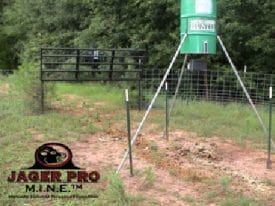
Demonstrate the M.I.N.E trapping system – Rod Pinkston
High volume hog control – Rod Pinkston
Brainstorming session and discussion on what has worked for you and how we can work together to manage feral hogs
EAT Lunch! Lunch sponsored by Jager Pro
These lunches are designed for the land manager, but may be beneficial to landowners, biologists, and others interested in natural resource management. We will share ideas and learn about recent land management techniques and opportunities. We hope you will attend.
Tall Timbers has partnered with the Florida Fish and Wildlife Conservation Commission (FWC), the Georgia Department of Natural Resources – Wildlife Resources Division (GADNR),and Quail Forever to help the northern bobwhite (quail) and youth shooting programs in Florida and Georgia.
All four organizations have signed a memorandum of agreement pledging that they will each provide mutually beneficial support to a project called the Florida/Georgia Quail Coalition, whose goal is to enhance, promote and conserve quality habitat for northern bobwhite and to promote and support youth shooting sports programs and education.The term of the agreement is for three years, and the four organizations each will appoint one authorized representative to serve on the Coalition’s steering committee.
Representatives from the Florida/Georgia Quail Coation, L-R: Howard Vincent, Pheasants/Quail Forever; Dan Forster, GADNR; Nick Wiley, FWC and Bill Palmer, Tall Timbers. They celebrated the partnership agreement, Wednesday, April 16 at Tall Timbers.
Quail Forever will provide one shared full-time position employee and one part-time position staff member. The organization also is charged with providing funding to establish, manage and monitor quail populations and habitat on public and private lands in Florida and Georgia, and to work with the Coalition to increase youth hunting opportunities on some of these lands once adequate bird populations and habitat have been restored. Also, Quail Forever is to provide funding from its local chapters to help pay the cost of youth shooting sports programs and scholastic shooting teams.
“Being a Georgia native and having been raised in a family which respects our upland hunting tradition, I am eager to see the positive effects which will be generated by this landmark partnership,” said Talbott Parten, Quail Forever’s regional representative for Georgia and Florida. “Knowing the commitment of the partners involved, it is my, and Quail Forever’s, firm belief that in the years to come, future generations of Georgia and Florida outdoorspeople will be able to look back at this partnership as a pivotal moment for the conservation of the bobwhite quail in the Southeast.”
Tall Timbers will serve as the fiscal agent to receive and disburse money provided by local Quail Forever chapters to pay for approved Coalition quail habitat projects. The Coalition enhances efforts of the Upland Ecosystem Restoration Project (UERP), which is housed at Tall Timbers. For more information on UERP, visit http://TallTimbers.org/gb-UERP.html. Tall Timbers also agrees to house both Coalition employees by providing them office space and administrative support. “Coalition activities will energize restoration efforts by our agency partners in Florida and Georgia, and hold great promise to recover quail populations and other grassland birds on public lands,” Tall Timbers President/CEO Bill Palmer said.
Both states’ wildlife and conservation agencies have similar duties and responsibilities as outlined in the agreement. The FWC and GADNR are charged with providing leadership for youth shooting sports and quail habitat projects, and for the planning, implementation, monitoring and auditing of such projects and events.
“Only through collaborative efforts like the Florida/Georgia Quail Coalition will we be able to reach our conservation goals of more substantial habitat restoration for bobwhite quail and all species that depend on early successional habitat,” said GADNR’s Wildlife Resources Division Director Dan Forster. “Conservation and hunting go hand in hand so through supporting youth shooting sports programs and education we will complete the cycle that leads to success.”
“I feel really good about the partnership we have created here and the level of leadership,” said FWC Executive Director Nick Wiley. “I am confident that we have the ability and commitment to make some positive changes to help quail restoration in both our states.”
To increase and enhance quality quail habitat, money for projects will be spent on frequent small-scale prescribed burning, removing oak trees, roller-chopping dense palmettos and hardwood thickets and thinning rows of planted pine trees. The result of such management practices will create a forest and canopy that is more open, allowing sunlight to reach the forest floor, so that native grasses and weeds can grow, which provide quail food and cover from predators.
A new Director of Development hired at Tall Timbers
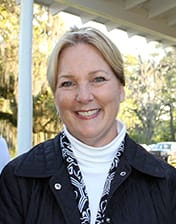
We are pleased to announce that Dale Fuller has joined Tall Timbers as its new Director of Development. She will plan, implement and coordinate all development activities at Tall Timbers as well as implement our marketing program to increase the visibility and reach of the organization. An avid outdoors woman, Dale is a native of the Red Hills region with experience in fundraising, marketing, communication and public relations, and a proven record of engaging volunteers, creating beneficial partnerships and soliciting funds. As you encounter Dale in her capacity as the Director of Development for Tall Timbers, please make her feel welcome.
“I am excited about this opportunity, and I look forward to working with staff, volunteers and the community to move forward the important work and mission of Tall Timbers.” Dale
Tall Timbers Map Collection Digitized and Cataloged
By Carol Kimball, Librarian
Newly available through our online library catalog are digital versions of our map collection. They range from aerial photographs of the Red Hills region, to historic maps of Leon and Thomas Counties. There are hand drawn timber maps of the various plantations from the 1940s and ‘50s, and many other maps of regional interest.
Using grant money from the Panhandle Library Access Network (PLAN) and Capital City Bank Group Foundation, we were able to get the historic, one-of-a-kind maps scanned, and cataloged. The scanned maps are linked to the library record, and are accessible to the public, online. Visit the library page on our website to find the catalog link: http://www.talltimbers.org/info-library.html
New Tall Timbers Membership Opportunities and Benefits
Tall Timbers has expanded its membership opportunities and added some perks. The more you invest (yes, it is an investment!), the more benefits you receive. Two new levels have been added with lower contribution levels to provide an entry for those who may want to try us out. We have also expanded our program specific giving opportunities allowing you to more easily contribute to programs you are interested in supporting.
We Need Your Support – Become a Tall Timbers Member Today!
Annual membership gifts help support the day-to-day operations of Tall Timbers and are the lifeblood of our organization. As a charitable non-profit, Tall Timbers relies on the generous financial support of our members to help sustain the important research, conservation and education programs within the organization.
Please take a moment to tour our website, to learn about our programs and to join others like you as a member of Tall Timbers. You can Join, Renew or Make a Gift of membership online using our secure website.
We’re Tall Timbers…Stewards of Wildlife and Wildlands. JOIN TODAY!
The M-CORES program, which includes the proposed Suncoast Connector Toll Road in Jefferson County, passed through the Florida Legislature at breakneck speed with little review or analysis. Tall Timbers has a number of concerns given the potential for significant and wide spread impacts. These include fragmenting public and private conservation lands, robbing business from Main Street Monticello, impacting our rivers and other water resources, and making prescribed fire more difficult and costly.
Join us in asking the Jefferson County Board of County Commissioners to OPPOSE the Suncoast Connector toll road and its path through Jefferson County.
Take action now with our easy email form.
Send an email to all five Jefferson County Board of County Commissioners with one click!
Selected Publications authored by Wildland Fire Science staff.
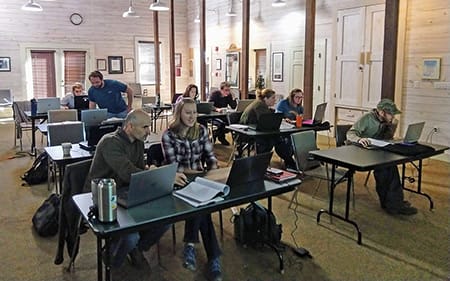
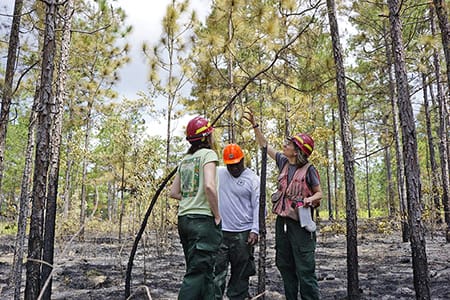
Educating and guiding the next generation of fire researchers and managers is a key goal of Wildland Fire Science and a resource for testing new ideas in fire research.
Tall Timbers hosts the Prescribed Fire Science Consortium, a national network of researchers and managers who promote integrated research and management to advance next generation tools for fire practitioners. https://arcg.is/1DSjDT
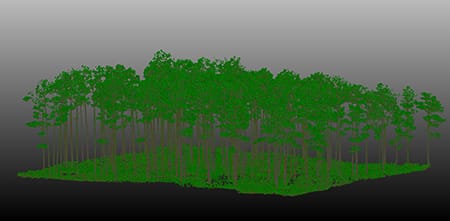
Working with partners in the Prescribed Fire Science Consortium, the program is building nexgen 3-D fuel beds using terrestrial LiDAR and novel sampling techniques to power new fire behavior models for prescribed fire managers. This work links to Tall Timbers work in wildlife habitat usage and ecological forestry.
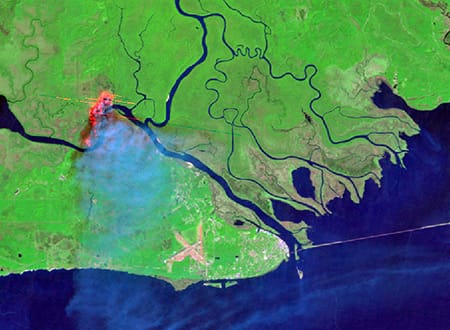
Tall Timbers is leading an effort to map fire regimes at the landscape scale. Staff work with numerous agencies to evaluate fire records and satellite imagery to build this critical conservation database. https://skfb.ly/6DqOY
We are linking physics and field observations to understand the fluid dynamics of fire behavior surface fire regimes. Our work combines field observations using advanced thermal imaging techniques, laboratory studies, and coupled fire-atmospheric modeling to help managers improve outcomes of managed fire regimes.
Burn prioritization modeling seminars and fire modeling tools are supported by Wildland Fire Science to train managers in the important planning stages of prescribed fires.
The conserved lands of the Greater Red Hills region are found on working, income-producing properties that support agriculture, forestry, and recreational hunting. These properties contribute $272 million annually to local economies and support 2,300 jobs. [link to Planning & Advocacy section] The landowners’ strong stewardship ethic preserves their working lands while replenishing drinking water supplies, protecting water quality, and providing wildlife habitat for dozens of rare and endangered species. Tall Timbers’ conservation easements on these working properties encourage landowners to retain their traditional livelihood by keeping farms in family ownership.
Home to world-class wild quail populations, the Greater Red Hills region contains the largest concentration of gamebird preserves in the United States. These preserves also support the largest community of Red-cockaded woodpeckers on private lands. Indicators of high quality habitat found here include the gopher tortoise, Bachman’s sparrow, fox squirrel, and many amphibians. Tall Timbers’ conservation easements identify and protect the critical habitats of these species.
The region also boasts outstanding aquatic resources. Large river systems, like the Flint/Apalachicola, Ochlockonee, and Aucilla, flow from Georgia and feed into the Gulf of Mexico to support some of the world’s most productive estuaries. Large disappearing sinkhole lakes, like Iamonia, Miccosukee, and Jackson, provide habitat for an array of aquatic species and migratory birds. Tall Timbers’ conservation easements protect these vital watersheds and wetlands that are the lifeblood for the ecological health of the region.
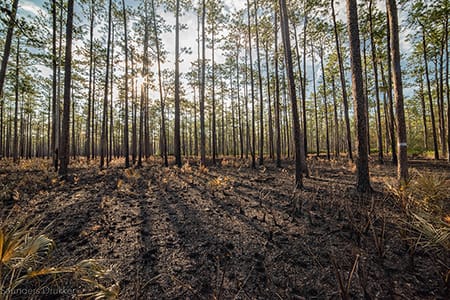
Once dominated by longleaf pine, our pine woodlands support abundant wildlife and local economies. These forests need prescribed fire to stay healthy. Herbert L. Stoddard and his associates Ed and Roy Komarek were pioneers in this emerging scientific field during the mid-20th century. Tall Timbers continues that legacy with applied research on prescribed fire and land management. Today, there is a tremendous need to expand prescribed fire use beyond the Red Hills to ensure ecosystem health and reduce wildfire risk. Additionally, Tall Timbers uses conservation easements to permanently protect private woodlands while balancing the need for economic return from selective timbering.
Tall Timbers hosts the premier fire technology transfer organization—the Southern Fire Exchange. This JFSP funded effort helps connect research to management through webinars, workshops, and support of the Prescribed Fire Science Consortium.
The Longleaf Legacy landscape prescribed fire burn team arm of Wildland Fire Science works directly with landowners and partners to effectively put fire on the ground and promote prescribed fire throughout the region.
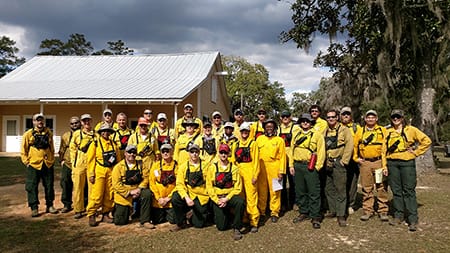
Staff and researchers support Federal fire training by serving as a cadre for NWCG training courses, ranging from basic wildland fire to advanced fire effects.
(PFTC) specializes in training fire fighters the principles and techniques of prescribed fire through practical hands-on experience. https://www.fws.gov/fire/pftc/
Private land owners are the largest source of prescribed fire in the country. These land owners and the culture of fire that was maintained by them during decades of suppression are a part of why Tall Timbers is a world-wide center for prescribed fire science. Workshops and fire training are a critical focus of the Longleaf Legacy Landscape Burn Team and our support of the Georgia Forestry Commission Prescribed Fire Center in Marion County.





 “I feel really good about the partnership we have created here and the level of leadership,” said FWC Executive Director Nick Wiley. “I am confident that we have the ability and commitment to make some positive changes to help quail restoration in both our states.”