Vote “Yes” for Georgia Outdoor Stewardship Amendment
Tall Timbers is urging its members and friends to vote “yes” this November for passage of the Georgia Outdoor Stewardship Amendment. This is a historic opportunity to protect Georgia’s waters and lands. Georgia’s economy and quality of life are directly tied to both the water quality of our rivers, lakes and streams and the availability and beauty of our outdoor spaces, wildlife habitats and parks.
If passed by voters this fall, the Georgia Outdoor Stewardship Act would provide for the dedication of up to 80% of the existing sales and use tax on outdoor sporting goods with an initial dedicated amount of approximately $20 million annually. The legislation would sunset after ten years, with the option to be renewed.
If passed, this funding would:
Protect lands critical to clean drinking water and the quality of Georgia’s lakes, rivers and streams
Acquire and improve parks and trails for children, families and outdoor enthusiasts to enjoy in communities throughout the state
Maintain and improve access to wildlife management areas and create new opportunities for hunting and fishing
Support Georgia’s $27 billion outdoor recreation industry and the jobs it and the other economic sectors that rely upon access to land and water create
This bill received strong bipartisan support in the Georgia General Assembly and signed into law by Governor Deal in May “because of the positive impact it could have on communities throughout our state without creating any new fees or raising any taxes. If the voters agree, this funding will be used to protect invaluable natural resources while ensuring that children, families and outdoor enthusiasts have parks, wildlife management areas and other outdoor spaces to enjoy for generations to come,” said Representative Sam Watson of Moultrie, the bill’s primary sponsor.
Only projects approved by the Department of Natural Resources and consistent with the state’s established goals for conservation would be eligible for the funding, which will be subject to strict accountability provisions.
A recent poll commissioned by the Georgia Outdoor Stewardship Coalition indicated that eight in 10 Georgians agree that a portion of the existing state sales tax on outdoor recreation equipment should be constitutionally dedicated to land conservation. We hope you agree and support this important amendment.
By Georgia Ackerman, Greater Red Hills Awareness Initiative Coordinator
The partners of the Red Hills Initiative contribute articles for the twice monthly column, “Exploring the Red Hills” published in the Tallahassee Democrat. Authors share stories celebrating the cultural, historical, and ecological wonders of the Red Hills. Find more blogs and videos at Red Hills Region.
The partners of the Red Hills Initiative contribute articles for the news column, “Exploring the Red Hills” published in the Tallahassee Democrat. Authors share stories celebrating the cultural, historical, and ecological wonders of the Red Hills. Find more blogs and videos at Red Hills Region
To sign up for the Red Hills Happenings, an regional activity newsletter including upcoming conservation field trips, visit www.redhillsregion.org If you’d like to contribute a story to the Exploring the Red Hills column, please contact Georgia Ackerman.
By Juanita Whiddon, Archives & Historical Resources Coordinator
The death of Harold Odom on February 11, 2016 brought sadness to volunteers and staff of Tall Timers who had worked with Harold for the last twenty years. Harold was special among our volunteers because he had lived at Tall Timbers from 1929 to 1934 when his father, Ralph Odom, was assistant manager to T. P. Strickland. He had wonderful stories about Harry and Genevieve Beadel.
As one of his projects, he transcribed the diaries from those years that the Odom family lived on Tall Timbers. He did several programs for our volunteers about Tall Timbers during the Depression Era. Harold loved doing tours at Tall Timbers, and those visitors fortunate enough to be on one of this tours got a rich taste of what life was like on a Red Hills hunting plantation during the 1930s.
Harold was a generous volunteer too. Harold’s mother and Mrs. Genevieve Beadel became good friends, and Mrs. Beadel gave her several things from the house. Harold donated these items to Tall Timbers. They include: the old light fixture for the original dining room, a French pottery planter, and a bone handle carving set.
Plans for a memorial plaque are incomplete at this time, but we want to recognize Harold for his service to Tall Timbers.
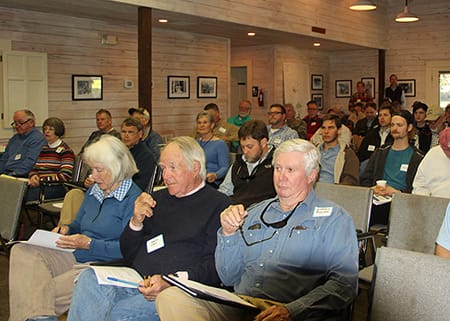
Tall Timbers is partnering with state offices in Georgia and Florida to host two landowner incentive luncheons in March. Georgia landowners/managers are invited to join us on March 4, and Florida landowners/managers on March 11. Both luncheons will be held at Tall Timbers in the Komarek Science Education Center (Barn) and start at 10 a.m., and conclude after presentations, questions and lunch at 1 p.m.
Topics covered will include funding opportunities from both state and federal programs including the Farm Bill. These programs have been successful in distributing financial incentives for proper land management, including prescribed burning, tree planting, or imperiled species management. Eric Staller, land manager at Tall Timbers recommends these programs for being user friendly and efficient, “allowing for restoration and exotic plant control on Tall Timbers.”
If you would like to learn about how these programs could benefit your property, we invite you to join us. Pre-registration is required, to register click the link below, call Tall Timbers at 850-893-4153, or email ksash@ttrs.org.
The M-CORES program, which includes the proposed Suncoast Connector Toll Road in Jefferson County, passed through the Florida Legislature at breakneck speed with little review or analysis. Tall Timbers has a number of concerns given the potential for significant and wide spread impacts. These include fragmenting public and private conservation lands, robbing business from Main Street Monticello, impacting our rivers and other water resources, and making prescribed fire more difficult and costly.
Join us in asking the Jefferson County Board of County Commissioners to OPPOSE the Suncoast Connector toll road and its path through Jefferson County.
Take action now with our easy email form.
Send an email to all five Jefferson County Board of County Commissioners with one click!
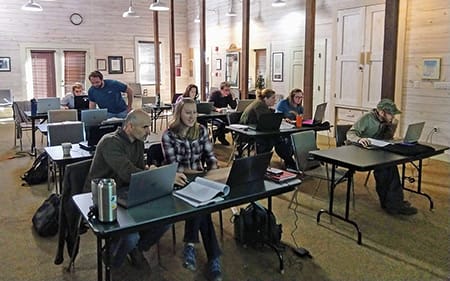
Burn prioritization modeling seminars and fire modeling tools are supported by Wildland Fire Science to train managers in the important planning stages of prescribed fires.
Educating and guiding the next generation of fire researchers and managers is a key goal of Wildland Fire Science and a resource for testing new ideas in fire research.
Tall Timbers hosts the premier fire technology transfer organization—the Southern Fire Exchange. This JFSP funded effort helps connect research to management through webinars, workshops, and support of the Prescribed Fire Science Consortium.
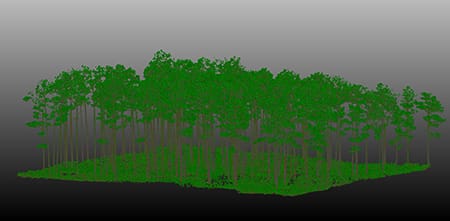
Working with partners in the Prescribed Fire Science Consortium, the program is building nexgen 3-D fuel beds using terrestrial LiDAR and novel sampling techniques to power new fire behavior models for prescribed fire managers. This work links to Tall Timbers work in wildlife habitat usage and ecological forestry.
The Longleaf Legacy landscape prescribed fire burn team arm of Wildland Fire Science works directly with landowners and partners to effectively put fire on the ground and promote prescribed fire throughout the region.
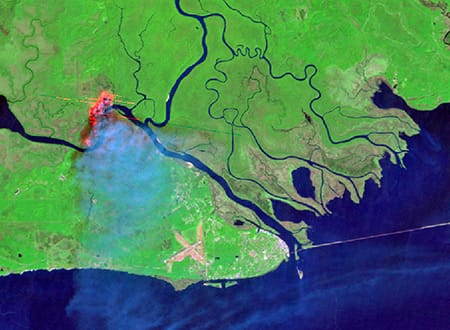
Tall Timbers is leading an effort to map fire regimes at the landscape scale. Staff work with numerous agencies to evaluate fire records and satellite imagery to build this critical conservation database. https://skfb.ly/6DqOY
Tall Timbers hosts the Prescribed Fire Science Consortium, a national network of researchers and managers who promote integrated research and management to advance next generation tools for fire practitioners. https://arcg.is/1DSjDT
We are linking physics and field observations to understand the fluid dynamics of fire behavior surface fire regimes. Our work combines field observations using advanced thermal imaging techniques, laboratory studies, and coupled fire-atmospheric modeling to help managers improve outcomes of managed fire regimes.
Selected Publications authored by Wildland Fire Science staff.
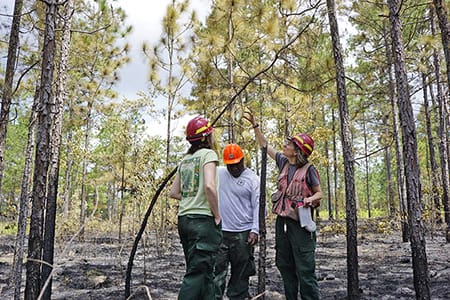
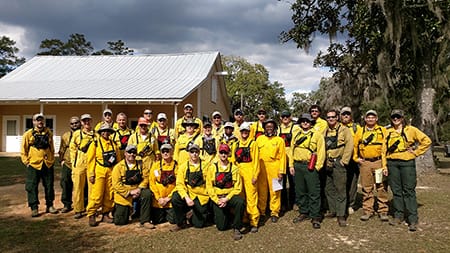
Staff and researchers support Federal fire training by serving as a cadre for NWCG training courses, ranging from basic wildland fire to advanced fire effects.
(PFTC) specializes in training fire fighters the principles and techniques of prescribed fire through practical hands-on experience. https://www.fws.gov/fire/pftc/
Private land owners are the largest source of prescribed fire in the country. These land owners and the culture of fire that was maintained by them during decades of suppression are a part of why Tall Timbers is a world-wide center for prescribed fire science. Workshops and fire training are a critical focus of the Longleaf Legacy Landscape Burn Team and our support of the Georgia Forestry Commission Prescribed Fire Center in Marion County.
The conserved lands of the Greater Red Hills region are found on working, income-producing properties that support agriculture, forestry, and recreational hunting. These properties contribute $272 million annually to local economies and support 2,300 jobs. [link to Planning & Advocacy section] The landowners’ strong stewardship ethic preserves their working lands while replenishing drinking water supplies, protecting water quality, and providing wildlife habitat for dozens of rare and endangered species. Tall Timbers’ conservation easements on these working properties encourage landowners to retain their traditional livelihood by keeping farms in family ownership.
Home to world-class wild quail populations, the Greater Red Hills region contains the largest concentration of gamebird preserves in the United States. These preserves also support the largest community of Red-cockaded woodpeckers on private lands. Indicators of high quality habitat found here include the gopher tortoise, Bachman’s sparrow, fox squirrel, and many amphibians. Tall Timbers’ conservation easements identify and protect the critical habitats of these species.
The region also boasts outstanding aquatic resources. Large river systems, like the Flint/Apalachicola, Ochlockonee, and Aucilla, flow from Georgia and feed into the Gulf of Mexico to support some of the world’s most productive estuaries. Large disappearing sinkhole lakes, like Iamonia, Miccosukee, and Jackson, provide habitat for an array of aquatic species and migratory birds. Tall Timbers’ conservation easements protect these vital watersheds and wetlands that are the lifeblood for the ecological health of the region.
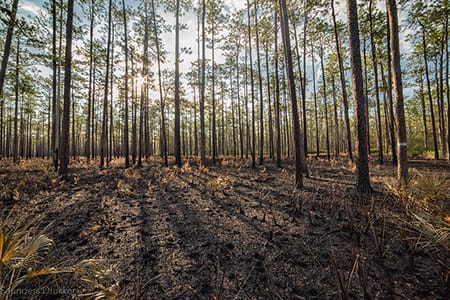
Once dominated by longleaf pine, our pine woodlands support abundant wildlife and local economies. These forests need prescribed fire to stay healthy. Herbert L. Stoddard and his associates Ed and Roy Komarek were pioneers in this emerging scientific field during the mid-20th century. Tall Timbers continues that legacy with applied research on prescribed fire and land management. Today, there is a tremendous need to expand prescribed fire use beyond the Red Hills to ensure ecosystem health and reduce wildfire risk. Additionally, Tall Timbers uses conservation easements to permanently protect private woodlands while balancing the need for economic return from selective timbering.




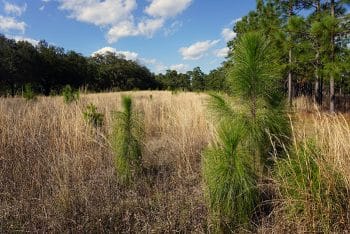 Topics covered will include funding opportunities from both state and federal programs including the Farm Bill. These programs have been successful in distributing financial incentives for proper land management, including prescribed burning, tree planting, or imperiled species management. Eric Staller, land manager at Tall Timbers recommends these programs for being user friendly and efficient, “allowing for restoration and exotic plant control on Tall Timbers.”