Tall Timbers Research Station scientist, Jim Cox, receives prestigious award
The Florida Chapter of The Wildlife Society has recognized Jim Cox for his “professional achievement and contributions to the conservation of Florida’s wildlife and natural resources” with the Herbert W. Kale, II Award. Since 2002, Jim has directed the Vertebrate Ecology Program at Tall Timbers where he, his graduate students and interns endeavor to understand the ecology and management needs of the many declining vertebrates closely associated with longleaf forests, including the endangered Red-cockaded Woodpecker. Cox is especially interested in understanding the role that the frequency, season, and scale of prescribed burning may play in regulating vertebrate populations. He also studies Bachman’s Sparrows, Brown-headed Nuthatches and most recently, with the award of a grant from the U.S. Fish & Wildlife Service, Henslow’s Sparrows. All are species that are declining throughout their range.
In announcing the award, Arnold Brunell, President of the Florida Chapter of The Wildlife Society, noted Cox’s “influence in promoting the conservation of sand hill habitats, restoration of longleaf ecosystems, and lightning-season burning.” Brunell also noted Cox’s “pioneering work using GIS technology as a tool for identifying critical conservation areas in Florida… and his exemplary communication skills that have educated and motivated many….”
With a strong la Niña event in the Pacific Ocean we could potentially experience drought conditions this spring lasting possibly into the fall. At the same time, according to the Florida Division of Forestry (DOF), this fourth strongest event is be moderated for the panhandle region due to other climate patterns. Accordingly, DOF is preparing for a severe fire season in 2011 in central and south Florida, but with less of a threat (currently) for north Florida. The potential for drought conditions has implications for both burning, burn permitting, and quail management. If DOF crews are fighting wild fires throughout the state, they may be reticent to provide as many permits in our area. South Florida has already seen increased wild fire activity this winter and DOF is expecting many more this spring. The DOF website provides a good synopsis of weather predictions and their fire forecast for the state http://www.fl-dof.com/fire_weather/forecast/seasonal_forecast.html .
What do these fire forecasts mean for quail management? Now quail populations are regionally good to excellent. Rat populations in the Red Hills remain high, red-tailed hawks are prevalent, and quail survival remains good. This bodes well for the upcoming nesting season. However, we have seen severe droughts in the past bring high quail numbers to an abrupt end. A good example of this scenario occurred between 1997 and 1998. The winter of 97-98 had regionally high quail numbers, normal rainfall, and heavy rains occurred during March of 1998. Then it stopped raining and turned hot and the following season there were noticeably lower quail numbers.
On properties that conducted large scale clean-up operations in spring of 1998, population declines were even more severe because cover did not respond. We measured one plantation course that declined from 2.2 quail per acre in 1997 to less than one quail per acre the next fall. Droughts have many influences on quail: they result in slower cover response after burning that can result in lower adult survival; if temperatures are severe they reduce egg-laying, hatchability of eggs, and chick survival rates; and they change habitat use of quail and quail broods. Managers can only influence some of these factors and it starts with careful burning.
We typically recommend burning between March and mid-May to achieve quail management goals and reduce hardwood encroachment. Stretching out burning over several months, and leaving more cover during hawk migrations in March, can result in increased quail survival and bring more birds into the nesting season (hawks are likely to be more prevalent this March given severe winter weather that has pushed a lot of birds south). Another benefit of this is that vegetation in burns conducted later in the spring recovers quicker than earlier burns, which also provides both survival benefits and creates great brood habitat.
However, when drought is predicted, managers face a dilemma – burn early in March when conditions warrant but risk slow cover response if drought conditions occur, or burn later to avoid cover issues but risk not getting burning done due to fire bans.
The current weather forecast for north Florida and southwest Georgia indicate that fire bans are unlikely this year. However, being prepared to begin burning early this year would be wise. If the predictions for a dry April and May continue, then burning more this year in early March is an option. With high ground moisture content, cover will likely respond to early fire this year, which may mitigate cover concerns for quail. If drought conditions do not materialize in northern Florida, then you can always stretch out your burning through April and into May. Either way, an important concept to keep in mind this year is to make sure burning is conducted such that each covey has access to unburned blocks of good size (10-40 acres). Be cognizant of cover when conducting mowing or chopping in the woods, if rainfall is likely to be well below normal.
In drought years, fields that are typically excellent brood habitat may not become useful until the second hatch (if at all). Quail with broods often rely on low areas and unburned blocks for rearing chicks. In drought years, especially in grass-dominated habitats, quail use wet-weather ponds, low areas, drains, and creek bottoms as brood habitat. We have seen broods move over a quarter mile within days of hatching to end up in drains. Therefore, it may be a good idea to burn through these areas this winter and early spring to prepare them as brood habitat this summer.
Finally, supplemental feeding is an important consideration during drought years. Our studies clearly indicate that nesting rates are higher on areas that were supplementally fed and these differences are most noticeable during dry conditions. For more information on supplemental feeding see the 2009Quail Call.
On Saturday, Feb. 19, Tall Timbers will honor former Trustee Rosamond (Rozzie) C. Davis at our annual Naturalists’ Ball, for her years of service as an advocate for conservation and land use planning. Since 1990, Rozzie has volunteered her time and talent to Tall Timbers, first as a member of the Red Hills Conservation Association and later chairing the Land Conservancy Planning Committee. She still serves on the Land Conservancy Committee.
The Ball will be held at Glen Arven Country Club in Thomasville, GA. The black tie event begins at 7:00 PM with dinner and dancing. If you would like to attend the event, please contact Development Director Vann Middleton to purchase tickets: 850.893.4153, x343 or vann@ttrs.org.
Miss Kate was one of the first landowners in the Red Hills to build guest housing for some very special wildlife
By Jim Cox, Vertebrate Ecologist
The construction needed to widen U.S. 319 could not avoid going through the territories of two families of Red-cockaded Woodpeckers. To make the road safer for travel between Tallahassee and Thomasville without harming woodpeckers, eight sites were selected where artificial cavities would be used to offset the loss of woodpecker territories attributable to road building. Miss Kate allowed two of the sites to be constructed on her property, and one of the sites was occupied quickly by a new woodpecker family.
Since that time, artificial cavities have been used to increase the regional woodpecker population on several scores of properties with Safe Harbor agreements. The agreements allow those landowners who are interested in increasing woodpecker numbers to do so without incurring additional restrictions. At Pebble Hill Plantation, another property that figures prominently in the Ireland legacy of the region, the woodpecker population has nearly quadrupled from two territories to eight, thanks to the fine timber management practiced on the property and the judicious use artificial cavities.
Tall Timbers biologist, Greg Hagan, prepares pine tree for artificial cavity insert.
Safe Harbor agreements also provide landowners who are not interested in woodpeckers with special assurances. If there are no woodpeckers when the agreement is signed, the landowner is under no obligation other than to burn the property regularly. If woodpeckers ever show up, the property is no liable for maintaining habitat. With this flexibility, it’s no wonder that properties enrolled in the program now extend over nearly 130,000 acres in the Red Hills region. It’s the largest land-conservation program going in the area.
A final benefit comes in the form of assistance for beneficial land management activities. Over the past five years, nearly $375,000 has been provided to local landowners for planting longleaf, burning, brush control, and herbicide usage. The funding tends to come and go, but has certainly helped many landowners improve the look of their woods.
When I was hired by the Tall Timbers Research Department in 2003, I was the first employee given the title "Fire Ecologist" and was instructed to develop a program focused on prescribed fire. Those were the orders of our then Chairman of the Board of Trustees, Miss Kate Ireland. She rightly recognized that the founders of Tall Timbers in 1958 sought first and foremost to objectively study fire’s effects, natural history, and appropriate application for the benefit of wildlife, natural communities, and public safety. As Miss Kate both led and generously supported Tall Timbers, she was vigilant in focusing the priorities of the organization, and the newly formed Fire Ecology Program in particular, on its original cause.
Responding to her vision, the Fire Ecology Program has worked to strengthen Tall Timbers’ leadership role in the science of fire ecology. Our areas of interest include the effects of fire regime on natural communities and ecosystems, improved measurement of fire behavior and effects, monitoring burned area and fire severity using remote sensing and other approaches, understanding the historic extent of fire-dependent natural communities, and measuring prescribed fire effects on air quality. It is a tribute to Miss Kate that "fire" is the common component in all we do.
Some of the accomplishments stemming from her renewed emphasis on fire ecology include our national-level leadership in federal initiatives to monitor fire using remote sensing, new and surprising perspectives in the role of fire in promoting carbon sequestration, greater understanding of what defines fire-dependent natural communities and their place on the landscape, and cutting-edge methods for quantifying the impact of prescribed fire on air quality. These advances help secure a brighter future for prescribed fire and its many benefits, as sought through the vision of Tall Timbers’ founders and the leadership of Miss Kate Ireland.
The M-CORES program, which includes the proposed Suncoast Connector Toll Road in Jefferson County, passed through the Florida Legislature at breakneck speed with little review or analysis. Tall Timbers has a number of concerns given the potential for significant and wide spread impacts. These include fragmenting public and private conservation lands, robbing business from Main Street Monticello, impacting our rivers and other water resources, and making prescribed fire more difficult and costly.
Join us in asking the Jefferson County Board of County Commissioners to OPPOSE the Suncoast Connector toll road and its path through Jefferson County.
Take action now with our easy email form.
Send an email to all five Jefferson County Board of County Commissioners with one click!
Burn prioritization modeling seminars and fire modeling tools are supported by Wildland Fire Science to train managers in the important planning stages of prescribed fires.
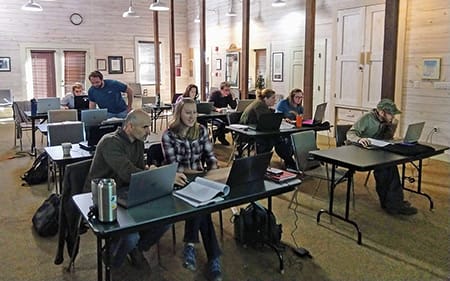
Educating and guiding the next generation of fire researchers and managers is a key goal of Wildland Fire Science and a resource for testing new ideas in fire research.
Tall Timbers hosts the premier fire technology transfer organization—the Southern Fire Exchange. This JFSP funded effort helps connect research to management through webinars, workshops, and support of the Prescribed Fire Science Consortium.
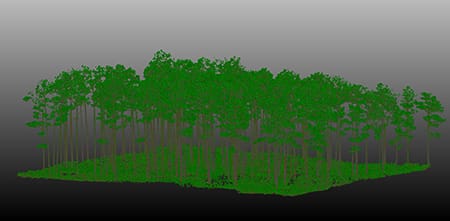
Working with partners in the Prescribed Fire Science Consortium, the program is building nexgen 3-D fuel beds using terrestrial LiDAR and novel sampling techniques to power new fire behavior models for prescribed fire managers. This work links to Tall Timbers work in wildlife habitat usage and ecological forestry.
The Longleaf Legacy landscape prescribed fire burn team arm of Wildland Fire Science works directly with landowners and partners to effectively put fire on the ground and promote prescribed fire throughout the region.
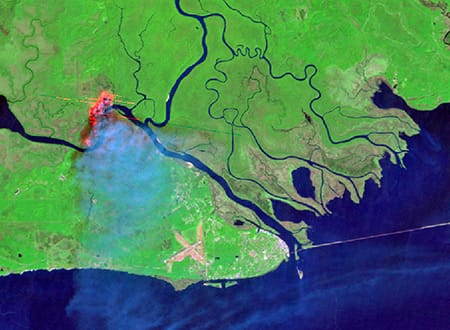
Tall Timbers is leading an effort to map fire regimes at the landscape scale. Staff work with numerous agencies to evaluate fire records and satellite imagery to build this critical conservation database. https://skfb.ly/6DqOY
Tall Timbers hosts the Prescribed Fire Science Consortium, a national network of researchers and managers who promote integrated research and management to advance next generation tools for fire practitioners. https://arcg.is/1DSjDT
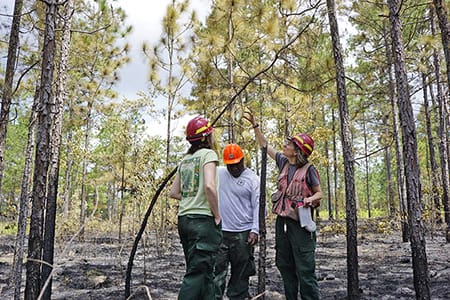
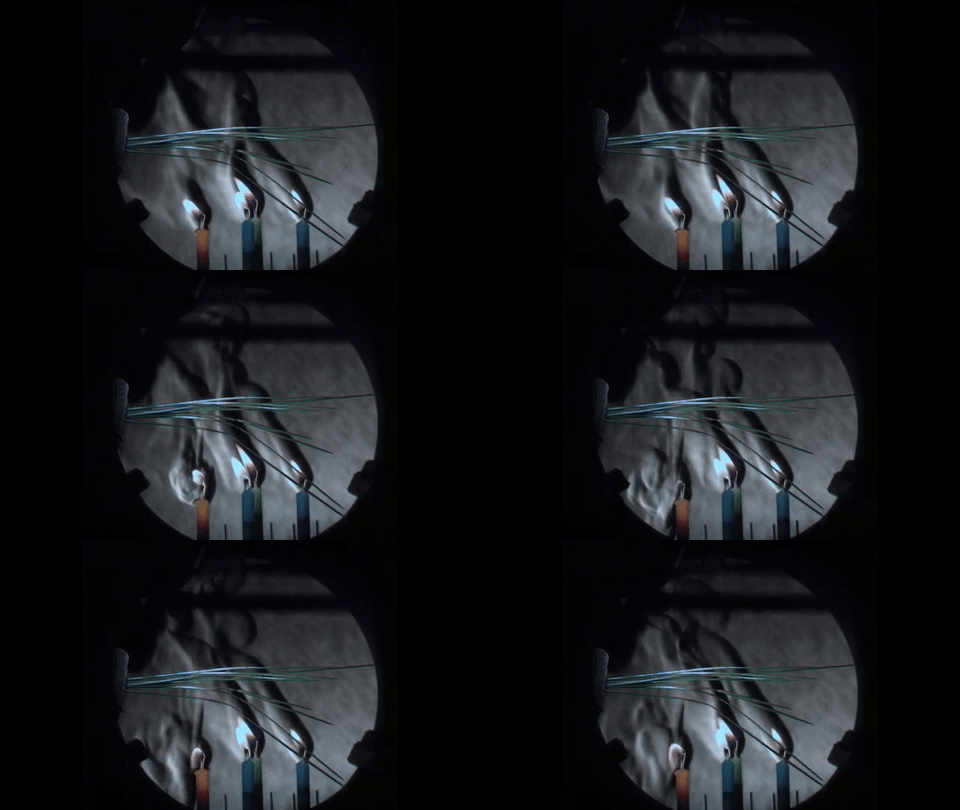
We are linking physics and field observations to understand the fluid dynamics of fire behavior surface fire regimes. Our work combines field observations using advanced thermal imaging techniques, laboratory studies, and coupled fire-atmospheric modeling to help managers improve outcomes of managed fire regimes.
Selected Publications authored by Wildland Fire Science staff.
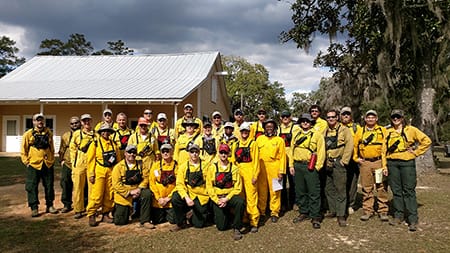
Staff and researchers support Federal fire training by serving as a cadre for NWCG training courses, ranging from basic wildland fire to advanced fire effects.
(PFTC) specializes in training fire fighters the principles and techniques of prescribed fire through practical hands-on experience. https://www.fws.gov/fire/pftc/
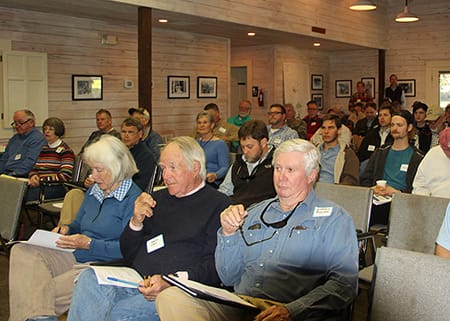
Private land owners are the largest source of prescribed fire in the country. These land owners and the culture of fire that was maintained by them during decades of suppression are a part of why Tall Timbers is a world-wide center for prescribed fire science. Workshops and fire training are a critical focus of the Longleaf Legacy Landscape Burn Team and our support of the Georgia Forestry Commission Prescribed Fire Center in Marion County.
The conserved lands of the Greater Red Hills region are found on working, income-producing properties that support agriculture, forestry, and recreational hunting. These properties contribute $272 million annually to local economies and support 2,300 jobs. [link to Planning & Advocacy section] The landowners’ strong stewardship ethic preserves their working lands while replenishing drinking water supplies, protecting water quality, and providing wildlife habitat for dozens of rare and endangered species. Tall Timbers’ conservation easements on these working properties encourage landowners to retain their traditional livelihood by keeping farms in family ownership.
Home to world-class wild quail populations, the Greater Red Hills region contains the largest concentration of gamebird preserves in the United States. These preserves also support the largest community of Red-cockaded woodpeckers on private lands. Indicators of high quality habitat found here include the gopher tortoise, Bachman’s sparrow, fox squirrel, and many amphibians. Tall Timbers’ conservation easements identify and protect the critical habitats of these species.
The region also boasts outstanding aquatic resources. Large river systems, like the Flint/Apalachicola, Ochlockonee, and Aucilla, flow from Georgia and feed into the Gulf of Mexico to support some of the world’s most productive estuaries. Large disappearing sinkhole lakes, like Iamonia, Miccosukee, and Jackson, provide habitat for an array of aquatic species and migratory birds. Tall Timbers’ conservation easements protect these vital watersheds and wetlands that are the lifeblood for the ecological health of the region.
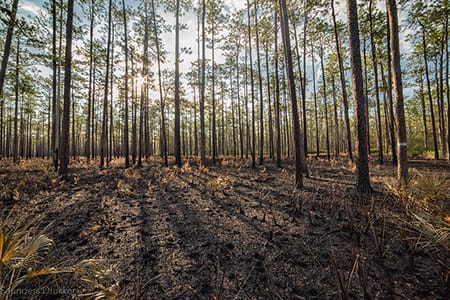
Once dominated by longleaf pine, our pine woodlands support abundant wildlife and local economies. These forests need prescribed fire to stay healthy. Herbert L. Stoddard and his associates Ed and Roy Komarek were pioneers in this emerging scientific field during the mid-20th century. Tall Timbers continues that legacy with applied research on prescribed fire and land management. Today, there is a tremendous need to expand prescribed fire use beyond the Red Hills to ensure ecosystem health and reduce wildfire risk. Additionally, Tall Timbers uses conservation easements to permanently protect private woodlands while balancing the need for economic return from selective timbering.

 The Florida Chapter of The Wildlife Society has recognized Jim Cox for his “professional achievement and contributions to the conservation of Florida’s wildlife and natural resources” with the Herbert W. Kale, II Award. Since 2002, Jim has directed the Vertebrate Ecology Program at Tall Timbers where he, his graduate students and interns endeavor to understand the ecology and management needs of the many declining vertebrates closely associated with longleaf forests, including the endangered Red-cockaded Woodpecker. Cox is especially interested in understanding the role that the frequency, season, and scale of prescribed burning may play in regulating vertebrate populations. He also studies Bachman’s Sparrows, Brown-headed Nuthatches and most recently, with the award of a grant from the U.S. Fish & Wildlife Service, Henslow’s Sparrows. All are species that are declining throughout their range.

 On Saturday, Feb. 19, Tall Timbers will honor former Trustee Rosamond (Rozzie) C. Davis at our annual Naturalists’ Ball, for her years of service as an advocate for conservation and land use planning. Since 1990, Rozzie has volunteered her time and talent to Tall Timbers, first as a member of the Red Hills Conservation Association and later chairing the Land Conservancy Planning Committee. She still serves on the Land Conservancy Committee.