Tall Timbers Scientists Partner with the Southern Fire Exchange to Share Information
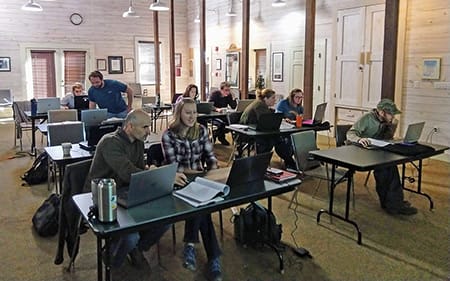
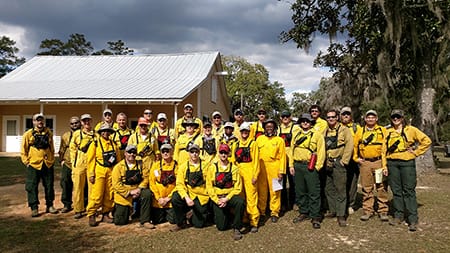
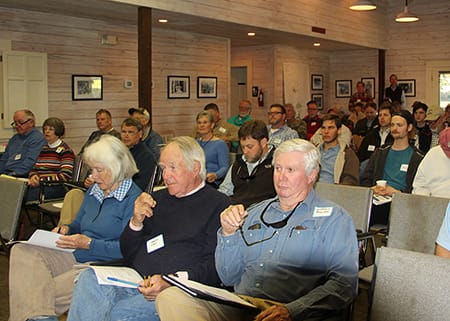
Tall Timbers scientists partnered with the Southern Fire Exchange this spring to share cutting-edge fire science research and information through a series of free online webinars. The webinars covered topics ranging from an introduction to prescribed fire to the latest in research on longleaf pine forest ecology and fire behavior modeling. The Southern Fire Exchange (SFE) is a fire science communication and delivery partnership led by Tall Timbers, the University of Florida, NC State University and the USFS Southern Research Station with funding provided by grants from the federal Joint Fire Science Program. The webinars were part of an effort by SFE to increase virtual training opportunities for prescribed burners and wildland fire managers during COVID-19. Combined the four successful webinars reached over 880 attendees from all over the Southeast and across the world. The webinar presentations have been recorded and are now available for viewing on the Southern Fire Exchange YouTube Channel.
The Stoddard Plots — Six Decades of Change in Forest Structure
By Kevin Robertson, Fire Ecology Program Director
A recent publication predicted that old-field pinelands, much like those of Red Hills region, will ultimately lose their pine component and become closed canopy hardwood forests, even if treated with frequent fire. We are challenging that notion by revisiting data from the Stoddard Plots on Tall Timbers Research Station, to see how forest structure has changed over time under a frequent fire regime.
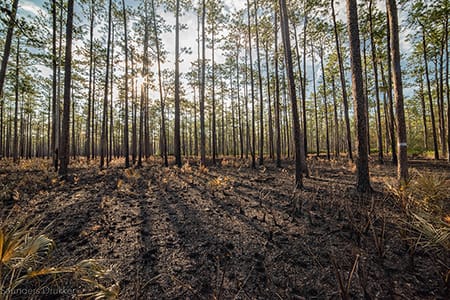
1-year interval Stoddard Plot being burned in March.
The Stoddard Plots are half-acre plots set up by Herbert Stoddard in 1960, two years after the establishment of Tall Timbers, with the goal of determining how different fire return intervals influence the vegetation and soils of old-field pinelands. Upon their establishment, Stoddard measured the species and diameters of trees greater than 4 cm diameter at breast height. Former Tall Timbers’ ecologist Sharon Hermann measured them again in 1994, and the Fire Ecology Lab measured them in 2011.
Figure 1 shows our results, with square symbols representing the average basal area for each category of trees and error bars showing standard deviation among the three replicate plots per fire treatment. The round symbols show data from the Pebble Hill plots in native longleaf pine-wiregrass communities burned at the same intervals.
Figure 1. Basal area at breast height per unit area of trees in different categories in the Tall Timbers Research Station Stoddard Plots (square symbols) burned at different fire return intervals since 1960, and in the Pebble Hill Fire Plots burned at different intervals since 2005. Error bars indicate standard deviation among three replicate plots.
In the 1-year fire interval (annually burned plots), there was no notable increase in off-site hardwoods (such as water oak and sweet gum that historically were in wetter environments) or in native upland hardwoods (like southern red oak and mockernut hickory that were historically in uplands). Loblolly pine decreased some, and shortleaf pine increased slightly.
In the 2-year interval plots, the hardwoods once again did not significantly increase, loblolly pine decreased, and shortleaf pine increased substantially.
In the 3-year interval plots, hardwoods similarly did not increase over time, loblolly pine stayed about the same, and shortleaf pine increased a great deal.
In the unburned plots, off-site hardwood increased dramatically, and other categories of trees remained about the same.
Total tree basal area increased with increasing fire return interval, corresponding to greater differences between old-field and native sites.
This evidence from the Stoddard Plots, which have not had mechanical or chemical treatment since their establishment 60 years ago, suggests that fire return intervals of 1-3 years prevent conversion to hardwood forests, although shortleaf pine is likely to increase over time. Shortleaf pine is a native, upland, fire-resistant pine species that provides pine needles as fuel for fires, so it is not likely to contribute to the plots transitioning to a fire-resistant community type.
Other management approaches, including thinning hardwoods, may be needed in more open woodlands, wetter areas, and other special cases. However, these results underscore the necessity and effectiveness of frequent fire for maintaining old-field pine communities for decades — without a trend toward hardwood dominance.
By Dave McElveen, Research Associate, Stoddard Bird Lab
It’s not every day we find a new wildlife species in our backyards. But that’s the case with the Intricate Satyr butterfly at Tall Timbers.
Known in the scientific world as Hermeuptychia intricata, the Intricate Satyr looks a lot like the Carolina Satyr and lives in the same areas, though they don’t interbreed. And that’s why it took so long to be discovered by science. It was hiding in plain sight! It wasn’t until 2014 that scientists in Texas looked at the DNA of various satyrs in south Texas and discovered the new species.
The Intricate Satyr uses woodoats and witchgrasses as its host plants. A host plant is where a butterfly lays its eggs and what the caterpillars feed on. Both are found along the swamp edges of Woodyard Hammock. With local lepidopterists Brian Lloyd and Eric Shaw, we set out to see if this new species may be inhabiting Tall Timbers. We walked down Beadle Road from SR 12 toward Lake Iamonia encountered satyrs right away. We netted 18 of them and after close examination found that at least 2 were Intricate Satyrs. Mission accomplished!
Distinguishing between Intricate and Carolina Satyrs can be tricky. Some individuals are clearly marked, but some show characteristics of both and can’t be easily distinguished. But no worries, they can tell the difference — they use scent to tell who is who. The arrows and line in the photos below indicate curves or lack thereof in wing markings that distinguish the two species for us humans.
An old-growth pond cypress towers above a Madison County swamp that will be protected by a Tall Timbers conservation easement. Photo by Peter Kleinhenz.
Of Swamps and Spiders
By Peter Kleinhenz
Another spider on my neck?! I was five minutes into my hands and knees crawl through a squishy layer of muck, my body hemmed in by an interconnected tangle of shrubs and greenbrier vines, when I could feel yet another set of eight legs crawling down my back. It was early August, I was hot, and the assault of arachnids in the form of spiders and ticks was getting the best of me. Then I saw it.
Looming in front of me, so gargantuan that it created a hole in the screen of vegetation, was the sentinel of this particular patch of swamp. An enormous pond cypress, at least four feet across and 70 feet high, towered above all else. I squirmed my way to the trunk, put my hands on the bark, and appreciated the fact that here was another incredible natural feature of the Aucilla River watershed that would be protected forever thanks to a conservation-minded landowner with a passion for his land, and the efforts of Tall Timbers.
The slog through the swamp was part of the process to document the habitat conditions, species, and infrastructure on a Madison County, Florida property that is to be conserved via a donated conservation easement. The landowner, who has passionately worked to restore the property by planting longleaf pine, prescribed burning, and protecting his wetlands, recognized that his work could be erased in the future with a simple land sale after he passes. As a result, like several other landowners in the watershed, he generously decided to donate a conservation easement to Tall Timbers.
Little Blue Herons are one of the many wading bird species that find refuge in the conserved wetlands of the Aucilla and St. Marks River watersheds. Photo by Preston Ballard
Conservation easements work well for all parties involved, including the natural resources. A landowner can continue to live on, and even generate income from the land, while the significant natural areas of the property become legally safe from major disturbances in the future. Sometimes, however, a landowner wants to donate a conservation easement, but can’t benefit from the tax incentives or cover the upfront costs. What then?
Tall Timbers staff, in the last few months, have visited several properties with tremendous conservation value, but where a donated conservation easement is not an option. In these instances, the Land Conservancy staff at Tall Timbers has to get creative. To address this potential barrier head-on, Tall Timbers staff wrote and received a $7,066,860 Natural Resources Conservation Service-Regional Conservation Partnership Program (NRCS-RCPP) grant to, among other things, help fund the purchase of conservation easements in the Aucilla and St. Marks River watersheds.
Staff has also been working through other private and government-based funding streams, on a case-by-case basis, to make the permanent conservation of significant natural lands in our area a reality. While it’s a little bit early to divulge much about these projects, you can rest assured that we are working hard to conserve some of the most unique and important conservation lands in the Aucilla and St. Marks watersheds.
Kayakers explore Big Blue Spring, one of the most pristine springs in Florida. Photo by Preston Ballard
The control of invasive plants, such as this air potato, is critical for the health of our local watersheds and the species that inhabit them. Photo by Peter Kleinhenz
Simultaneous with land conservation efforts, Tall Timbers has sought to bring management assistance to the landowners in these watersheds through the NRCS-RCPP grant mentioned above. Individual landowners all the way up to homeowners’ associations have already contacted Tall Timbers regarding invasive plant management, prescribed burning, or other forms of restoration management. Landowners of properties, like the Madison County tract mentioned earlier, can apply for funding assistance to turn their land into even better wildlife habitat, and we encourage them to do just that. Conservation and land management are virtually one and the same in the Southeastern Coastal Plain, so we are placing an equally strong emphasis on both over the next five years.
The Tall Timbers Land Conservancy is working to conserve some of the most unique and wild places in the Aucilla and St. Marks River watersheds. Photo by Preston Ballard
If Tall Timbers is to make lasting and far-reaching impacts in these watersheds, we must also raise awareness among their residents about the importance of watershed conservation. A recent example comes in the form of the new Aucilla River watershed web pages on the Tall Timbers’ website. Brian Wiebler and I worked to get photos and content together, while Dixie Davis in the Tall Timbers Geospatial Lab produced an impressive interactive map. These two items support each other, enabling a visitor to the pages to familiarize themselves with our efforts to conserve the watershed, while giving them the means with which to experience it. I hope you’ll enjoy exploring these pages, and that you’ll enjoy exploring the watershed even more.
You can probably surmise by now that it’s been a busy few months, despite the omnipresent threat of COVID-19. As I sit here now, at home, writing this and thinking about all that we’ve been up to and plan to do, I feel like I’m caught up in a tornado of activities. It’s easy to get stressed, overwhelmed, and even discouraged at times. But a chigger bite is itching on my foot, and I immediately get carried back to where that bite likely came from.
I’m back in the swamp, covered in mud, with my hands on a tree that has grown for centuries, unconcerned about everything that has gone on around it. It has guarded this swamp, even when virtually every tree around it was cut. I look up into the canopy of this ancient sentinel and I know that all this work is so, so worth it.
If you have an interest in learning more about conserving your property within the Aucilla River or St. Marks River watersheds, please contact Peter Kleinhenz or Shane Wellendorf.
This gorgeous depressional wetland will be permanently conserved through a conservation easement donated to Tall Timbers. Photo by Peter Kleinhenz
The M-CORES program, which includes the proposed Suncoast Connector Toll Road in Jefferson County, passed through the Florida Legislature at breakneck speed with little review or analysis. Tall Timbers has a number of concerns given the potential for significant and wide spread impacts. These include fragmenting public and private conservation lands, robbing business from Main Street Monticello, impacting our rivers and other water resources, and making prescribed fire more difficult and costly.
Join us in asking the Jefferson County Board of County Commissioners to OPPOSE the Suncoast Connector toll road and its path through Jefferson County.
Take action now with our easy email form.
Send an email to all five Jefferson County Board of County Commissioners with one click!
Selected Publications authored by Wildland Fire Science staff.
Educating and guiding the next generation of fire researchers and managers is a key goal of Wildland Fire Science and a resource for testing new ideas in fire research.
Tall Timbers hosts the Prescribed Fire Science Consortium, a national network of researchers and managers who promote integrated research and management to advance next generation tools for fire practitioners. https://arcg.is/1DSjDT
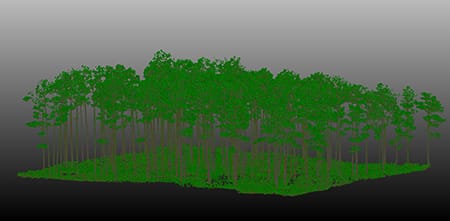
Working with partners in the Prescribed Fire Science Consortium, the program is building nexgen 3-D fuel beds using terrestrial LiDAR and novel sampling techniques to power new fire behavior models for prescribed fire managers. This work links to Tall Timbers work in wildlife habitat usage and ecological forestry.
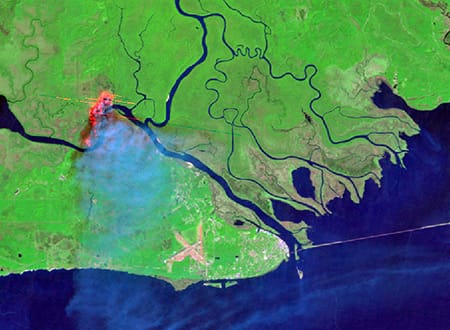
Tall Timbers is leading an effort to map fire regimes at the landscape scale. Staff work with numerous agencies to evaluate fire records and satellite imagery to build this critical conservation database. https://skfb.ly/6DqOY
We are linking physics and field observations to understand the fluid dynamics of fire behavior surface fire regimes. Our work combines field observations using advanced thermal imaging techniques, laboratory studies, and coupled fire-atmospheric modeling to help managers improve outcomes of managed fire regimes.
Burn prioritization modeling seminars and fire modeling tools are supported by Wildland Fire Science to train managers in the important planning stages of prescribed fires.
The conserved lands of the Greater Red Hills region are found on working, income-producing properties that support agriculture, forestry, and recreational hunting. These properties contribute $272 million annually to local economies and support 2,300 jobs. [link to Planning & Advocacy section] The landowners’ strong stewardship ethic preserves their working lands while replenishing drinking water supplies, protecting water quality, and providing wildlife habitat for dozens of rare and endangered species. Tall Timbers’ conservation easements on these working properties encourage landowners to retain their traditional livelihood by keeping farms in family ownership.
Home to world-class wild quail populations, the Greater Red Hills region contains the largest concentration of gamebird preserves in the United States. These preserves also support the largest community of Red-cockaded woodpeckers on private lands. Indicators of high quality habitat found here include the gopher tortoise, Bachman’s sparrow, fox squirrel, and many amphibians. Tall Timbers’ conservation easements identify and protect the critical habitats of these species.
The region also boasts outstanding aquatic resources. Large river systems, like the Flint/Apalachicola, Ochlockonee, and Aucilla, flow from Georgia and feed into the Gulf of Mexico to support some of the world’s most productive estuaries. Large disappearing sinkhole lakes, like Iamonia, Miccosukee, and Jackson, provide habitat for an array of aquatic species and migratory birds. Tall Timbers’ conservation easements protect these vital watersheds and wetlands that are the lifeblood for the ecological health of the region.
Once dominated by longleaf pine, our pine woodlands support abundant wildlife and local economies. These forests need prescribed fire to stay healthy. Herbert L. Stoddard and his associates Ed and Roy Komarek were pioneers in this emerging scientific field during the mid-20th century. Tall Timbers continues that legacy with applied research on prescribed fire and land management. Today, there is a tremendous need to expand prescribed fire use beyond the Red Hills to ensure ecosystem health and reduce wildfire risk. Additionally, Tall Timbers uses conservation easements to permanently protect private woodlands while balancing the need for economic return from selective timbering.
Tall Timbers hosts the premier fire technology transfer organization—the Southern Fire Exchange. This JFSP funded effort helps connect research to management through webinars, workshops, and support of the Prescribed Fire Science Consortium.
The Longleaf Legacy landscape prescribed fire burn team arm of Wildland Fire Science works directly with landowners and partners to effectively put fire on the ground and promote prescribed fire throughout the region.
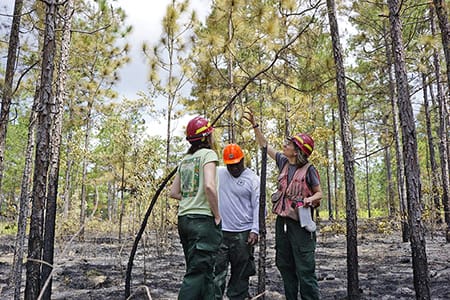
Staff and researchers support Federal fire training by serving as a cadre for NWCG training courses, ranging from basic wildland fire to advanced fire effects.
(PFTC) specializes in training fire fighters the principles and techniques of prescribed fire through practical hands-on experience. https://www.fws.gov/fire/pftc/
Private land owners are the largest source of prescribed fire in the country. These land owners and the culture of fire that was maintained by them during decades of suppression are a part of why Tall Timbers is a world-wide center for prescribed fire science. Workshops and fire training are a critical focus of the Longleaf Legacy Landscape Burn Team and our support of the Georgia Forestry Commission Prescribed Fire Center in Marion County.

 Tall Timbers scientists partnered with the Southern Fire Exchange this spring to share cutting-edge fire science research and information through a series of free online webinars. The webinars covered topics ranging from an introduction to prescribed fire to the latest in research on longleaf pine forest ecology and fire behavior modeling. The Southern Fire Exchange (SFE) is a fire science communication and delivery partnership led by Tall Timbers, the University of Florida, NC State University and the USFS Southern Research Station with funding provided by grants from the federal Joint Fire Science Program. The webinars were part of an effort by SFE to increase virtual training opportunities for prescribed burners and wildland fire managers during COVID-19. Combined the four successful webinars reached over 880 attendees from all over the Southeast and across the world. The webinar presentations have been recorded and are now available for viewing on the Southern Fire Exchange YouTube Channel.