High Male Incubation Good Sign for Fall Bobwhite Abundance
By Theron Terhune & Clay Sisson
The quail hatch is shaping up to be a good one! Plenty of adult bobwhites and broods are being observed and reported across the Red Hills and Albany area quail properties, as well as our study sites on central Florida Ranches, the Carolinas and Alabama. Breeding season adult survival has been excellent in the Albany area, the Carolinas and central Florida, but average to slightly below average in the Red Hills region. On all of our study sites along the east Coast, we have been seeing average to above average production compared to our historical records. In the Albany area, nest production per capita is well above average, whereas brood production per capita is slightly below average, supposedly due to high attrition from snakes. On all of our other sites (in the Carolinas, central Florida and the Red Hills), nest and brood production has been about average at the mid-season point, but good breeding season survival on all sites, with the exception of our Red Hills study sites, affords a lot of opportunity for birds to re-nest and/or hatch second broods.
Despite average production, poorly timed rains resulted in high amounts of chick mortality in the Red Hills during the first (late May, early June) wave of hatches, but chick survival has dramatically improved since then. However, high snake activity has resulted in higher than usual chick mortality to snakes, compared to the past couple of years. The good news is that there still appears to be a lot of cotton rats out there to alleviate the pressure on the young quail chicks. In fact, on our Albany area study sites, we recorded an all-time high abundance of cotton rats during our early August sampling period.
Beyond chick survival and our typical per capita production tracking metrics (broods and nests produced per hen), male incubation rates are excellent so far at >27% for Tall Timbers and Dixie study sites which is already at our long-term average for the entire breeding season. Our recent research has shown that male incubation patterns are 2.5 times more predictive of population change than any other bobwhite demographic we monitor. As a result, when male incubation rates are above average, we are 78% more likely to observe a population increase, compared to years when male incubation rates are lower than 28%. During years when male incubation is higher than normal, overall production from hens can be biased low or underestimated, which appears to be the case this year. An even greater predictor of population growth is broods hatched by males. To date, the number of broods hatched by males is 0.16 for the breeding season. Our long-term data on Tall Timbers indicates that when broods produced per male is at or greater than 0.16, a population increase was observed nearly 88% of the time (see Figure 1). If this pattern is holds true for this year, we could see modest increases in fall bobwhite abundance. Taken collectively, there is reason for optimism heading toward the breeding season finish line. A good late hatch will be the deciding factor for many as to whether population increases are observed this fall compared to last year.
Figure 1. Bobwhite density (and lambda – population growth rate) and reproduction of Northern Bobwhite at Tall Timbers from 2000 – 2019. Gray bars represent bobwhite density (birds per acre) and solid black line lambda; the dotted-black line represents successful male-incubated nests per radio-tagged male (broods per male), and the dashed-grey line represents successful female-incubated nests per radio-tagged female (broods per female).
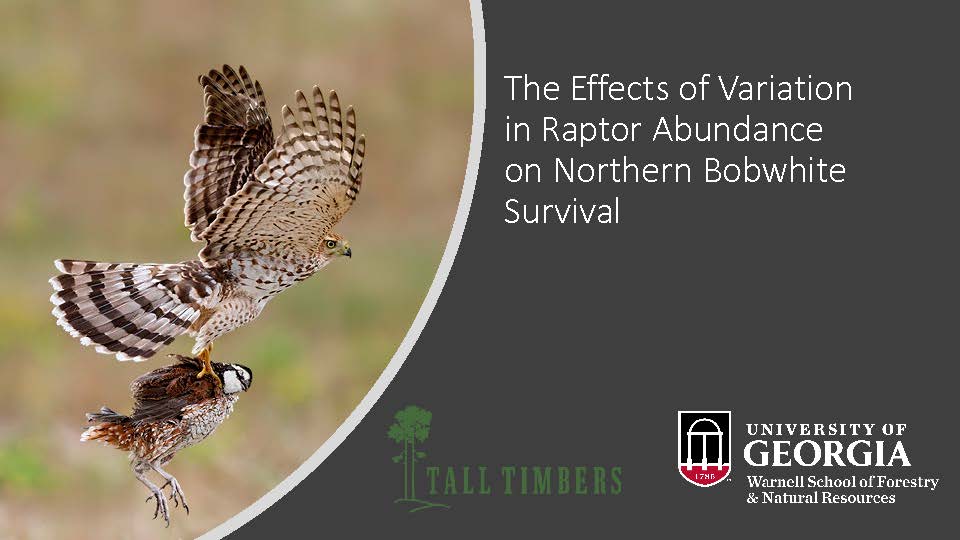
For more than a decade (2008–2020), the Tall Timbers Game Bird Program has collected raptor count data on two Red Hills properties and one Albany area Plantation in attempt to capture spatial and temporal patterns in raptor abundance as it relates to bobwhite demographics. In April, Justin Rectenwald successfully defended his thesis earning a Master’s degree at The University of Georgia using this long-term dataset where he evaluated “The Effects of Variation in Raptor Abundance on Northern Bobwhite Survival.” He is now employed full-time as a Game Bird Biologist with the Albany Quail Project. As with any good research, we were able to corroborate a few “prior beliefs,” quell some others, and ask some new questions. In this summer’s edition of the Quail Call newsletter, we will recap our findings, but here are a few key take home points from Justin’s thesis:
Raptor abundance varied throughout the year with the timing of regional pulses varying by species group.
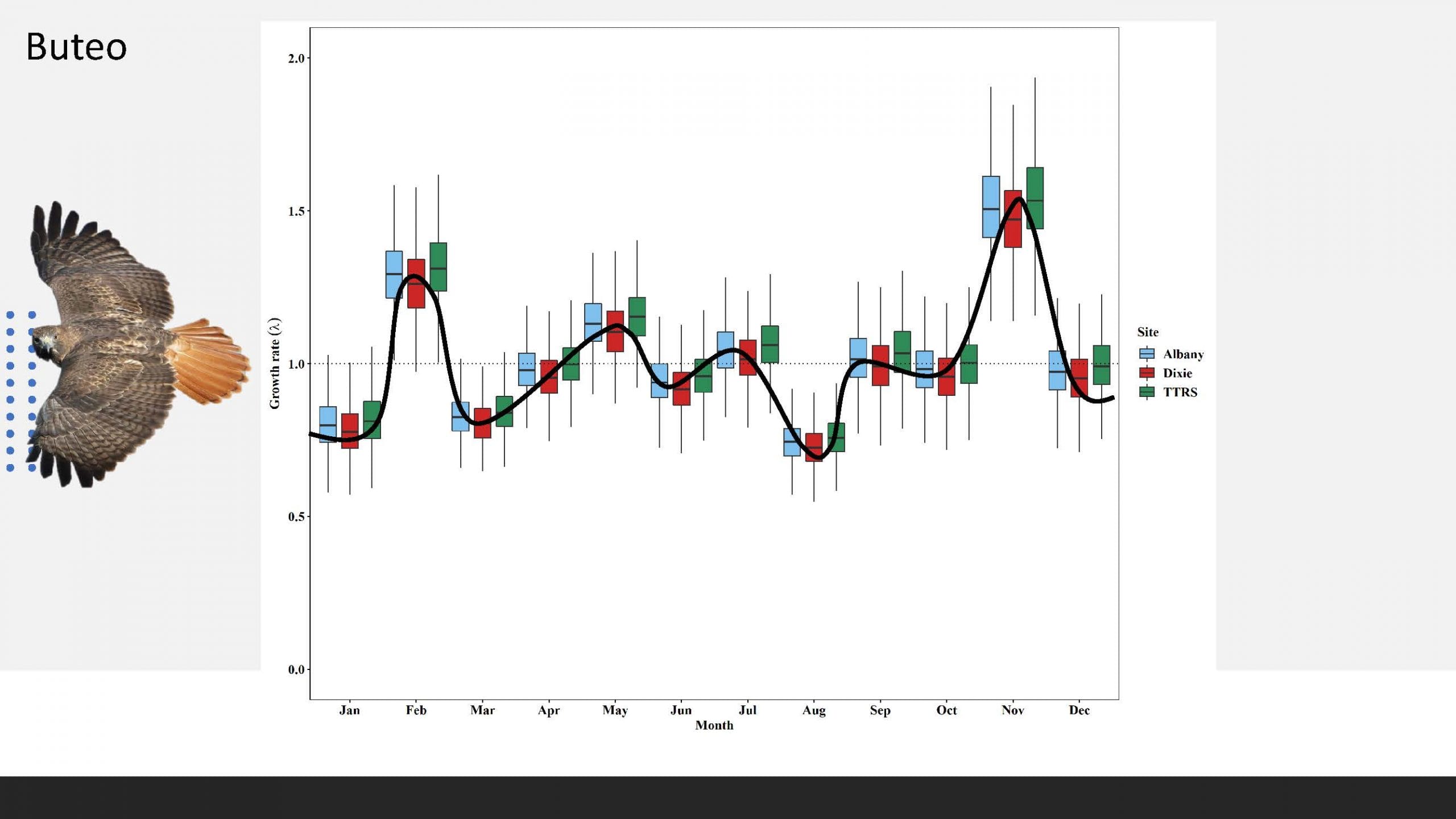
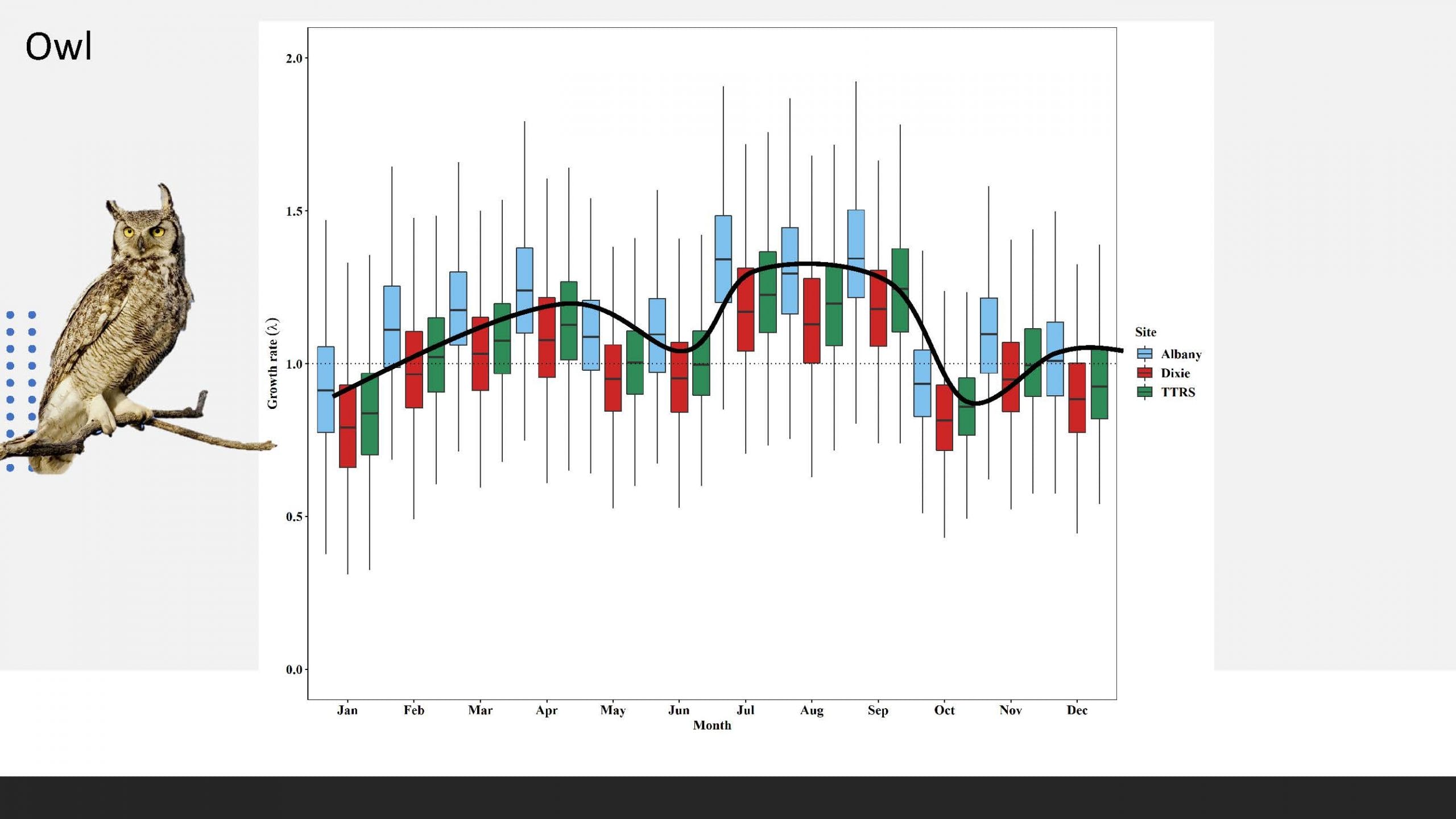
Accipiters (e.g., Cooper’s hawks), buteos (e.g., red-tailed hawks), and owls exhibited different abundance patterns seasonally and annually both within and among species. These fluctuations in raptor numbers were largely associated with natural migration for accipiters and buteos and dispersal of juvenile owls. The bulk of regional and temporal variation in raptor pulses was during the bobwhite non-breeding season, whereas raptor fluctuations during the bobwhite breeding season (May–September) remained relatively constant and similar for each raptor group. Whereas a latitudinal effect was not observed in our data, differences did exist among sites, indicating that variation in raptor numbers observed may be related to differences in resource availability (i.e., presence/absence of hardwood drains or amount of hardwoods in uplands).
Minor pulses in raptor numbers can negatively impact bobwhite survival.
Bobwhite were more vulnerable to buteo and owl depredation during breeding season due to reduced vigilance of mating activity by bobwhite, as well as nest-building and egg-laying, incubation, and brood rearing activities. An increase in buteo and accipiter abundance was observed in the late summer and fall resulting in declines in annual bobwhite survival. In particular, as previously thought, accipiters have a negative influence on bobwhite survival in late winter, which is associated with an increase in accipiter abundance coupled with deterioration of cover conditions late in the hunting season.
Owls appear to have a larger impact on bobwhite survival, especially during the breeding season, than previously thought.
A somewhat novel or surprising finding from this research was that owls influenced survival at a higher rate than expected. The data suggest that for each additional owl added per 82 acres, bobwhite survival decreased by nearly 3.5 times. As is also true for accipiters, this effect was much larger than that observed for changes in buteo density, but there are also more buteos, as a whole, on the landscape. It appears that a greater proportion of barred owls exist on the landscape in the Red Hills region, compared to a greater number of great-horned owls in the Albany area. While great-horned and barred owls are sympatric species, there is a high amount of competition among these owls, which may impact bobwhite survival by impacting species-specific owl abundance in the uplands.
Although avian predators are federally protected, we can moderate their impact on bobwhite mortality rates by implementing sound management practices to reduce both the amount of raptor habitat in the uplands, and increasing the quality of vegetation conditions, as well as employing additional practices, such as supplemental feeding to reduce bobwhite foraging times. This research indicated that the major pulses of avian predators due to migration in late winter and early spring is over in the Southeast by late February and early March, but this is also a moving window related to weather conditions. For example, cold winters may delay Accipiter migration timing, which could dramatically decrease monthly bobwhite survival during late winter and impact bobwhite breeding densities. Similarly, cotton rat survival and abundance may also be influenced by these same pulses in raptor abundance. Importantly, this study demonstrates that during most years when a proper burn program is implemented (small scale burning, and distributing burns properly during March–May), raptor impacts on bobwhite survival can be mitigated, but large scale burning or burning too much at one time may have negative impacts on the bobwhite population. Going forward we plan to take a closer look at northerly spring migration patterns and how they are affected by weather, as well as how habitat modifications (i.e. hardwood removal, thinning mid rotation pines, snag removal) may impact raptor numbers on a site.
Population Reintroduction of Brown-headed Nuthatch Provides New Information
By Jim Cox, Stoddard Bird Lab Director
Population reintroductions are increasingly important for managing rare wildlife. Habitat loss and fragmentation will only increase over the coming decades, meaning that space for wildlife will increasingly be smaller and dissected more frequently by roads, urbanization, and unsuitable habitats. These changes especially pose threats to species that need large areas to survive or have specialized habitat needs.
Jim Cox uses a recording of a Brown-headed Nuthatch call to lure birds to catch in the mist net set up nearby. Photo by William Eaton
Population reintroductions also regularly provide new information on the species involved, as some of our recent work has shown. The Stoddard Bird Lab collaborated with Gary Slater (Center for Natural Lands Management, Washington) to look at the development of cooperative breeding in two reintroduced populations of the Brown-headed Nuthatch. Cooperation in the nuthatch occurs when adult males decide to forego their chances to breed and instead assist in the breeding efforts of another male and his partner.
It’s an unusual type of behavior (found in <5% of all songbirds), and previous work with a bird that breeds cooperatively suggested cooperation occurred only after the available habitat on the reintroduction site had become saturated. Before that time, the excess breeders moved into a surrounding landscape devoid of other males to set up territories and attempt to secure mates, rather than assist in the breeding efforts of others.
Gary reintroduced nuthatches to the Everglades National Park in the late 1990s and monitored the growth of the population for five years. More recently, we reintroduced nuthatches to Jonathan Dickinson State Park and have monitored birds there for two breeding seasons. In both cases, cooperation occurred in the first couple of breeding seasons following the initial releases, well before the available habitat (over 9,000 acres on both sites) was saturated.
The results provide novel support for factors other than lack of space in driving cooperative behavior. Rather than habitat saturation, factors such as the number of males and females available appear to play a bigger role. When there is an excess of males, some males elect to help others rather than set up and defend a lonely territory.
Our work on Jonathan Dickinson has also yielded other novelties. The Brown-headed Nuthatch is thought to be a sedentary species that sets up shop in a small area (about 10-15 acres), and then spends the rest of its life in the general vicinity. Some of the individuals we’ve monitored on Tall Timbers have not moved more than 300 yards in the 10 years they’ve been alive! In contrast, we’ve seen some drastic movements in the first two breeding seasons in our reintroduced population. The two nesting pairs we had the first year post reintroduction have moved over a mile to new nesting locations in 2020. There were no other territorial nuthatches on the park back in 2019, and the lack of neighbors allowed the birds to roam over several hundred acres (not the more typical 15 acres). The changes point to the role that neighbors might have when most individuals in a population try to find breeding habitat, not simply physical features such as food resources and the maturity of pines..
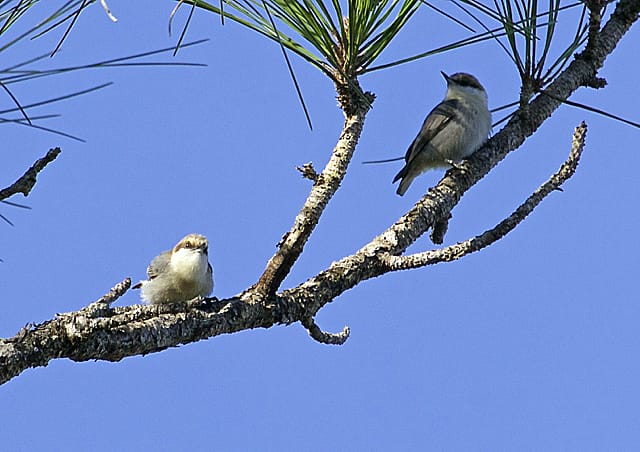
A nesting pair of nuthatches reintroduced to Jonathan Dickinson State Park in 2019 that has moved over a mile to a new nesting location in 2020. Photo by William Eaton
This work also has important conservation implications, in addition to some of the theoretical elements discussed above. The nuthatch has disappeared from many areas in south Florida, including several large (5000+ acres) tracts of public land. The populations remaining in south Florida have lowered genetic diversity, which may be a product of the inability for individuals to move regularly among increasingly isolated patches. Tools like reintroduction and translocation are likely to be increasingly needed to combat these threats, as habitat loss and climate change continue to alter the existing landscape.
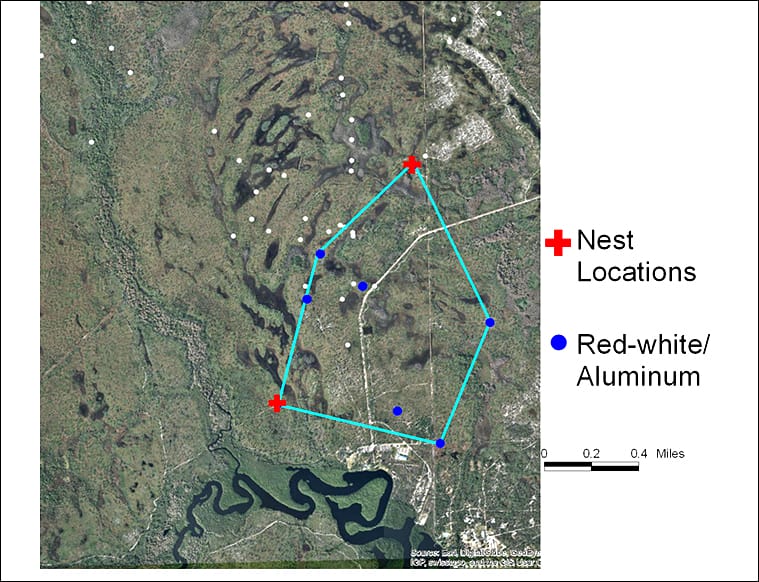
Movements of a male color-marked nuthatch reintroduced to Jonathan Dickinson State Park in 2018. The area extends over nearly 200 acres, 10x the normal area used. Red crosses show nesting locations for this male and his mate in 2019 (northern most) and 2020 (southwest).
John McGuire hired to lead Private Lands Prescribed Fire Initiative
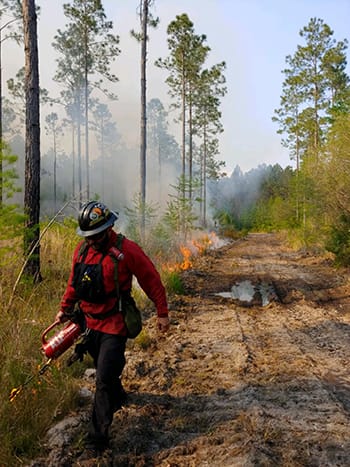
John McGuire prescribed burning
Tall Timbers recently hired John McGuire as director of the Private Lands Prescribed Fire Initiative. He has been tasked to increase the acres of private lands treated with prescribed fire through outreach, research and direct assistance.
John is well-known in the Southeast for his work with prescribed fire. He is a certified burn manager in Alabama, Florida, Georgia, and Mississippi. He is also a certified forester and wildlife biologist, as well as a senior ecologist. John comes to Tall Timbers from the private sector where worked for over a decade in ecosystem markets and restoration business. Prior to that he was the first outreach coordinator for the Longleaf Alliance when it was a fledgling organization.
He recently co-authored a paper with Nancy Lowenstein, Extension Specialist with Auburn University, titled “Cogongrass Fires” that was published in March 2020 for Forestry & Wildlife, a publication of the Alabama Extension System and Auburn University. Read the paper here.
John’s passion hobby is as a historian working with Vietnam Veterans.
The M-CORES program, which includes the proposed Suncoast Connector Toll Road in Jefferson County, passed through the Florida Legislature at breakneck speed with little review or analysis. Tall Timbers has a number of concerns given the potential for significant and wide spread impacts. These include fragmenting public and private conservation lands, robbing business from Main Street Monticello, impacting our rivers and other water resources, and making prescribed fire more difficult and costly.
Join us in asking the Jefferson County Board of County Commissioners to OPPOSE the Suncoast Connector toll road and its path through Jefferson County.
Take action now with our easy email form.
Send an email to all five Jefferson County Board of County Commissioners with one click!
Selected Publications authored by Wildland Fire Science staff.
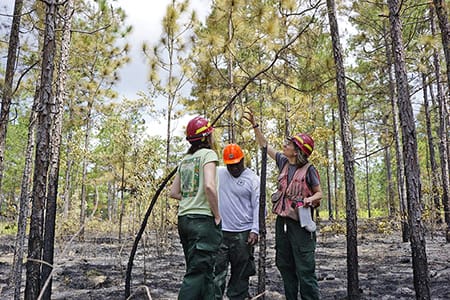
Educating and guiding the next generation of fire researchers and managers is a key goal of Wildland Fire Science and a resource for testing new ideas in fire research.
Tall Timbers hosts the Prescribed Fire Science Consortium, a national network of researchers and managers who promote integrated research and management to advance next generation tools for fire practitioners. https://arcg.is/1DSjDT
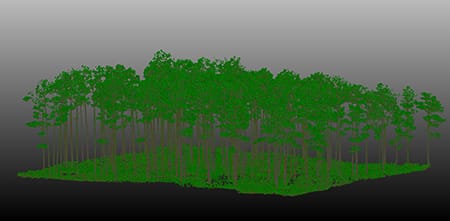
Working with partners in the Prescribed Fire Science Consortium, the program is building nexgen 3-D fuel beds using terrestrial LiDAR and novel sampling techniques to power new fire behavior models for prescribed fire managers. This work links to Tall Timbers work in wildlife habitat usage and ecological forestry.
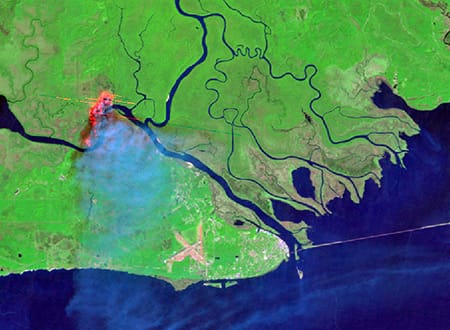
Tall Timbers is leading an effort to map fire regimes at the landscape scale. Staff work with numerous agencies to evaluate fire records and satellite imagery to build this critical conservation database. https://skfb.ly/6DqOY
We are linking physics and field observations to understand the fluid dynamics of fire behavior surface fire regimes. Our work combines field observations using advanced thermal imaging techniques, laboratory studies, and coupled fire-atmospheric modeling to help managers improve outcomes of managed fire regimes.
Burn prioritization modeling seminars and fire modeling tools are supported by Wildland Fire Science to train managers in the important planning stages of prescribed fires.
The conserved lands of the Greater Red Hills region are found on working, income-producing properties that support agriculture, forestry, and recreational hunting. These properties contribute $272 million annually to local economies and support 2,300 jobs. [link to Planning & Advocacy section] The landowners’ strong stewardship ethic preserves their working lands while replenishing drinking water supplies, protecting water quality, and providing wildlife habitat for dozens of rare and endangered species. Tall Timbers’ conservation easements on these working properties encourage landowners to retain their traditional livelihood by keeping farms in family ownership.
Home to world-class wild quail populations, the Greater Red Hills region contains the largest concentration of gamebird preserves in the United States. These preserves also support the largest community of Red-cockaded woodpeckers on private lands. Indicators of high quality habitat found here include the gopher tortoise, Bachman’s sparrow, fox squirrel, and many amphibians. Tall Timbers’ conservation easements identify and protect the critical habitats of these species.
The region also boasts outstanding aquatic resources. Large river systems, like the Flint/Apalachicola, Ochlockonee, and Aucilla, flow from Georgia and feed into the Gulf of Mexico to support some of the world’s most productive estuaries. Large disappearing sinkhole lakes, like Iamonia, Miccosukee, and Jackson, provide habitat for an array of aquatic species and migratory birds. Tall Timbers’ conservation easements protect these vital watersheds and wetlands that are the lifeblood for the ecological health of the region.
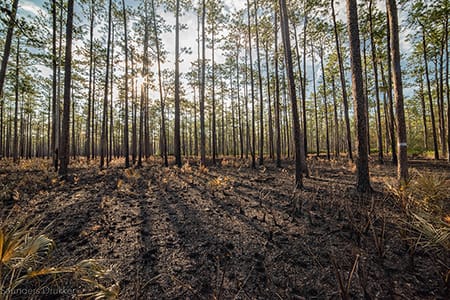
Once dominated by longleaf pine, our pine woodlands support abundant wildlife and local economies. These forests need prescribed fire to stay healthy. Herbert L. Stoddard and his associates Ed and Roy Komarek were pioneers in this emerging scientific field during the mid-20th century. Tall Timbers continues that legacy with applied research on prescribed fire and land management. Today, there is a tremendous need to expand prescribed fire use beyond the Red Hills to ensure ecosystem health and reduce wildfire risk. Additionally, Tall Timbers uses conservation easements to permanently protect private woodlands while balancing the need for economic return from selective timbering.
Tall Timbers hosts the premier fire technology transfer organization—the Southern Fire Exchange. This JFSP funded effort helps connect research to management through webinars, workshops, and support of the Prescribed Fire Science Consortium.
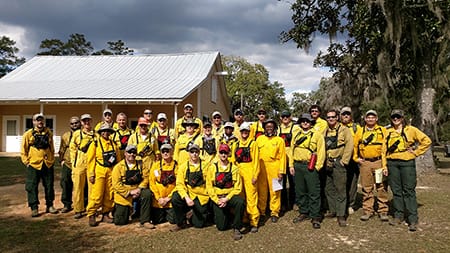
The Longleaf Legacy landscape prescribed fire burn team arm of Wildland Fire Science works directly with landowners and partners to effectively put fire on the ground and promote prescribed fire throughout the region.
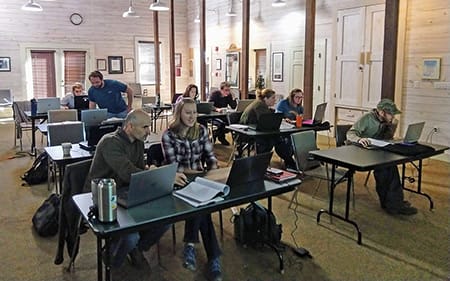
Staff and researchers support Federal fire training by serving as a cadre for NWCG training courses, ranging from basic wildland fire to advanced fire effects.
(PFTC) specializes in training fire fighters the principles and techniques of prescribed fire through practical hands-on experience. https://www.fws.gov/fire/pftc/
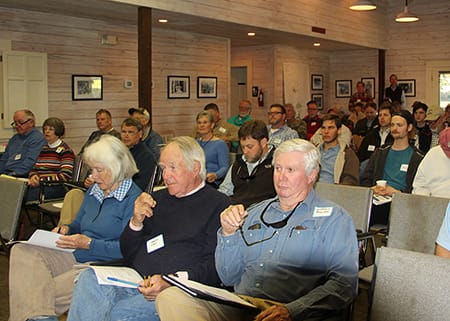
Private land owners are the largest source of prescribed fire in the country. These land owners and the culture of fire that was maintained by them during decades of suppression are a part of why Tall Timbers is a world-wide center for prescribed fire science. Workshops and fire training are a critical focus of the Longleaf Legacy Landscape Burn Team and our support of the Georgia Forestry Commission Prescribed Fire Center in Marion County.


 The quail hatch is shaping up to be a good one! Plenty of adult bobwhites and broods are being observed and reported across the Red Hills and Albany area quail properties, as well as our study sites on central Florida Ranches, the Carolinas and Alabama. Breeding season adult survival has been excellent in the Albany area, the Carolinas and central Florida, but average to slightly below average in the Red Hills region. On all of our study sites along the east Coast, we have been seeing average to above average production compared to our historical records. In the Albany area, nest production per capita is well above average, whereas brood production per capita is slightly below average, supposedly due to high attrition from snakes. On all of our other sites (in the Carolinas, central Florida and the Red Hills), nest and brood production has been about average at the mid-season point, but good breeding season survival on all sites, with the exception of our Red Hills study sites, affords a lot of opportunity for birds to re-nest and/or hatch second broods.