By Neil Fleckenstein, Red Hills Planning Coordinator
Update — As many eNews readers are now aware, Tall Timbers is deeply concerned about the proposed Suncoast Connector toll road, a proposed 150+ mile toll road corridor extending from Citrus County through Jefferson County. (Background information below). The Suncoast Connector is just one component of the Multi-Use Corridors of Regional Economic Significance Program (M-CORES), hastily passed by the Florida Legislature in 2019.
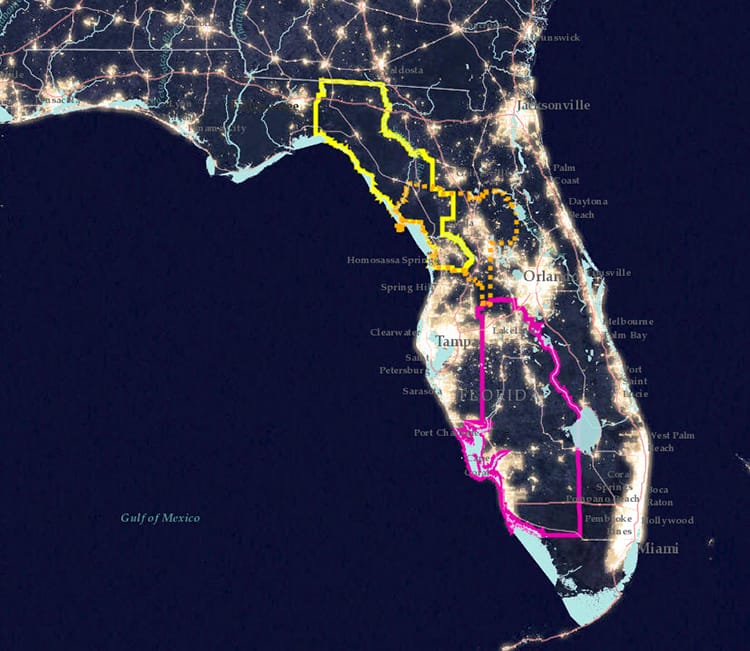
A night skies image shows the rural Big Bend coast.
Tall Timbers continues to be actively engaged in this complex issue. We are working with subject matter experts on several important issue papers shedding light on key environmental, coastal resiliency, and economic issues related to the toll road; collaborating with local, regional, and state partners to protect our shared conservation and community interests; meeting with key leaders to share our concerns; and engaging in many outreach and education activities to keep interested parties like you up to speed on this issue.
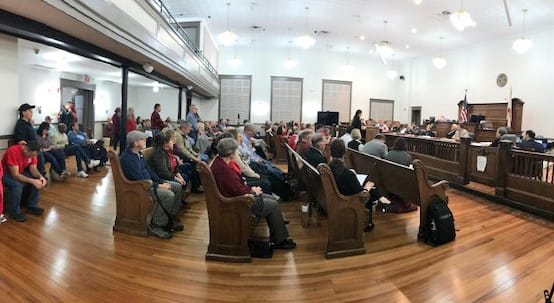
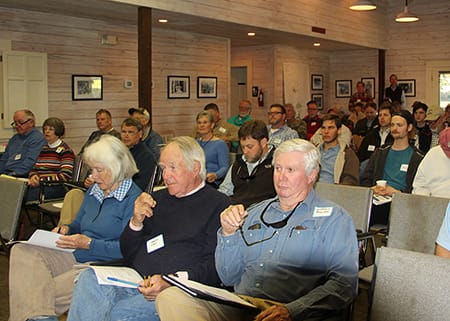
Jefferson County Board of County Commissioners meeting
In recent weeks, COVID-19 has forced the postponement of in-person Task Force meetings. In their place, the Florida Department of Transportation (DOT) has coordinated two webinars to update Task Force members on key issues, and provide the public with opportunities to provide input. DOT is to be applauded for their efforts to continue this complex process amidst the pandemic. Unfortunately, public participation has suffered as many members of the public have been unable to weigh-in with their concerns. That said, during a recent webinar, 37 out of 38 public speakers opposed the Suncoast Connector toll road.
If you have not already done so, we encourage you to join the more than 1,000 concerned citizens who have signed up to receive periodic updates from Tall Timbers about this project.
Issue background — Tall Timbers remains alarmed about the proposed new toll road’s many potential negative impacts. US Highway 19, a four-lane divided roadway, runs throughout the length of the eight-county Suncoast Connector planning area and is substantially underutilized. In fact, for much of its route through the toll road planning area, US 19 functions at between 16 and 20 percent of its maximum service volume.
Aside from being unnecessary, a new toll road or the co-location of new travel lanes along the US 19 corridor would cost billions of dollars ─ an unnecessary luxury when Florida is struggling with declining tax revenues amidst the COVID-19 pandemic. (April tax collections based on March sales activity were down $773 million or 28 percent). Even without this economic crunch, it will be crucial in the future to avoid placing costly infrastructure in a flood-prone corridor, where over 50 percent of the study area is in a 100- or 500-year floodplain and 30 percent is vulnerable to category 5 storm surge and rising sea levels.
And then there are the irreplaceable natural treasures of the Big Bend region. Government, private landowners, and non-profits have invested millions of dollars protecting forests, wetlands, rivers, and focal species in the most undeveloped coastal area left in the Sunshine State.
Recommendations — For these and other reasons, Tall Timbers opposes the construction of a new toll road corridor or the co-location of new travel lanes within the existing US 19 corridor, from Jefferson County through Levy County. Instead, we support transportation improvements in Citrus County ─ which could include tolled and non-tolled roadways — to address mobility challenges in that rapidly growing county. (Notably, the population of Citrus County exceeds the combined population of the other seven counties in the study area).
North of Citrus County, the existing US 19 corridor is highly underutilized and is not in need of new tolled travel lanes. As an alternative, mobility projects that are broadly supported by local communities, businesses and residents, could enhance traffic flow near rural communities. We also recommend further evaluation by DOT of the consensus recommendations contained in the 2016 Interstate-75 Relief Task Force for enhancing traffic flow in Central and North Florida.
For additional information — contact Red Hills Planning Coordinator Neil Fleckenstein or Tall Timbers CEO/President Bill Palmer.
First glimpses into plant responses to fire
reintroduction
By Kevin Robertson, PhD, Fire Ecology Program Director
Last fall we began a study aimed at monitoring the response of vegetation to reintroduction of fire into pine communities where fire had been excluded for several decades. Our hypothesis was that several plant species survive extended fire exclusion as living roots, even while invisible above ground, then resprout following fire re-introduction. We set up pre-burn plots at six sites; four of them were burned early this year: Plank Road State Forest, FSU Gulf Coastal and Marine Lab, St. Joseph Buffer Preserve, and a mountain longleaf site near Weogufka, Alabama.
Each of the burns appear to have accomplished the tricky objective of top-killing the overgrown broadleaf woody vegetation, while not consuming much of the accumulated duff, which can be especially lethal at the bases of pine trees. The pines still look healthy, but we will hold judgement until they survive their first year.
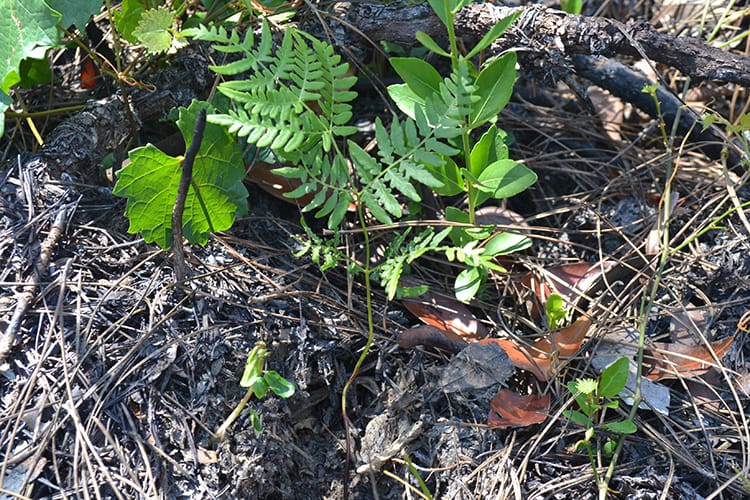
The vegetation response so far has been subtle but interesting. As expected, most of the woody plants that were top-killed have resprouted, although many have not. Some new plants have emerged, and most of them have resprouted from roots or tubers. Among the species that were previously not seen during our thorough pre-burn censuses, but re-emerged from roots or tubers are bracken fern (Pteridium aquilinum), Atlantic pigeon wings (Clitoria americana), and greenbriars (Smilax auriciulata and S. rotundifolia). Several other species not previously seen were found post-fire, but they showed evidence of having above-ground vegetation pre-fire, typically a small burn stem. This suggests that some plants, while not completely subterranean during fire exclusion, had greatly reduced above-ground vegetation to the point of being practically invisible.
Bracken fern emerging following fire at the St. Joseph Buffer Preserve in a plot where it was not seen before the fire.
Also new to the plots were many seedlings, especially at the Weogufka site, some of which were likely in the soil before the fire, and others that may have dispersed to the site following the fire. These plants included various witchgrasses (Dichanthelium) and goldenrods (Solidago), as well as tree species including red maple (Acer rubrum), tulip poplar (Liriodendron tulipifera), sassafras (Sassafras albidum), and some oaks (Quercus).
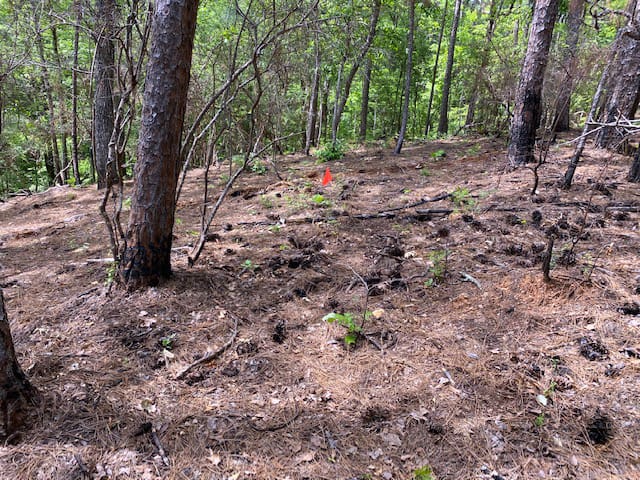
Post-burn plot at mountain longleaf site near Weogufka, Alabama.
As the duff continues to be reduced toward the natural condition of exposed mineral soil, there may be more plants that emerge. In any case, we are poised to learn a great deal about pine community recovery after fire exclusion and reintroduction.
Volunteers are the life blood of any non-profit organization and Tall Timbers would like to recognize some of the volunteers that make our organization better. Our first featured volunteer is David Arnold.
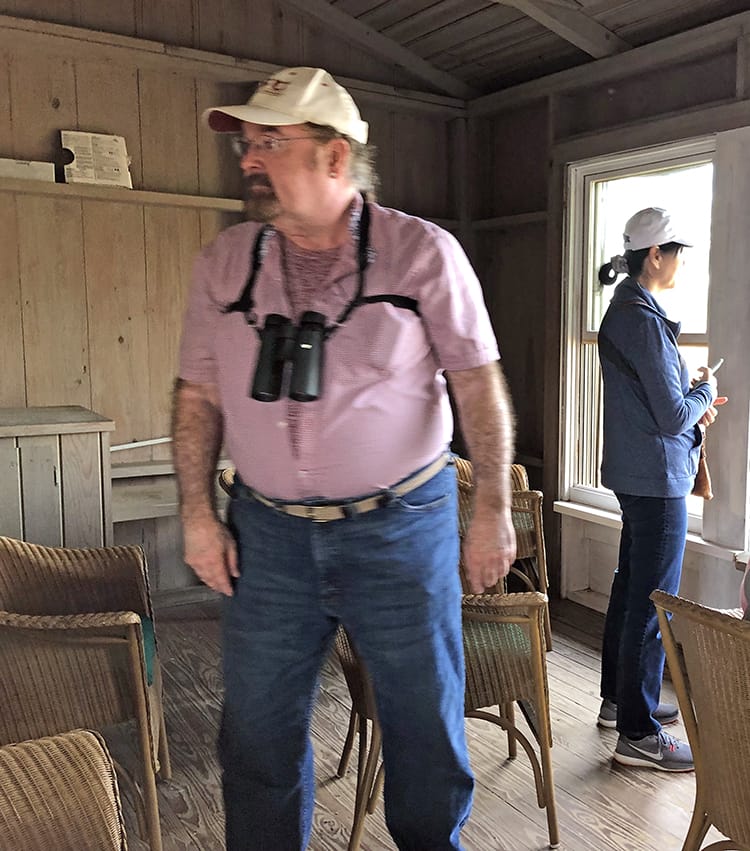
David Arnold at the Gannet Pond Bird Watch with a visitor.
David recently retired from the Florida Fish and Wildlife Conservation Commission (FWC). He came out for a Sunday afternoon Beadel House tour a few years ago and really enjoyed his interaction with the volunteers. He also renewed his acquaintance with Juanita Whiddon, a former FWC co-worker. She asked him to join the group and he came to the next monthly meeting.
As a long-time birder, he was a natural to take over the monthly Sunday afternoon tour stops at the Gannet Pond Bird Watch. David grew up along the Texas Gulf Coast with parents who got into birding when he was a teenager. He is a former president of the Apalachee Audubon Chapter and has also served on the Board of Directors. He enjoys pointing out birds at Tall Timbers to tour visitors, as well as explaining how important it is to have a variety of well-managed habitat types to support a diverse and healthy ecosystem.
David has also studied the history of Tall Timbers; he pitches in with other volunteers for special group tours of Tall Timbers’ historic buildings, and is a big help on volunteer “work days.”
Excellent bobwhite hunting reported and a favorable forecast for breeding
By Dr. Theron Terhune, Game Bird Program Director
Despite not having a good late hatch last breeding season, quail hunting has been exceptional. Reports from several managers in the Red Hills region and Albany area indicate that bird numbers are up 5–10%, with some properties being up as much as 45% in terms of coveys moved per hour. In central Florida and the Carolinas, our study sites also indicate similar good fortune with bird numbers being up >45% on each property being monitored via radio-telemetry. We believe the good bird numbers in the fall along the east Coast are in large part due to excellent chick survival during the 2019 breeding season, resulting in an increase of first-year birds being recruited to the hunting season. This has been substantiated by harvest ratios averaging 75-80% for first-year (juvenile) birds.
Overwinter survival is about average through February on 2 of 3 properties we are monitoring in the Red Hills (62% and 48% at Tall Timbers and Dixie Plantation, respectively), and Albany region (>60%). During our January quail trapping season, we continued to observe high cotton rat numbers, and given the relatively mild winter, we are optimistic for a good carryover of cotton rats, as well as a good carryover of bobwhite to the 2020 breeding season, setting the stage nicely for the upcoming breeding season. However, the same mild conditions profiting cotton rats has apparently affected raptor migration patterns as well, especially Buteos (red-tailed hawks and red-shouldered hawks).
During December, we observed higher overall raptors numbers (see Figure 1– Fall Raptor Counts), especially Butoes, such that migrating hawks stayed in the region longer than usual, likely due to the warm conditions early and presence of a healthy prey base. Contrary to higher Buteo numbers, Accipiter abundance ( e. g. Cooper’s Hawks) has been lower than typical throughout the fall and winter, so far, likely offsetting higher mortality associated with Buteos. The cooler weather observed in January finally compelled many raptors to move farther south; they have not yet begun to migrate back north, resulting in lower than average numbers during the late winter (Jan and Feb) months so far, as indicated by our weekly raptor counts (see Figure 2). Typically, when raptor numbers are lower than normal in January and February, they are higher than normal in March and April. As such, careful consideration to management during the burning season will help to reduce the most important pinch point of the year for bobwhite—the inextricable interaction of burning, bobwhite covey break-up and raptor migration. In addition to broadcast supplemental feeding in good habitat areas, we recommend burning at small scales and distributing timing of burns throughout March, April, and May. This should facilitate keeping as much cover for as long as possible and mediate predation risk of bobwhite until the raptor migration back north is over.
Strong Commitment to Public Trust and Conservation Excellence
One thing that unites us as a nation is land: Americans strongly support saving the open spaces they love. Since 1990, Tall Timbers has been doing just that for the people of the Red Hills region. Now Tall Timbers has been awarded its second land trust accreditation renewal—proving once again that, as part of a network of over 400 accredited land trusts across the nation, it is committed to professional excellence and to maintaining the public’s trust in its conservation work.
“Renewing our accreditation shows Tall Timbers’ ongoing commitment to permanent land conservation in the greater Red Hills region of North Florida and Southwest Georgia,” said Kevin McGorty, Land Conservancy Director. “Our conservation easements protect some of the last remnants of the great longleaf pine forests that once dominated the landscape. In addition, our easements protect rivers, lakes, canopy roads, and working lands that add distinctiveness to the rural character of the Red Hills.” Today, Tall Timbers holds over 142,000 acres under conservation easement, and it owns Tall Timbers Research Station and Dixie Plantation for fire ecology, wildlife and land management research and public outreach.
Old Growth Woods, a 1,108-acre property in Grady County, Georgia owned by June White, Barbara White, Jane White, and family is under conservation easement with Tall Timbers.
Tall Timbers provided extensive documentation and was subject to a comprehensive third-party evaluation prior to achieving this distinction. The Land Trust Accreditation Commission awarded renewed accreditation, signifying its confidence that Tall Timbers’ lands will be protected forever. Accredited land trusts now steward almost 20 million acres—the size of Denali, Yellowstone, Grand Canyon, Glacier, Everglades and Yosemite National Parks combined.
“It is exciting to recognize Tall Timbers’ continued commitment to national standards by renewing this national mark of distinction,” said Melissa Kalvestrand, executive director of the Commission. “Donors and partners can trust the more than 400 accredited land trusts across the country are united behind strong standards and have demonstrated sound finances, ethical conduct, responsible governance, and lasting stewardship.”
Tall Timbers is one of 1,363 land trusts across the United States according to the Land Trust Alliance’s most recent National Land Trust Census. A complete list of accredited land trusts and more information about the process and benefits can be found at www.landtrustaccreditation.org.
The M-CORES program, which includes the proposed Suncoast Connector Toll Road in Jefferson County, passed through the Florida Legislature at breakneck speed with little review or analysis. Tall Timbers has a number of concerns given the potential for significant and wide spread impacts. These include fragmenting public and private conservation lands, robbing business from Main Street Monticello, impacting our rivers and other water resources, and making prescribed fire more difficult and costly.
Join us in asking the Jefferson County Board of County Commissioners to OPPOSE the Suncoast Connector toll road and its path through Jefferson County.
Take action now with our easy email form.
Send an email to all five Jefferson County Board of County Commissioners with one click!
Selected Publications authored by Wildland Fire Science staff.
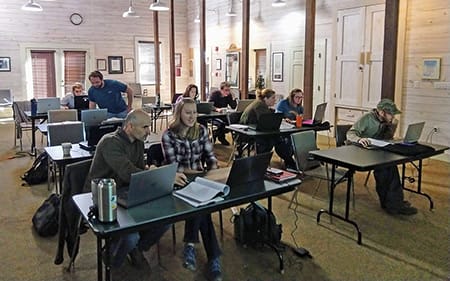
Educating and guiding the next generation of fire researchers and managers is a key goal of Wildland Fire Science and a resource for testing new ideas in fire research.
Tall Timbers hosts the Prescribed Fire Science Consortium, a national network of researchers and managers who promote integrated research and management to advance next generation tools for fire practitioners. https://arcg.is/1DSjDT
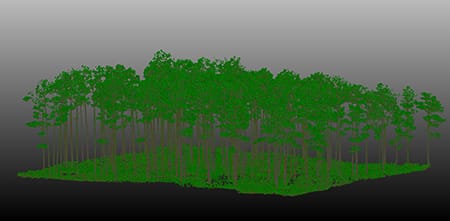
Working with partners in the Prescribed Fire Science Consortium, the program is building nexgen 3-D fuel beds using terrestrial LiDAR and novel sampling techniques to power new fire behavior models for prescribed fire managers. This work links to Tall Timbers work in wildlife habitat usage and ecological forestry.
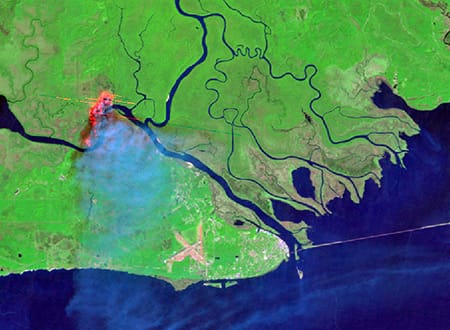
Tall Timbers is leading an effort to map fire regimes at the landscape scale. Staff work with numerous agencies to evaluate fire records and satellite imagery to build this critical conservation database. https://skfb.ly/6DqOY
We are linking physics and field observations to understand the fluid dynamics of fire behavior surface fire regimes. Our work combines field observations using advanced thermal imaging techniques, laboratory studies, and coupled fire-atmospheric modeling to help managers improve outcomes of managed fire regimes.
Burn prioritization modeling seminars and fire modeling tools are supported by Wildland Fire Science to train managers in the important planning stages of prescribed fires.
The conserved lands of the Greater Red Hills region are found on working, income-producing properties that support agriculture, forestry, and recreational hunting. These properties contribute $272 million annually to local economies and support 2,300 jobs. [link to Planning & Advocacy section] The landowners’ strong stewardship ethic preserves their working lands while replenishing drinking water supplies, protecting water quality, and providing wildlife habitat for dozens of rare and endangered species. Tall Timbers’ conservation easements on these working properties encourage landowners to retain their traditional livelihood by keeping farms in family ownership.
Home to world-class wild quail populations, the Greater Red Hills region contains the largest concentration of gamebird preserves in the United States. These preserves also support the largest community of Red-cockaded woodpeckers on private lands. Indicators of high quality habitat found here include the gopher tortoise, Bachman’s sparrow, fox squirrel, and many amphibians. Tall Timbers’ conservation easements identify and protect the critical habitats of these species.
The region also boasts outstanding aquatic resources. Large river systems, like the Flint/Apalachicola, Ochlockonee, and Aucilla, flow from Georgia and feed into the Gulf of Mexico to support some of the world’s most productive estuaries. Large disappearing sinkhole lakes, like Iamonia, Miccosukee, and Jackson, provide habitat for an array of aquatic species and migratory birds. Tall Timbers’ conservation easements protect these vital watersheds and wetlands that are the lifeblood for the ecological health of the region.
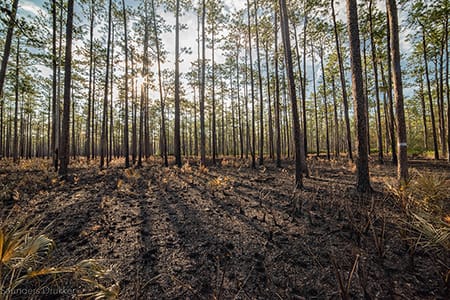
Once dominated by longleaf pine, our pine woodlands support abundant wildlife and local economies. These forests need prescribed fire to stay healthy. Herbert L. Stoddard and his associates Ed and Roy Komarek were pioneers in this emerging scientific field during the mid-20th century. Tall Timbers continues that legacy with applied research on prescribed fire and land management. Today, there is a tremendous need to expand prescribed fire use beyond the Red Hills to ensure ecosystem health and reduce wildfire risk. Additionally, Tall Timbers uses conservation easements to permanently protect private woodlands while balancing the need for economic return from selective timbering.
Tall Timbers hosts the premier fire technology transfer organization—the Southern Fire Exchange. This JFSP funded effort helps connect research to management through webinars, workshops, and support of the Prescribed Fire Science Consortium.
The Longleaf Legacy landscape prescribed fire burn team arm of Wildland Fire Science works directly with landowners and partners to effectively put fire on the ground and promote prescribed fire throughout the region.
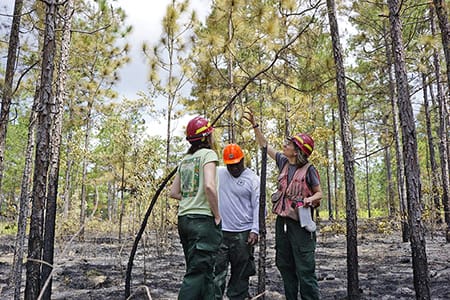
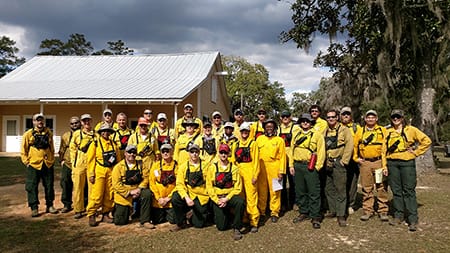
Staff and researchers support Federal fire training by serving as a cadre for NWCG training courses, ranging from basic wildland fire to advanced fire effects.
(PFTC) specializes in training fire fighters the principles and techniques of prescribed fire through practical hands-on experience. https://www.fws.gov/fire/pftc/
Private land owners are the largest source of prescribed fire in the country. These land owners and the culture of fire that was maintained by them during decades of suppression are a part of why Tall Timbers is a world-wide center for prescribed fire science. Workshops and fire training are a critical focus of the Longleaf Legacy Landscape Burn Team and our support of the Georgia Forestry Commission Prescribed Fire Center in Marion County.