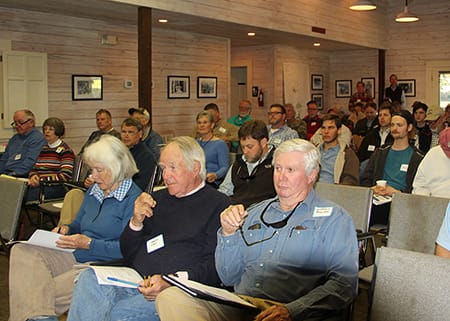
On February 11, 2020, the Suncoast Connector Toll Road Task Force held its fourth meeting, this time in Madison County. The focus of the Task Force meeting was on economic needs across the Task Force planning area, discussion of alternate corridor evaluation, and important natural, cultural, and historic resources to avoid as routes for the proposed toll road are evaluated.
Tall Timbers has followed the M-CORES process closely since its inception and remains concerned about the proposed toll road’s potential impacts to wildlife habitat, our region’s water resources, Jefferson County’s archaeological treasures, and Main Street communities like Monticello. It’s worth noting that Tall Timbers has consistently supported smart growth that enhances our economy, protects our environment and preserves community character. We supported the four-laning of US 319 and advocated for a “parkway” design that would be compatible with the road’s rural surrounding. We also supported the passage of Blueprint 2000 to address urban infrastructure needs in Leon County while protecting water quality and creating needed community parks.
Regarding the Suncoast Connector Toll Road, Tall Timbers believes that we should address the transportation needs in Citrus County in the southernmost portion of the study area. Citrus County is unlike the other seven counties in the study area: It is fast growing, rapidly urbanizing, and its population exceeds the combined population of the other seven counties in the study area.
North of Citrus County, the existing US 19 corridor is highly underutilized and is not in need of new tolled travel lanes. Much of the US 19 corridor itself is already susceptible to storm surge and sea level rise and placing costly new transportation infrastructure in this vulnerable area is imprudent. In addition, some Task Force members have noted that adding additional tolled travel lanes to US 19, so far west of Interstate 75, will have little impact relieving congestion on I-75. They note that the majority of trips on that route continue north toward Atlanta or east to Jacksonville. If additional capacity is desired in or near the Suncoast Connector planning area, it should be built well east of the vulnerable Big Bend region, in closer proximity to Interstate 75.
The most important upcoming event related to M-CORES is the fifth Task Force meeting, which will be held on March 24 in Jefferson County. This will be the only Task Force meeting in Jefferson County and thus the best opportunity for the Task Force to hear your voice! The meeting will be held at the Monticello Church of the Nazarene from 10:00 AM until 4:00 PM at 1590 North Jefferson Street, Monticello, Florida. Public comments will begin at 4:00 PM and we encourage you to arrive early to get a seat and let your voice be heard.
Also, if you have not already done so, we encourage you to join the nearly 1,000 concerned citizens who have signed up to receive periodic updates from Tall Timbers about this project.
For additional information, contact Red Hills Planning Coordinator Neil Fleckenstein or Tall Timbers CEO/President Bill Palmer.
Trophy catches happen with bird banding just as infrequently as they happen with fishing and hunting
By Jim Cox, Stoddard Bird Lab Director
In July 2017, the Stoddard Bird Lab was working on a genetics project that required netting and securing DNA samples from lots of Bachman’s Sparrows in peninsular Florida. The study was an extension of some previous work we’d done with Dr. Sabrina Taylor and her students at Louisiana State University, but the effort that summer yielded a big surprise.
One of the males we netted in central Florida turned out to be a big trophy catch because it’s plumage characteristics typically associated with sparrow populations found far north and west of central Florida. The feathers lacked the black centers commonly found in the other males we netted nearby, and the tone of the back, head, and wing feathers was much brighter with distinct orange hues (Fig 1A). Bachman’s Sparrows exhibit striking variation in plumage throughout their North American range, and the male we netted in central Florida that day had characteristics described for sparrow populations that breed much further north and west of peninsular Florida.
A. Unusual territorial male Bachman’s Sparrows netted on Starkey Wilderness Preserve, July 2017. B. Typical central Florida plumage also netted on Starkey Wilderness Preserve, July 2017 (Pasco Co., FL)
This unusual catch could help to explain some of the results we’ve seen in our genetic work with this species. Despite the presence of distinctive feather colors among populations that are separated by large, geographic barriers (e.g., Mississippi River), there is no hint of any genetic differences among these populations. The genetic data suggest regular exchanges are taking place across broad geographic areas, and this trophy catch may simply have been the first visual documentation that we have of that type of regular exchange. We suspect this male moved into central Florida from Oklahoma, Arkansas, or another distant location, and then decided to test his luck with the locals. More details are provided in an upcoming issue of the Florida Field Naturalist.
Photographer Beate Sass returns to Tall Timbers for a one woman exhibit of her last ten years of work. The exhibit opens at the Webster Art Gallery Saturday, March 7, with a “Meet the Artist” reception from 3:00‒5:00 p.m. The public is invited to attend.
About 11 years ago, Tall Timbers was privileged to work with Beate Sass, a gifted photographer living in Tallahassee, who was interested in our tenant farm restoration project. Not only did she document the historic structures and artifacts, but she also did portrait studies of former tenant family members who had lived on Tall Timbers Plantation. Beate asked each one to bring an object that they felt connected them with the project, and incorporated the object into the portrait narrative. The photographic portion of the restoration culminated in a memorable exhibit at LeMoyne Arts in 2010.
Shortly after the close of this exhibit, Beate and her family moved to Decatur, Georgia when her husband accepted a position at Georgia State University. Beate quickly integrated into the metro Atlanta professional photography world. Soon she was involved with a project called We Are Decatur. The small city of Decatur, county seat of DeKalb County, was a microcosm of what had happened all over metro Atlanta for the past 50 plus years. Regardless of race, religion, gender or ethnicity, people were living and working respectfully together, and were bringing prosperity to what had been a depressed area of the city. Eight of these powerful images will be part of the Tall Timbers exhibit.
Sharian Rugs is the oldest family business in the City of Decatur. It has prospered since it was founded in 1931 by Bedros and Paul Sharian’s parents, who were Armenian immigrants. Paul and Bedros joined the family business as young men and took over the operation from their parents in the 1950s. Despite being in their nineties, Bedros and Paul continue to come into the office on a daily basis but have passed the management on to their children and grandchildren.
On a more personal level, Beate decided to document her 90 year-old father’s life. Too often, in our society’s emphasis on youth, we forget that our seniors live meaningful lives. Beate used her skill and artistry with the camera to bring her father’s simple daily activities into stunning focus. Ten images will be displayed as part of this collection.
One image of her current work in progress—documenting the now-closed United Methodist Children’s Home in Decatur, Georgia—will be included in this show. This project includes photographs of and stories about the former residents, employees and volunteers of the Children’s Home, which is now owned by the city of Decatur.
Finally, a number of the Tall Timbers images featured in the LeMoyne exhibit will be reintroduced. The staff and volunteers have looked forward to bringing Beate back to Tall Timbers to exhibit her work.
The Webster Art Gallery, in the historic Beadel House at Tall Timbers, is open to the public on Tuesdays and Thursdays from 2:00‒4:00 p.m. Questions regarding access and special tour times should be directed to curator, Juanita Whiddon at 850-566-3390. The Beate Sass photography exhibit continues through the end of May.
The M-CORES program, which includes the proposed Suncoast Connector Toll Road in Jefferson County, passed through the Florida Legislature at breakneck speed with little review or analysis. Tall Timbers has a number of concerns given the potential for significant and wide spread impacts. These include fragmenting public and private conservation lands, robbing business from Main Street Monticello, impacting our rivers and other water resources, and making prescribed fire more difficult and costly.
Join us in asking the Jefferson County Board of County Commissioners to OPPOSE the Suncoast Connector toll road and its path through Jefferson County.
Take action now with our easy email form.
Send an email to all five Jefferson County Board of County Commissioners with one click!
Selected Publications authored by Wildland Fire Science staff.
Educating and guiding the next generation of fire researchers and managers is a key goal of Wildland Fire Science and a resource for testing new ideas in fire research.
Tall Timbers hosts the Prescribed Fire Science Consortium, a national network of researchers and managers who promote integrated research and management to advance next generation tools for fire practitioners. https://arcg.is/1DSjDT
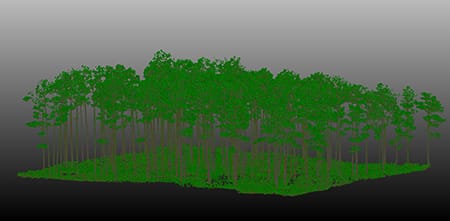
Working with partners in the Prescribed Fire Science Consortium, the program is building nexgen 3-D fuel beds using terrestrial LiDAR and novel sampling techniques to power new fire behavior models for prescribed fire managers. This work links to Tall Timbers work in wildlife habitat usage and ecological forestry.
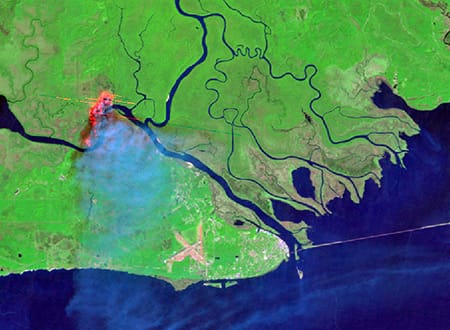
Tall Timbers is leading an effort to map fire regimes at the landscape scale. Staff work with numerous agencies to evaluate fire records and satellite imagery to build this critical conservation database. https://skfb.ly/6DqOY
We are linking physics and field observations to understand the fluid dynamics of fire behavior surface fire regimes. Our work combines field observations using advanced thermal imaging techniques, laboratory studies, and coupled fire-atmospheric modeling to help managers improve outcomes of managed fire regimes.
Burn prioritization modeling seminars and fire modeling tools are supported by Wildland Fire Science to train managers in the important planning stages of prescribed fires.
The conserved lands of the Greater Red Hills region are found on working, income-producing properties that support agriculture, forestry, and recreational hunting. These properties contribute $272 million annually to local economies and support 2,300 jobs. [link to Planning & Advocacy section] The landowners’ strong stewardship ethic preserves their working lands while replenishing drinking water supplies, protecting water quality, and providing wildlife habitat for dozens of rare and endangered species. Tall Timbers’ conservation easements on these working properties encourage landowners to retain their traditional livelihood by keeping farms in family ownership.
Home to world-class wild quail populations, the Greater Red Hills region contains the largest concentration of gamebird preserves in the United States. These preserves also support the largest community of Red-cockaded woodpeckers on private lands. Indicators of high quality habitat found here include the gopher tortoise, Bachman’s sparrow, fox squirrel, and many amphibians. Tall Timbers’ conservation easements identify and protect the critical habitats of these species.
The region also boasts outstanding aquatic resources. Large river systems, like the Flint/Apalachicola, Ochlockonee, and Aucilla, flow from Georgia and feed into the Gulf of Mexico to support some of the world’s most productive estuaries. Large disappearing sinkhole lakes, like Iamonia, Miccosukee, and Jackson, provide habitat for an array of aquatic species and migratory birds. Tall Timbers’ conservation easements protect these vital watersheds and wetlands that are the lifeblood for the ecological health of the region.
Once dominated by longleaf pine, our pine woodlands support abundant wildlife and local economies. These forests need prescribed fire to stay healthy. Herbert L. Stoddard and his associates Ed and Roy Komarek were pioneers in this emerging scientific field during the mid-20th century. Tall Timbers continues that legacy with applied research on prescribed fire and land management. Today, there is a tremendous need to expand prescribed fire use beyond the Red Hills to ensure ecosystem health and reduce wildfire risk. Additionally, Tall Timbers uses conservation easements to permanently protect private woodlands while balancing the need for economic return from selective timbering.
Tall Timbers hosts the premier fire technology transfer organization—the Southern Fire Exchange. This JFSP funded effort helps connect research to management through webinars, workshops, and support of the Prescribed Fire Science Consortium.
The Longleaf Legacy landscape prescribed fire burn team arm of Wildland Fire Science works directly with landowners and partners to effectively put fire on the ground and promote prescribed fire throughout the region.
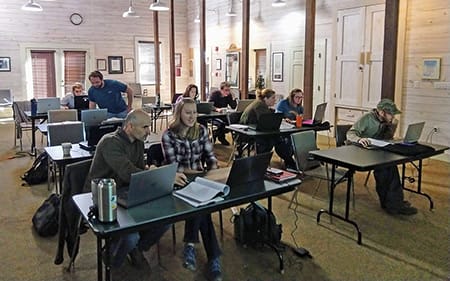
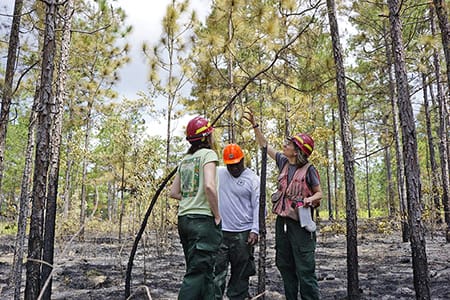
Staff and researchers support Federal fire training by serving as a cadre for NWCG training courses, ranging from basic wildland fire to advanced fire effects.
(PFTC) specializes in training fire fighters the principles and techniques of prescribed fire through practical hands-on experience. https://www.fws.gov/fire/pftc/
Private land owners are the largest source of prescribed fire in the country. These land owners and the culture of fire that was maintained by them during decades of suppression are a part of why Tall Timbers is a world-wide center for prescribed fire science. Workshops and fire training are a critical focus of the Longleaf Legacy Landscape Burn Team and our support of the Georgia Forestry Commission Prescribed Fire Center in Marion County.