By Kevin Robertson, PhD, Fire Ecology Program Director
As part of our effort to better understand the growth of wiregrass (Aristida stricta var. beyrichiana), we excavated several individuals of different sizes from plots planted on Tall Timbers a couple of decades ago, for closer examination. Wiregrass is what is called a “cespitose grass,” which means it has rhizomes that grow slowly outward in a ring. Rhizomes are thick root-like structures that horizontally near the surface, from which the grass blades grow upward and roots grow downward. We confirmed that wiregrass, like other like other cespitose grasses, have rhizomes that are connected at first but become disconnected rather early in the life of the tussock (bunch or clump). So, what looks like one wiregrass tussock is really several independent but genetically identical groups of rhizomes, called “ramets,” growing parallel to each other, outward in a circle. Their roots are highly intermingled, which may be a way of reducing competition among them. The front end of each rhizome grows and produces new shoots and roots while the back end eventually stops producing and then dies and disintegrates, leaving the empty circle often seen in wiregrass tussocks. Eventually the ramets grow far enough apart to begin sending rhizomes in all directions to form a new tussock. In this way, wiregrass can clonally reproduce in addition to reproducing by seed, although the process is very slow, seemingly several decades.
Side of an excavated wiregrass tussock showing the individual ramets growing outward.
Side view of a ramet showing its front end producing shoots and roots and its back end that has stopped producing.
Underside of an excavated wiregrass tussock showing the highly intermingled roots of the ramets.
Fabulous Bobwhite Chick Survival Indicates Good Hunting Numbers
By Theron Terhune, Game Bird Program Director
The 2019 breeding season is well behind us, and many bird dogs have now had the opportunity to knock off the rust from last year, hot on the trail for a covey’s scent. Despite the late-season conditions hampering the late hatch production, covey call counts in October and November have indicated that bobwhite numbers this year are just fine, notwithstanding the drought in July‒September. Early hunting reports throughout the Red Hills and Albany regions have corroborated what the birds have been preaching over the past several weeks at sunrise: bobwhite numbers are up as much as 35% on some properties from last year!
Despite getting out the gate fast, overall production in the Red Hills was lower this year compared to our long-term average. In the Red Hills region, we often experience a good late-season push, which makes up a good portion of the total season’s production. But, this year the birds seemed to run out of steam by August. So how did bird numbers remain the same or even increase this year?
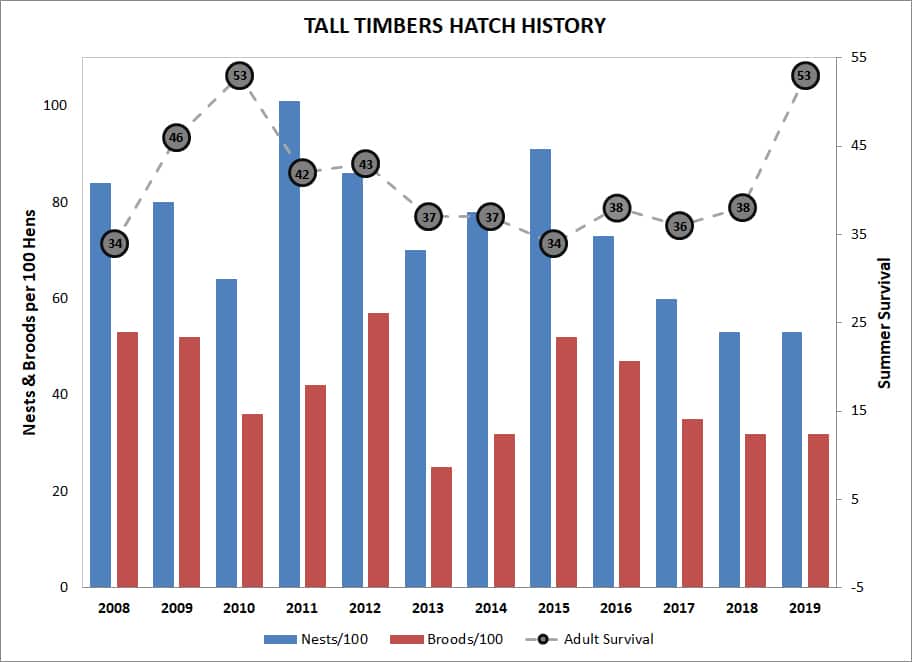
While per capita nest and brood production was slightly below average (see Figure 1), adult survival was well above average, and a moderate late hatch was observed with a few broods hatching in late September. The higher than normal adult survival may be explained by the high cotton rat numbers, especially early-to-mid breeding season (April through July). Even better news is that chick survival was higher this year than we have ever recorded, since we have been radio-tagging chicks. This good chick fortune is likely a combination of factors (high rat numbers, low and timely rainfall, abundant food resources, etc.), which was a much needed blessing to compensate for the lower than usual nest and brood production. Good chick survival also seems to have fueled larger than average covey sizes so far this fall! During our fall trapping, we captured a higher proportion of banded chicks tagged this past summer than in previous years.
Figure 1. Tall Timbers hatch history showing per capita production (nests and broods produced per 100 hens alive on 1 April) and adult survival during 2008 to 2019.
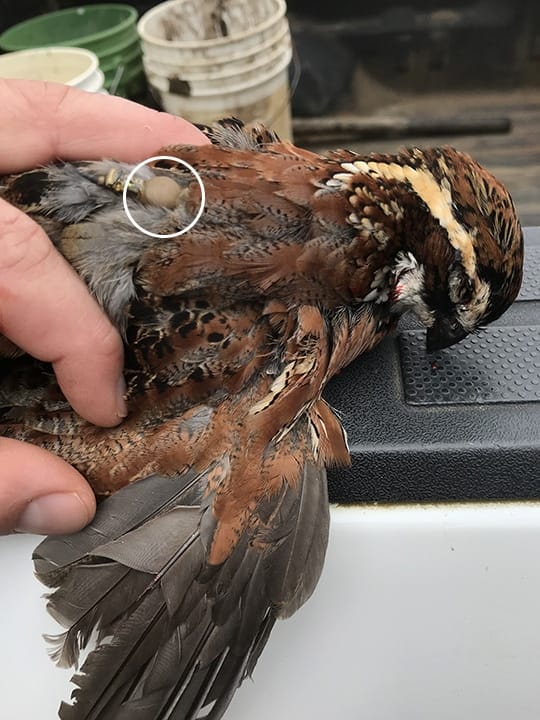
Speaking of chicks. This past weekend a male bobwhite was harvested on Dixie Plantation that hatched 27 July 2018, and was banded and radio-tagged (see picture), on 9 August 2018—and the chick was still toting the suture-tag. Not only is this bird more than 1-year-old, but this marks the oldest chick recovered with a sutured radio-tag to date. We have been saying for a couple years now that a 10% change in chick survival can net as much as a 24% gain in fall abundance. I think we just might reap the benefits of fabulous chick survival this hunting season!
Artist’s Choice Exhibit at Tall Timbers’ Webster Art Gallery
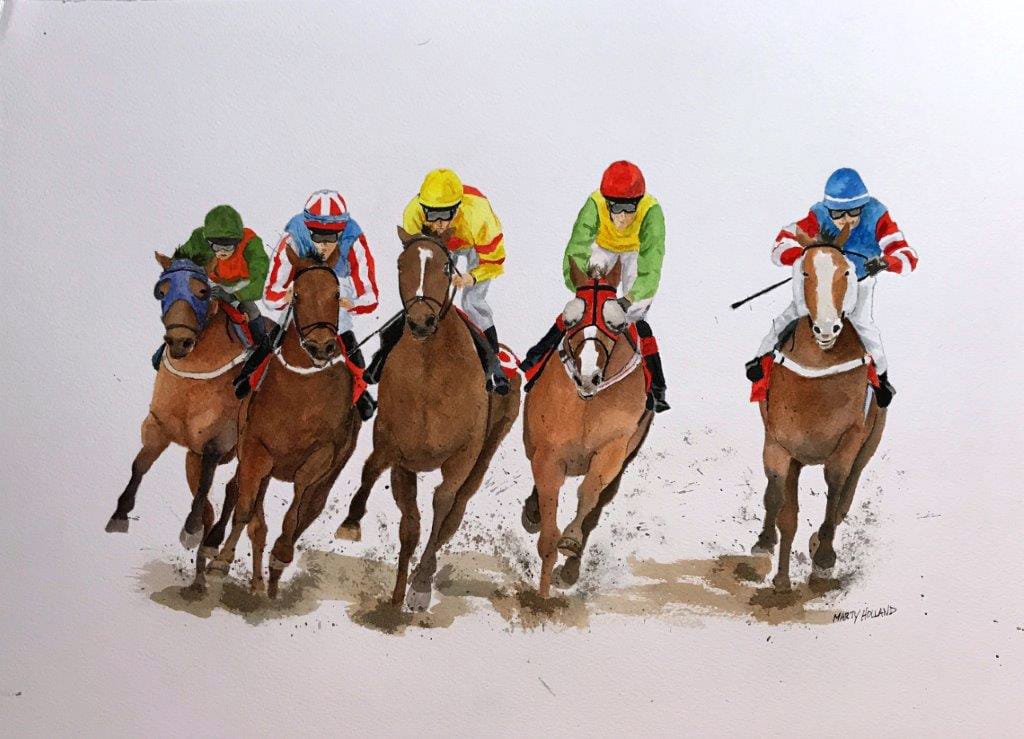
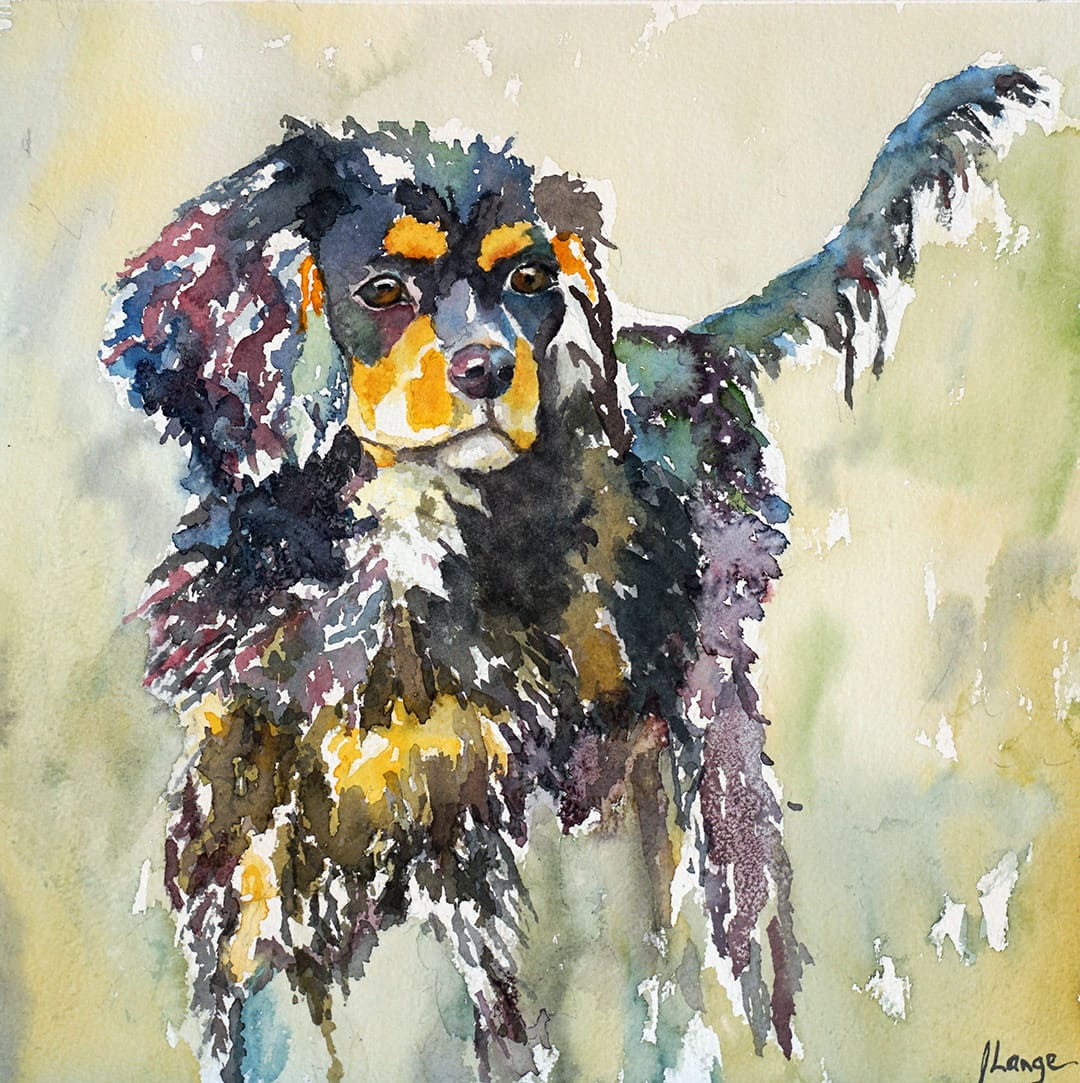
The Artist’s Choice Exhibit opens Sunday, December 8, 2019, and runs through the end of February. It features painting from members of the Tallahassee Area Watercolor Society. The Webster Art Gallery is located upstairs on the second floor of the historic Beadel House. The second floor is not handicap accessible.
Join us for the opening reception Sunday, December 8 from 2:00 – 4:00 p.m. (The opening reception is combined with Tallahassee Area Watercolor Society annual holiday social.)
Annual membership gifts help support the day-to-day operations of Tall Timbers and are the lifeblood of our organization. As a charitable nonprofit, Tall Timbers relies on the generous financial support of our members to help sustain the important research, conservation and education programs within the organization. Visit our Donate page to see how you can support Tall Timbers.
Stoddard Bird Lab to Study Fire Effects on Coastal Marsh Bird Species
By Jim Cox, Stoddard Bird Lab Director
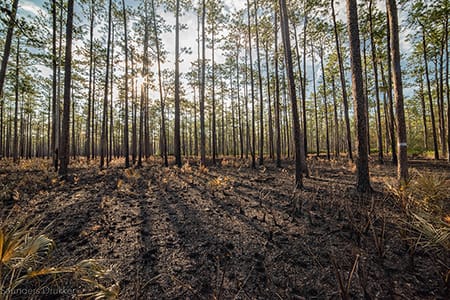
Fire has had an effect on almost every natural ecosystem found in Florida and southern Georgia. The frequency with which fires returned to some habitat types may not have been as regular as that needed to maintain our upland pinelands, but return it did at some point, and of course likely had an effect on habitat quality for several key species.
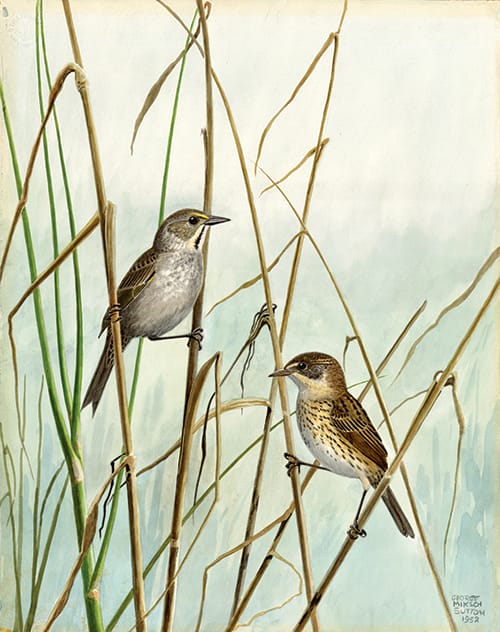
Watercolor of Seaside Sparrows by George M. Sutton, painted as an illustration for the book, Georgia Birds, by Thomas D. Burleigh, published in 1958.
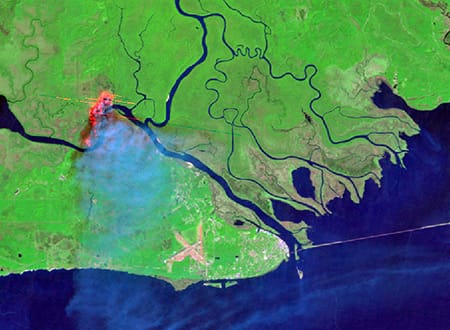
Thanks to a new grant from the National Oceanic and Atmospheric Administration’s RESTORE Science Program, the Stoddard Bird Lab will be studying the effects that fire has in coastal marshes along Florida’s Big Bend Coast. Lots of evidence suggests fires worked into these areas from adjacent pinelands, but how frequently and with what benefits for species such as Black Rail, Yellow Rail, Mottled Duck, Seaside Sparrow, and others is unknown.
The award supports five years of research to learn more about these effects. We’ll be getting our feet a bit more wet regularly, but the support extends our reach and doesn’t mean a drop in the work we’re doing with the beautiful pine forests of the Red Hills region. We’ll have support for a full-time project manager, as well as seasonal field crews. We also plugged in support for our burn teams so that they can help conduct some of the experimental burns needed in these coastal areas.
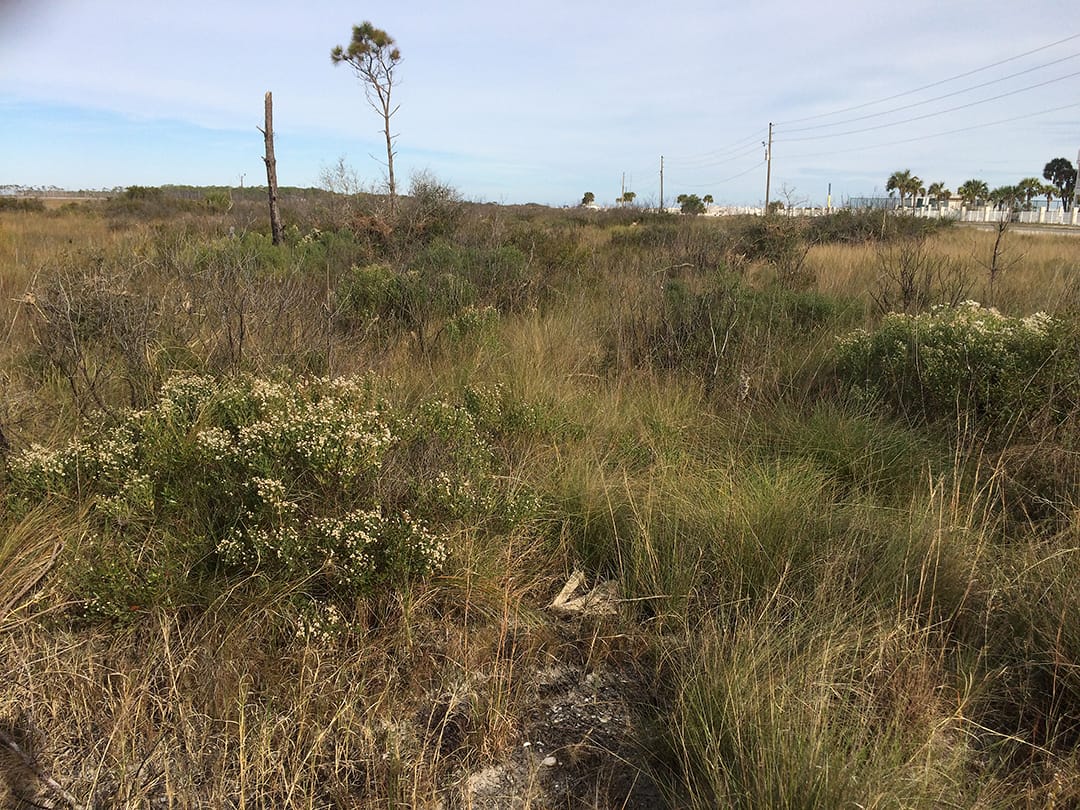
Of key interest will be effects on Black Rail, one of the most secretive bird species we have in North America. They use coastal areas throughout Georgia and Florida, and are under review for listing as an imperiled species, but information on how best to manage sites for this species are woefully inadequate. Some of the highest counts come from areas where fires are used regularly to burn the marsh habitat rails occupy. But is it best to burn such sites every year, every other year, or perhaps every 3-4 years? This is one of the questions we hope to address. One of the key issues is promoting the grass cover favored by rails in these areas, while controlling encroaching shrubs (such as the wax myrtles and baccharis shown in this picture on St. George Island).
The M-CORES program, which includes the proposed Suncoast Connector Toll Road in Jefferson County, passed through the Florida Legislature at breakneck speed with little review or analysis. Tall Timbers has a number of concerns given the potential for significant and wide spread impacts. These include fragmenting public and private conservation lands, robbing business from Main Street Monticello, impacting our rivers and other water resources, and making prescribed fire more difficult and costly.
Join us in asking the Jefferson County Board of County Commissioners to OPPOSE the Suncoast Connector toll road and its path through Jefferson County.
Take action now with our easy email form.
Send an email to all five Jefferson County Board of County Commissioners with one click!
Selected Publications authored by Wildland Fire Science staff.
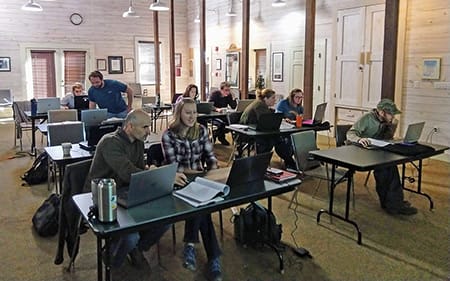
Educating and guiding the next generation of fire researchers and managers is a key goal of Wildland Fire Science and a resource for testing new ideas in fire research.
Tall Timbers hosts the Prescribed Fire Science Consortium, a national network of researchers and managers who promote integrated research and management to advance next generation tools for fire practitioners. https://arcg.is/1DSjDT
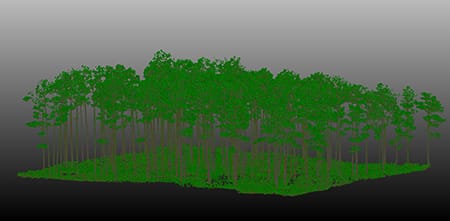
Working with partners in the Prescribed Fire Science Consortium, the program is building nexgen 3-D fuel beds using terrestrial LiDAR and novel sampling techniques to power new fire behavior models for prescribed fire managers. This work links to Tall Timbers work in wildlife habitat usage and ecological forestry.
Tall Timbers is leading an effort to map fire regimes at the landscape scale. Staff work with numerous agencies to evaluate fire records and satellite imagery to build this critical conservation database. https://skfb.ly/6DqOY
We are linking physics and field observations to understand the fluid dynamics of fire behavior surface fire regimes. Our work combines field observations using advanced thermal imaging techniques, laboratory studies, and coupled fire-atmospheric modeling to help managers improve outcomes of managed fire regimes.
Burn prioritization modeling seminars and fire modeling tools are supported by Wildland Fire Science to train managers in the important planning stages of prescribed fires.
The conserved lands of the Greater Red Hills region are found on working, income-producing properties that support agriculture, forestry, and recreational hunting. These properties contribute $272 million annually to local economies and support 2,300 jobs. [link to Planning & Advocacy section] The landowners’ strong stewardship ethic preserves their working lands while replenishing drinking water supplies, protecting water quality, and providing wildlife habitat for dozens of rare and endangered species. Tall Timbers’ conservation easements on these working properties encourage landowners to retain their traditional livelihood by keeping farms in family ownership.
Home to world-class wild quail populations, the Greater Red Hills region contains the largest concentration of gamebird preserves in the United States. These preserves also support the largest community of Red-cockaded woodpeckers on private lands. Indicators of high quality habitat found here include the gopher tortoise, Bachman’s sparrow, fox squirrel, and many amphibians. Tall Timbers’ conservation easements identify and protect the critical habitats of these species.
The region also boasts outstanding aquatic resources. Large river systems, like the Flint/Apalachicola, Ochlockonee, and Aucilla, flow from Georgia and feed into the Gulf of Mexico to support some of the world’s most productive estuaries. Large disappearing sinkhole lakes, like Iamonia, Miccosukee, and Jackson, provide habitat for an array of aquatic species and migratory birds. Tall Timbers’ conservation easements protect these vital watersheds and wetlands that are the lifeblood for the ecological health of the region.
Once dominated by longleaf pine, our pine woodlands support abundant wildlife and local economies. These forests need prescribed fire to stay healthy. Herbert L. Stoddard and his associates Ed and Roy Komarek were pioneers in this emerging scientific field during the mid-20th century. Tall Timbers continues that legacy with applied research on prescribed fire and land management. Today, there is a tremendous need to expand prescribed fire use beyond the Red Hills to ensure ecosystem health and reduce wildfire risk. Additionally, Tall Timbers uses conservation easements to permanently protect private woodlands while balancing the need for economic return from selective timbering.
Tall Timbers hosts the premier fire technology transfer organization—the Southern Fire Exchange. This JFSP funded effort helps connect research to management through webinars, workshops, and support of the Prescribed Fire Science Consortium.
The Longleaf Legacy landscape prescribed fire burn team arm of Wildland Fire Science works directly with landowners and partners to effectively put fire on the ground and promote prescribed fire throughout the region.
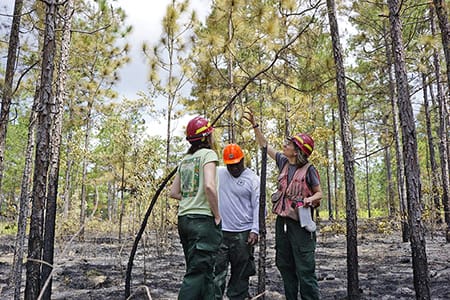
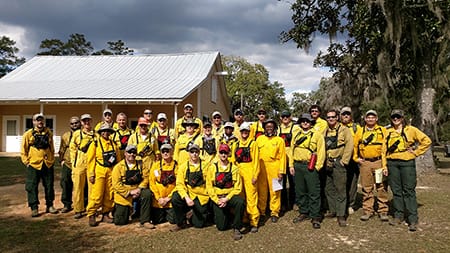
Staff and researchers support Federal fire training by serving as a cadre for NWCG training courses, ranging from basic wildland fire to advanced fire effects.
(PFTC) specializes in training fire fighters the principles and techniques of prescribed fire through practical hands-on experience. https://www.fws.gov/fire/pftc/
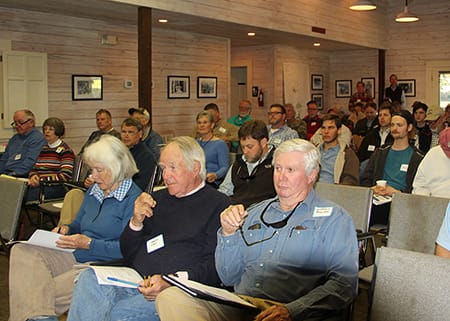
Private land owners are the largest source of prescribed fire in the country. These land owners and the culture of fire that was maintained by them during decades of suppression are a part of why Tall Timbers is a world-wide center for prescribed fire science. Workshops and fire training are a critical focus of the Longleaf Legacy Landscape Burn Team and our support of the Georgia Forestry Commission Prescribed Fire Center in Marion County.