A recent proposal by landowner Jeff Phipps to build a 5.3 mile, two-lane toll road through his Orchard Pond Plantation has gained financial support from the Florida Department of Transportation (DOT). The State Infrastructure Bank at Florida DOT has approved a $10.5 million loan with the remainder of the estimated $17 million project to be funded by Mr. Phipps. The toll road will connect Meridian Road and Old Bainbridge Road.
In a recent article in the Tallahassee Democrat, Mr. Phipps commented that “The reason I’m doing this is I’m afraid the county or some public agency will [build the highway] sometime down the road and it won’t be done properly; [government agencies] tend to do the bare minimum. What we’re hoping to do is put in a lot of good aesthetics and controls."
Tall Timbers shared its concerns with Mr. Phipps that this proposal could directly contribute to sprawling urban growth that could fragment portions of the Red Hills region in Leon County. Mr. Phipps expressed his personal opposition to urban sprawl and described his plan to build what he described as an environmentally friendly road.
Recently, several agencies submitted comments about the proposed toll road to the State Clearinghouse at the Florida Department of Environmental Protection. The Tallahassee-Leon County Planning Department stated that its primary concern is expanding infrastructure outside of the Urban Service Area. The Planning Department noted that the increased service provided by an improvement like the Orchard Pond Toll Road could encourage sprawling development in rural areas, which is inconsistent with the goals of the Comprehensive Plan. The Planning Department offered that this concern could be addressed by prohibiting future roadway and driveway connections to the new toll road.
Tall Timbers also submitted comments to the State Clearinghouse on the proposed road, highlighting the same concerns about the potential for the new road to encourage low density, sprawling growth in the Red Hills. Tall Timbers included suggestions for improving the existing Orchard Pond Road or constructing the new toll road and simultaneously protecting adjacent land with a conservation easement. A conservation easement would help achieve Mr. Phipps goal of an environmentally friendly roadway and would also prevent fragmentation of the landscape.
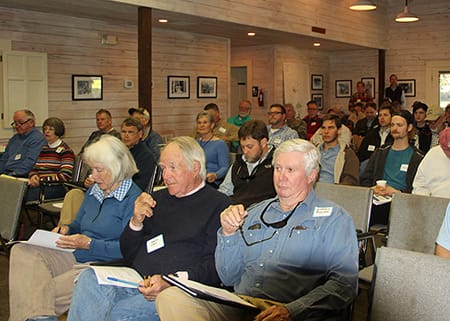
On November 8, the Leon County Board of Commissioners heard an update on the proposed Orchard Pond Toll Road. Commissioners were generally supportive of the concept. Commissioners Dozier and Maddox both commented on the importance of adhering to the Comprehensive Plan and not encouraging growth outside the Urban Service Area. Validating Tall Timbers concerns that this project could lead to sprawling growth, one commissioner commented that this was a great opportunity to open this rural area of Leon County for more residential, commercial, and school development. He noted that the new road should be four-lanes not two, should be funded in part by the extension of Blueprint 2000, and should not be a tolled facility.
Consultants for the proposed toll road will now focus on the project development and environment study, work on a detailed traffic and revenue study, and eventually move to the design phase of the project. There will be an opportunity for public comment on the project at a hearing in January, 2012.
For additional information, contact Neil Fleckenstein at 850-893-4153, ext. 335.
Slurp, Ahhhh, how I love sweet tea. As you well know the best sweet tea is found in the South! And, real sugar is the key to making quality sweet tea – forget all those sweetener alternatives, Aspartame, Splenda, and the like… they just aren’t the same. I was at a restaurant in Maryland a few weeks ago, and I asked if they had sweet tea; I should have known the obvious, natural response, "Nope, but we have un-sweet tea with sugar and sweetener right there." I’ll have water thank you very much. Now don’t get me wrong, there are obvious advantages to these sweeteners like fewer calories, but personally I simply don’t wish to settle for anything less than the "real" deal.
I have to say, I am so privileged to become a part of a such premier research station. From the scientists to the staff to the phenomenal views and thundering covey rises, Tall Timbers Research Station & Land Conservancy is the REAL DEAL! During the past three years as a post-doctorate scholar here at Tall Timbers, and already during the past couple of months in this new position, I have quickly learned that the success of Tall Timbers is rooted in the steadfastness of its contributors and members as well as the generosity of the plantation community who are willing to help out, share management knowledge (or secrets; well, at least some of them) and open up their properties for research, conservation, and educational purposes.
The Red Hills region is steeped in tradition and is in its own right unique, picturesque and richly diverse. Here there not only exists a cornucopia of flora (plant) and fauna (wildlife) but a wealth of land management knowledge and a stalwart, communal effort for conservation. With that said, I am struggling with whether this is going to make my job as an Outreach Coordinator easier or more difficult. What can an Outreach Program possibly do to benefit an already thriving region and community? In my mind, this is a question that can only adequately be answered as we move forward and continue to get to know one another and continue to cooperatively work together.
I hope to be able to benefit the Red Hills and Albany area communities by working closely with plantation owners, land managers, and conservation enthusiasts to develop resource and land management tools to save them time and money; improve communication among landowners, managers and other properties; increase the link between land management and research; and provide a conduit for information exchange. An example concept is hosting Land Managers’ Luncheons to come together more frequently as a plantation community, while learning about new tools available for land management. For more information about some of these ideas you can visit us on the Outreach web page. As we continue to develop and refine the Outreach Program over the course of the next several months, we hope to glean valuable insight from the Red Hills and greater Albany communities as to how we can better serve you through resource and land management tools, and educational and extension services.
I am excited about the vast research, conservation and outreach opportunities we have in this wonderful region and at Tall Timbers, and I am especially excited to get to know you and learn more about where you are, what you do, and how you do it. Although I come in afresh to this position with several novel ideas and perhaps grand visions of what could be, I DO NOT want to provide unnecessary alternatives to what is already the "real" deal. My intent as the Outreach Coordinator is to "keep it real" with no gimmick-alternatives, no additives and no preservatives, but I can’t possibly imagine being successful without your help! Please contact me with any thoughts or ideas that you might have where we can better serve you and the Red Hills community . . . OR, call me (850.893.4153, x268) . . . I’d love to sit down with you and have a nice cold glass of sweet tea and chat about quail, land management or the like.
Tall Timbers is pleased to introduce Dr. Theron M. Terhune, our new Outreach Coordinator, who officially joined our staff October 1. Establishing this position is a goal of our 2010-2019 Strategic Plan to develop effective outreach, education and communication programs…. With Dr. Terhune at the helm, we are excited to embark on the expansion of our outreach, extension and education efforts.
Some of you may already be familiar with Theron, despite his rather unfamiliar name, through his involvement with Tall Timbers at varying levels during the past 10 years. He received both a Bachelor of Science and Master’s Degree in Wildlife Sciences at Auburn University. However, prior to starting his graduate work, Theron worked for Pineland Plantation and the Albany Quail Project, where he gained invaluable field experience implementing basic habitat management actions, such as prescribed burning and woodland management, as well as assisting with traditional quail hunting on the property.
For his Master’s research, Theron worked with Clay Sisson, at the Albany Quail Project, investigating male bobwhite call counts in relation to timing of nest-incubation and fall population size. In 2008, Theron graduated from the University of Georgia (UGA) with a PhD in Forestry and Natural Resources; there, his dissertation research focused on the "Effects of Translocation on Population Genetics and Demographics of a Northern Bobwhite Population Located in a Fragmented Landscape in Southwest Georgia." Theron’s translocation research, conducted in cooperation with Clay Sisson, Bill Palmer and the Georgia Department of Natural Resources, served as the impetus for the development of many state-initiated translocation protocols, whereby findings from his work provide the scientific underpinnings for many of the criteria stipulated within these protocols. More recently during 2008-2010, Dr. Terhune served as a post-doctorate scholar here at Tall Timbers working with Dr. Bill Palmer to revise the National Bobwhite Conservation Initiative, a national strategic plan for recovering bobwhites and grassland songbirds range-wide.
Perhaps as unique as his name, Theron has a broad set of research interests, expertise, and hobbies, far too many to name here (you can read more about Theron and other Tall Timbers staff on our "new" website). He enjoys many kinds of hunting, especially traditional bow hunting, fishing and generally just being outdoors. As you will quickly learn, Theron loves to help folks so feel free to contact him with any of your outreach-, extension-, or education-related needs!
The latest drought projections have been released as we move into the winter period. La Niña conditions, although not as strong as last year, continue to strengthen. These conditions lead to warm and dry weather in north Florida. A significant part of our area, north Florida and southwest Georgia, is under extreme drought conditions based on the current Palmer Drought Index Map (http://droughtmonitor.unl.edu/). These conditions also raise the index for wildland fire potential to above normal.
Typically however, this region does not experience the wildfire problems that other areas experience because of the aggressive prescribed burning programs that many landowners use. Although fuel loads are somewhat lower because of poor growing conditions this summer, increased drying conditions may cause more intense fire behavior when conducting prescribed burns this coming spring on 2-year or longer roughs. This will be somewhat dependent on the moderating influence of the Atlantic Oscillation and whether or not it allows La Niña conditions to continue strengthening. At this point, projections we have read suggest that La Niña conditions, after the first of the year, will not be as strong as last year.
So what does that mean for habitat conditions for wildlife species of interest to landowners? Habitat cover conditions are not ideal this year for ground dwelling or foraging species. But they are not terrible either. As burn plans are developed, consider your cover needs coming out of the winter. Keep in mind that even in an ordinary year, spring tends to be dryer than other seasons. If your particular cover conditions are sparse, we suggest leaving unburned 1-year roughs or at least a portion of them for additional cover.
Covey call counts on properties in the Red Hills and Albany Area indicate populations are down from last year about 25% on average, with some areas seeing more severe declines than others. We attribute much of the decline to lower chick survival during the pre-July hatch as a result of excessive heat and dry weather during June. In most increasing years, the pre-July hatch provides the greater part of fall populations. In 2009 and 2010, both increasing years in the Red Hills, about 45% of the fall population of juveniles came from pre-July hatches.
Hatch dates of November captured juvenile bobwhites on Tall Timbers Research Station.
This year (2011), only 18% of the juveniles in the fall population were hatched from nests before July. Thankfully, there has been a region-wide late hatch this year. While the warm weather during October and November has made for difficult hunting conditions, it has helped keep the September hatched chicks alive. This year 56% of the fall juveniles were hatched in after August, which is nearly three-fold greater than the past two years. The late hatch may have biased covey call counts lower, as we suspect that coveys with young birds may call less than those with fully grown birds. This is one reason why the peak calling of coveys has occurred in November rather than October this year. Hot dry weather makes for a challenging start to the hunting season, but while covey counts are down 30%, hunting success is down 50% or more on some properties. After some more rain and cool weather, we expect hunting to improve – more in line with existing population levels.
Warm weather may be helping to keep winter migrant avian predators from reaching our area, which is a plus. Thus far, survival of adults has been good. However, with less than normal amounts of cover, avian predation on bobwhites may be higher than normal this winter. Greater mortality from predation could be exasperated given that cotton rat populations have also declined during the drought offering less alternative prey to predators in general. As such, we anticipate higher overwinter mortality this year. A conservative harvest strategy may be warranted on some properties to help avoid a low carry-over of bobwhites into the 2012 breeding season. Harvesting 10% of the fall population is a conservative target to “shoot” for.
The M-CORES program, which includes the proposed Suncoast Connector Toll Road in Jefferson County, passed through the Florida Legislature at breakneck speed with little review or analysis. Tall Timbers has a number of concerns given the potential for significant and wide spread impacts. These include fragmenting public and private conservation lands, robbing business from Main Street Monticello, impacting our rivers and other water resources, and making prescribed fire more difficult and costly.
Join us in asking the Jefferson County Board of County Commissioners to OPPOSE the Suncoast Connector toll road and its path through Jefferson County.
Take action now with our easy email form.
Send an email to all five Jefferson County Board of County Commissioners with one click!
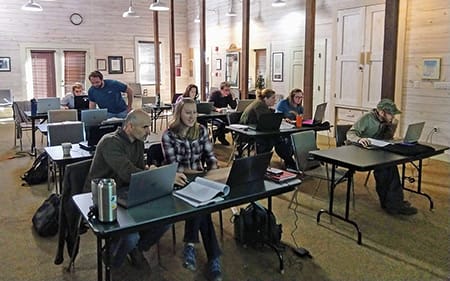
Burn prioritization modeling seminars and fire modeling tools are supported by Wildland Fire Science to train managers in the important planning stages of prescribed fires.
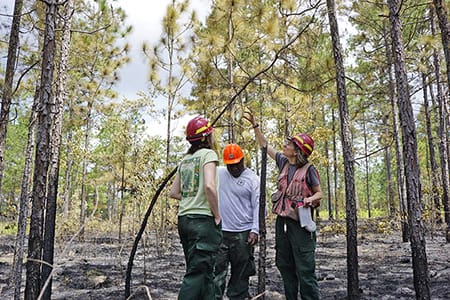
Educating and guiding the next generation of fire researchers and managers is a key goal of Wildland Fire Science and a resource for testing new ideas in fire research.
Tall Timbers hosts the premier fire technology transfer organization—the Southern Fire Exchange. This JFSP funded effort helps connect research to management through webinars, workshops, and support of the Prescribed Fire Science Consortium.
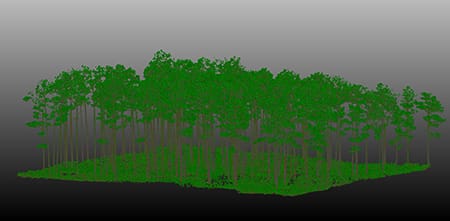
Working with partners in the Prescribed Fire Science Consortium, the program is building nexgen 3-D fuel beds using terrestrial LiDAR and novel sampling techniques to power new fire behavior models for prescribed fire managers. This work links to Tall Timbers work in wildlife habitat usage and ecological forestry.
The Longleaf Legacy landscape prescribed fire burn team arm of Wildland Fire Science works directly with landowners and partners to effectively put fire on the ground and promote prescribed fire throughout the region.
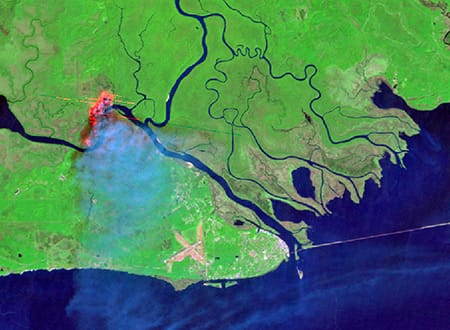
Tall Timbers is leading an effort to map fire regimes at the landscape scale. Staff work with numerous agencies to evaluate fire records and satellite imagery to build this critical conservation database. https://skfb.ly/6DqOY
Tall Timbers hosts the Prescribed Fire Science Consortium, a national network of researchers and managers who promote integrated research and management to advance next generation tools for fire practitioners. https://arcg.is/1DSjDT
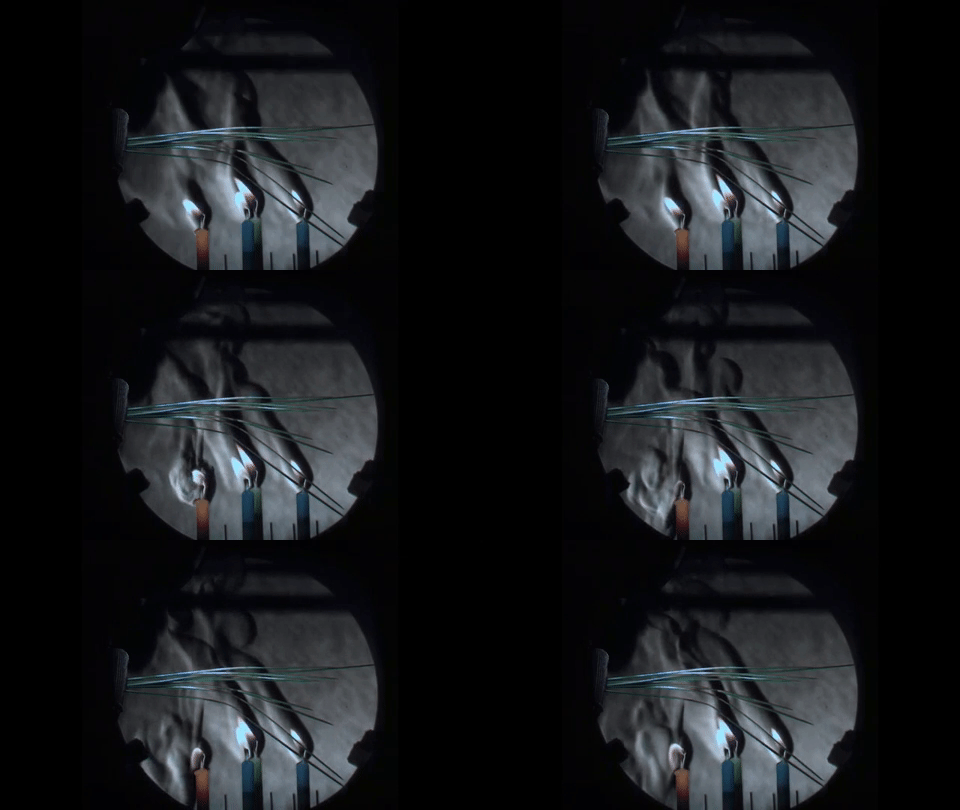
We are linking physics and field observations to understand the fluid dynamics of fire behavior surface fire regimes. Our work combines field observations using advanced thermal imaging techniques, laboratory studies, and coupled fire-atmospheric modeling to help managers improve outcomes of managed fire regimes.
Selected Publications authored by Wildland Fire Science staff.
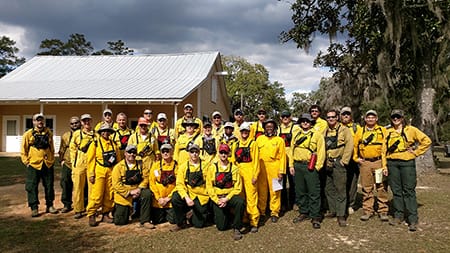
Staff and researchers support Federal fire training by serving as a cadre for NWCG training courses, ranging from basic wildland fire to advanced fire effects.
(PFTC) specializes in training fire fighters the principles and techniques of prescribed fire through practical hands-on experience. https://www.fws.gov/fire/pftc/
Private land owners are the largest source of prescribed fire in the country. These land owners and the culture of fire that was maintained by them during decades of suppression are a part of why Tall Timbers is a world-wide center for prescribed fire science. Workshops and fire training are a critical focus of the Longleaf Legacy Landscape Burn Team and our support of the Georgia Forestry Commission Prescribed Fire Center in Marion County.
The conserved lands of the Greater Red Hills region are found on working, income-producing properties that support agriculture, forestry, and recreational hunting. These properties contribute $272 million annually to local economies and support 2,300 jobs. [link to Planning & Advocacy section] The landowners’ strong stewardship ethic preserves their working lands while replenishing drinking water supplies, protecting water quality, and providing wildlife habitat for dozens of rare and endangered species. Tall Timbers’ conservation easements on these working properties encourage landowners to retain their traditional livelihood by keeping farms in family ownership.
Home to world-class wild quail populations, the Greater Red Hills region contains the largest concentration of gamebird preserves in the United States. These preserves also support the largest community of Red-cockaded woodpeckers on private lands. Indicators of high quality habitat found here include the gopher tortoise, Bachman’s sparrow, fox squirrel, and many amphibians. Tall Timbers’ conservation easements identify and protect the critical habitats of these species.
The region also boasts outstanding aquatic resources. Large river systems, like the Flint/Apalachicola, Ochlockonee, and Aucilla, flow from Georgia and feed into the Gulf of Mexico to support some of the world’s most productive estuaries. Large disappearing sinkhole lakes, like Iamonia, Miccosukee, and Jackson, provide habitat for an array of aquatic species and migratory birds. Tall Timbers’ conservation easements protect these vital watersheds and wetlands that are the lifeblood for the ecological health of the region.
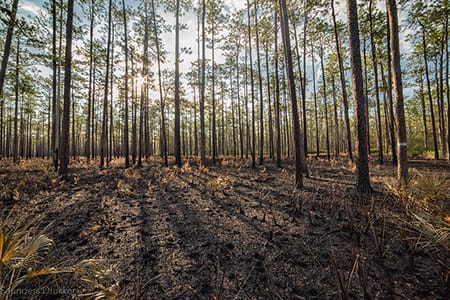
Once dominated by longleaf pine, our pine woodlands support abundant wildlife and local economies. These forests need prescribed fire to stay healthy. Herbert L. Stoddard and his associates Ed and Roy Komarek were pioneers in this emerging scientific field during the mid-20th century. Tall Timbers continues that legacy with applied research on prescribed fire and land management. Today, there is a tremendous need to expand prescribed fire use beyond the Red Hills to ensure ecosystem health and reduce wildfire risk. Additionally, Tall Timbers uses conservation easements to permanently protect private woodlands while balancing the need for economic return from selective timbering.