In these times of financial uncertainty, it is critical that we remain focused on our mission: Promoting good land stewardship through research, conservation and education. For 55 years now, Tall Timbers has remained at the forefront of critical research in the areas of fire ecology, forestry and wildlife management. Tall Timbers continues to be a vocal advocate for private landowner rights, helping shape public policy decisions on wildlife management, prescribed fire and land conservation. It is our hope that you will continue your investment in the future of Tall Timbers by renewing your annual gift this year.
You can be assured that your financial investment in Tall Timbers is being put to great use. Our research and conservation staff is able to leverage the support of our membership program by finding matching grant dollars from foundations, government agencies and corporate resources to help fund our programs at full capacity. In many cases, for every $1 contributed to our membership program we are able to find an additional $3 to match it from outside sources. Your membership makes a difference.
If you have already renewed your membership gift this year, we thank you. If not, you can easily click to renew online. With your help we can reach our annual goal of $425,000 by the end of the year.
By Dr. Theron M. Terhune, Outreach & Education Director
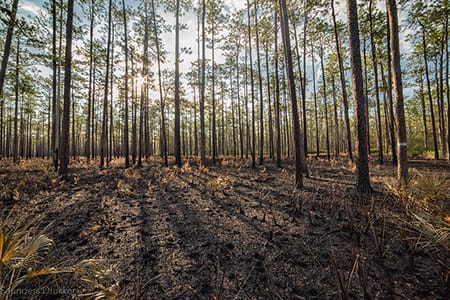
In the Southeast, and in particular the Red Hills region, prescribed fire is as common as wind, water, and the air we breathe. Fire is one of the basic and most economical tools used by land owners and managers to achieve a myriad of management objectives. Historically, most of North American plant communities evolved with recurring fire and therefore have become dependent on this disturbance for maintenance. Fire scientists believe that the natural fire return interval (or frequency of fire) for much of the Southeast varied from 1-3 years for many prairie, rangeland, grassland and savanna like landscapes which include upland pine ecosystems.
Here in the Red Hills we often speak of fire not in terms of if but when and how often. However, for many areas in the United States this is not the case. In fact, some states issue fire bans preventing landowners, land managers and others from implementing prescribed fire as a management tool, yet research demonstrates that the ecosystem effects of fire cannot be duplicated by other tools or techniques. For many of the lands we manage, fire is not only natural but a necessary part of maintaining a healthy ecosystem. After many years of fire exclusion, however, an ecosystem dependent on periodic fire becomes unhealthy such that trees can become stressed by overcrowding or disease, fire dependent species disappear, and fuels build up and potentially increase the risk of catastrophic wildfire. The lack of fire may also have unintended ecological effects, leading to the loss of habitat for rare and endangered species. On the contrary though, adequate implementation of prescribed fire (i.e., burning at the right time and right place) can positively influence the ecosystem and fire-dependent species by: reducing fuel loads and hazardous fuel conditions; minimizing the spread of pest insects and disease; improve natural forage palatability and nutrition value for game species (e.g., white-tailed deer and wild turkey); recycle nutrients back to the soil such as carbon sequestration; and promote the growth of trees, wildflowers and other beneficial flora.
I witnessed this firsthand when during our revision of the National Bobwhite Conservation Initiative (NBCI), a strategic recovery plan for northern bobwhite quail and grassland songbirds, I was fortunate enough to visit 25 states representing a large portion of the bobwhite’s historic and current range. This provided the rare opportunity to observe bobwhite habitat in several different landscape contexts. I learned that quail and many grassland songbirds occur in numerous landscapes and conditions where soil, topography, weather, and vegetation may vary greatly from site to site. However, a common theme was linked to the presence or absence of bobwhites and other grassland birds — fire. Typically, when fire was still a part of the management regime bobwhites and other songbirds were present, but when fire was removed from the system, few-to-none existed. I guess Herbert Stoddard was on to something when he coined the term “Fire Bird”, ‘cause where fire exists there too rests the hope for the bobwhite, but where fire is lacking so too will be the welcoming sound of the “bob-WHITE” call in the spring.
You can help us keep prescribed burning a valuable resource and land management tool. As land stewards, we not only have the responsibility to manage and maintain these ecosystems for future generations, but we also have the opportunity to educate and inform others of what we do and why. Doing so will help to ensure that we can continue to burn for management purposes in the future. Specifically, we must increase the awareness and benefits of prescribed fire as a land management tool. It is my desire to not only provide opportunities to increase the awareness of the impact of prescribed fire as a land management tool, but also provide a deeper, clearer understanding of the ecological impact and benefit. Opportunities to educate and inform about fire and other land management tools may come in various ways, shapes and sizes. Here are just a few such opportunities:
Upcoming Land Manager’s Luncheon on Hardwood Control and Response to Prescribed Fire
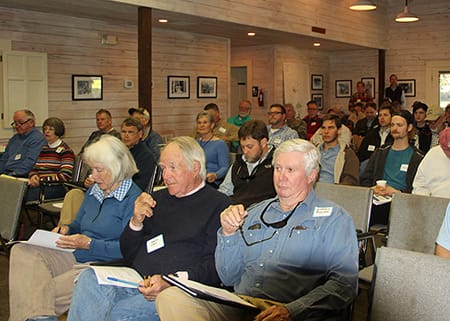
On Friday, March 29, we will host a land manager’s luncheon with the focus on hardwood control and response to prescribed fire. Topics will also include smoke management, fuels and fuel reduction, and using post-burn evaluations to effectively management vegetation. Tall Timbers’ Fire Ecologist, Dr. Kevin Robertson, and Fire Ecology Research Biologist, Angie Reid, will present some interesting research findings related to post-burn hardwood re-sprout and fuels management. Please see the announcement flyer for more details on how to sign up.
NRCS Prescribed Fire Training
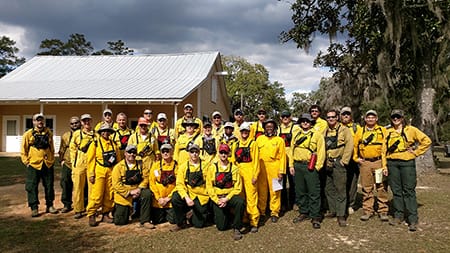
During the last week in February, Tall Timbers is hosting 25-30 Natural Resource Conservation Service (NRCS) biologists for a week-long intensive fire training course. Course participants will learn about prescribed fire implementation and safety, creation of fire management plans, ecological benefits of prescribed fire and gain burning experience by participating in 2-3 burns on-site.
By Kevin McGorty, Director Tall Timbers Land Conservancy
A key goal of Tall Timbers’ Strategic Plan is to work with landowners in closing the gap between conserved and unprotected lands in the Red Hills Region of north Florida and southwest Georgia. To date nearly 167,000 of the 300,000 acre Red Hills core area are permanently conserved, mostly by donated conservation easements. This is a remarkable success story, but more work needs to be done to ensure the sustainability for the future of this unique and beautiful region.
With this goal in mind and a love of their land, George and Cyndi Watkins recently donated a conservation easement to Tall Timbers for the remaining 1,595 acres of Dogwood Plantation. Dogwood is located on the Florida-Georgia state line, approximately 8 miles north of Monticello in Jefferson County, Florida and 10 miles south of Thomasville in Thomas County, Georgia. The property was originally part of Greenwood Plantation established in 1827 by Thomas P. Jones.
In 2004, the Watkins’ donated a 711 acre easement protecting the Wards Creek portion of their property. The phase II easement continues protecting the broad forested floodplain associated with Wards Creek, a tributary stream to Lake Miccosukee and part of the St. Marks River watershed, which are both considered important recharge areas for the Floridan Aquifer. The uplands portion of the property contains large longleaf which are extremely rare and worthy of additional protection. Dogwood Plantation has historically managed much of their uplands in a relatively natural way including frequent prescribed fire and multi-aged timber management with single tree harvest. This has allowed the sustainability of keystone plant and animal species. These species include the Bachman sparrow and Gopher tortoise, both listed as a state threatened species in Georgia and Florida.
Dogwood Plantation is strategically located and is adjacent to other conservation easements of similar critical habitats and management styles. At a landscape scale, this conservation easement will ensure connectively and similarity amongst these lands providing significant benefit to Tall Timbers’ efforts to conserve the greater Red Hills Region.
Reflecting the love for his land, George Watkins said it best “it is an honor to be the stewards of this property and comforting to know it is protected in perpetuity”.
Congress recently renewed, through 2013, an incentive that enhances the tax benefits of protecting land by donating a conservation easement. This invaluable tool has helped Tall Timbers accelerate the pace of conservation by working with willing landowners to protect over 52,000 acres on 51 family properties since the enhanced tax incentive was first enacted in 2006.
The legislation allows easement donors to:
Deduct up to 50% of their adjusted gross income in any year (up from 30%);
Deduct up to 100% of their adjusted gross income if the majority of that income came from farming, ranching or forestry; and
Continue to take deductions for as long as 16 years (previously 6 years).
According to Rand Wentworth, President of the Land Trust Alliance, “Taken as a whole with the gradual improvement of the real estate market and the reinstatement of the tax incentive this is a very good year for landowners to make a donation of a conservation easement.” Congress has a lot on its plate with the debt ceiling, sequestration, Farm Bill and other legislative priorities. There is no certainty that the easement incentive will be renewed for 2014. The only certainty is that it is in place this year.
A conservation easement is a legal agreement between a landowner and a non-profit land trust like Tall Timbers, or government agency that permanently limits uses of the land in order to protect important conservation values. For example, typical Tall Timbers’ easements restrict the amount of building and development on the property, but fully allow the landowner the continued use of the property for productive farming, forestry, hunting and wildlife management. Easements allow landowners to sell or pass the land and on heirs. In return, landowners are eligible for federal, state and in some cases local tax incentives. For most easement donors in the greater Red Hills region, the appraised range of easement value for tax deduction purposes has been between 25 and 60% depending on location of property and terms of easement.
As an example of how the federal enhanced conservation tax incentives work, under the prior law, an agricultural landowner earning $50,000 a year who donated a conservation easement worth $1 million could take a total of no more than $90,000 in tax deductions. Under the new law, that landowner can take as much as $800,000 in tax deductions – still less than the full value of their donation, but a significant increase. Certainly landowners need to consult their financial advisors regarding their particular situation, but the incentive has been very popular.
There is strong bipartisan support in Congress for making the federal enhanced incentive permanent. In the 112th Congress H.R. 1964 and S. 339 had 311 House and 28 Senate co-sponsors from 48 states, including majorities of Democrats and Republicans in the House. U.S. Representative Steve Southerland, II, Florida, District 2, supported the House Bill.
For more information about the incentive please see the Land Trust Alliance fact sheet entitled 20 Questions: Conservation and the Fiscal Cliff Deal www.lta.org/easementincentive. In addition, a recent Forbes article on charitable giving in 2013 further explains the incentive http://onforb.es/V5ucbO . Finally, to learn about Tall Timbers’ conservation easement program please visit http://www.talltimbers.org/landconservancy.html .
Prescribed fire is a safe way to apply a natural process, ensure ecosystem health and reduce wildfire risk.
By Eric Staller, Tall Timbers Natural Resources Coordinator
When do I burn is a common question, but the real question is why am I burning? Winter burns, spring burns and summer burns are all important depending on your objectives and habitat types. Objectives and habitat types will not only determine when to burn, but also fire frequency, size and scale. Typical objective categories include: silvicultural, wildlife management, and fuel reduction.
When wildlife management is your objective, fire frequency, size and scale are very important. At Tall Timbers we burn approximately 60% of the uplands each year in a mosaic pattern.
Fall and winter burns tend to be cooler, and wind direction tends to be more consistent throughout the day. Silvicultural objectives include site preparation for planting pines or to catch natural regeneration; a clean burn will allow sunlight to reach the seedlings, and seed to soil contact. Burning through pine plantations, particularly young pines, and fuel reduction are a few others.
Winter burns are often used for fuel reduction — to burn through drains and hammocks prior to leaf out. However, from a wildlife management or ecological perspective, spring and summer burns are much better. Winter burns will stay “black” until bud break or spring green up, which in the southeast is around the beginning of March; black or bare ground has a higher chance of eroding and is unsuitable habitat for wildlife.
When burning after spring green up, the ground cover will recover quickly, and become useable space for wildlife.
One month post burn on old field land shows regrowth.
To achieve wildlife management and ground cover objectives on old field lands, (land that at some time had previously been tilled for agriculture), spring is a better time to burn. The end of February through mid-May is typically good spring burning weather. By the latter part of May, however, relative humidity in the southeast begins to climb too high for clean burns on old field lands.
Spring and summer burning are very important for native uplands, those lands that have not been previously tilled. Many of the native plant species, such as wiregrass, evolved with frequent fire and need the growing season burns to produce viable seed. With regard to wildlife, the nests of ground nesting birds such as quail and Bachman’s sparrows may be burned in the summer, these species readily re-nest, and the summer burns will become great brooding habitat for the latter hatched broods. Also, for hunting, later burning improves the structure of native vegetation or areas dominated by grasses by reducing thick cover.
Burning in late spring and summer is the best time for hardwood control, as the saplings have moved resources from the root system to above ground. Top killing them at this time will lower the resources needed to re-sprout and the length of the growing season to replenish.
Growing season burns are important for many plant species, such as wire grass, to produce viable seed.
Prescribed fire is the most important land management tool; economically, ecologically, and for wildlife management, there is no substitute. Determine your objectives and habitat types and burn accordingly. Most managers will need to use all seasons of burning to meet all their objectives.
Finally, always remember to manage your smoke whenever you burn; it’s your smoke until it reaches the mixing height.
Managing your smoke is incredibly important in protecting our right to burn. Dispersion index, mixing height, and wind direction will determine good smoke management.
The M-CORES program, which includes the proposed Suncoast Connector Toll Road in Jefferson County, passed through the Florida Legislature at breakneck speed with little review or analysis. Tall Timbers has a number of concerns given the potential for significant and wide spread impacts. These include fragmenting public and private conservation lands, robbing business from Main Street Monticello, impacting our rivers and other water resources, and making prescribed fire more difficult and costly.
Join us in asking the Jefferson County Board of County Commissioners to OPPOSE the Suncoast Connector toll road and its path through Jefferson County.
Take action now with our easy email form.
Send an email to all five Jefferson County Board of County Commissioners with one click!
Burn prioritization modeling seminars and fire modeling tools are supported by Wildland Fire Science to train managers in the important planning stages of prescribed fires.
Educating and guiding the next generation of fire researchers and managers is a key goal of Wildland Fire Science and a resource for testing new ideas in fire research.
Tall Timbers hosts the premier fire technology transfer organization—the Southern Fire Exchange. This JFSP funded effort helps connect research to management through webinars, workshops, and support of the Prescribed Fire Science Consortium.
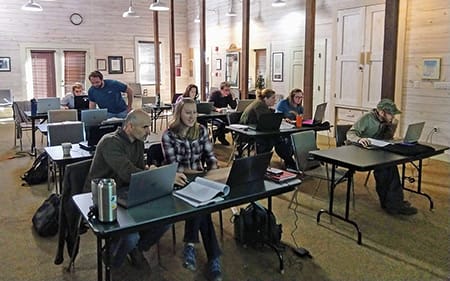
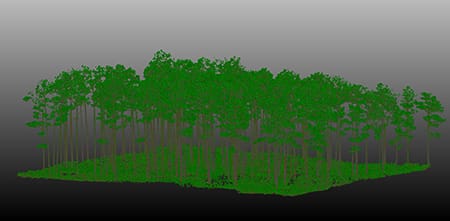
Working with partners in the Prescribed Fire Science Consortium, the program is building nexgen 3-D fuel beds using terrestrial LiDAR and novel sampling techniques to power new fire behavior models for prescribed fire managers. This work links to Tall Timbers work in wildlife habitat usage and ecological forestry.
The Longleaf Legacy landscape prescribed fire burn team arm of Wildland Fire Science works directly with landowners and partners to effectively put fire on the ground and promote prescribed fire throughout the region.
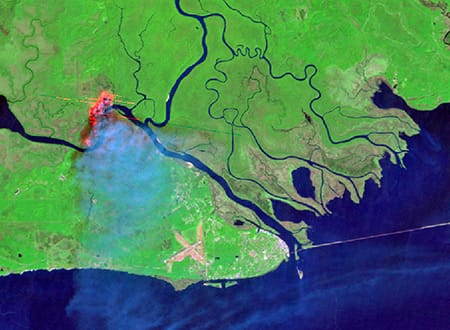
Tall Timbers is leading an effort to map fire regimes at the landscape scale. Staff work with numerous agencies to evaluate fire records and satellite imagery to build this critical conservation database. https://skfb.ly/6DqOY
Tall Timbers hosts the Prescribed Fire Science Consortium, a national network of researchers and managers who promote integrated research and management to advance next generation tools for fire practitioners. https://arcg.is/1DSjDT
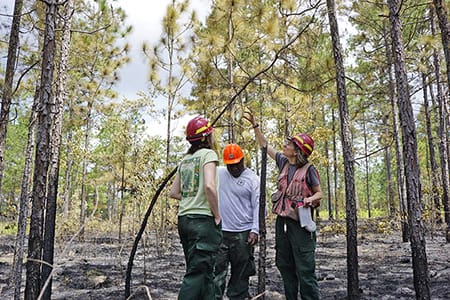
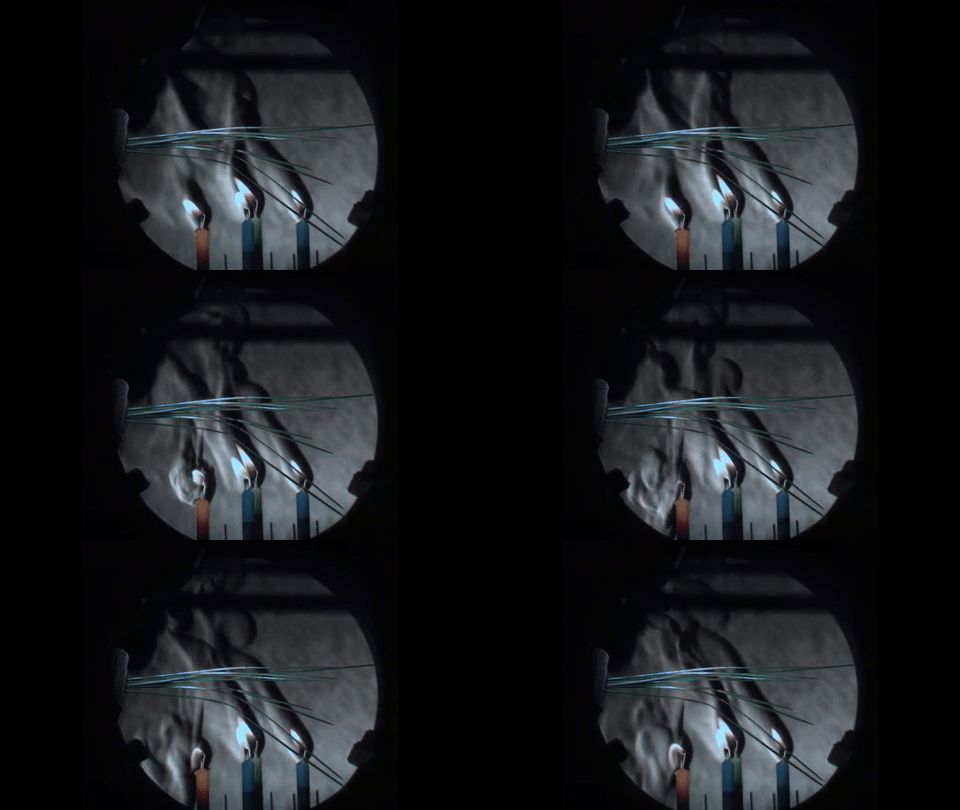
We are linking physics and field observations to understand the fluid dynamics of fire behavior surface fire regimes. Our work combines field observations using advanced thermal imaging techniques, laboratory studies, and coupled fire-atmospheric modeling to help managers improve outcomes of managed fire regimes.
Selected Publications authored by Wildland Fire Science staff.
Staff and researchers support Federal fire training by serving as a cadre for NWCG training courses, ranging from basic wildland fire to advanced fire effects.
(PFTC) specializes in training fire fighters the principles and techniques of prescribed fire through practical hands-on experience. https://www.fws.gov/fire/pftc/
Private land owners are the largest source of prescribed fire in the country. These land owners and the culture of fire that was maintained by them during decades of suppression are a part of why Tall Timbers is a world-wide center for prescribed fire science. Workshops and fire training are a critical focus of the Longleaf Legacy Landscape Burn Team and our support of the Georgia Forestry Commission Prescribed Fire Center in Marion County.
The conserved lands of the Greater Red Hills region are found on working, income-producing properties that support agriculture, forestry, and recreational hunting. These properties contribute $272 million annually to local economies and support 2,300 jobs. [link to Planning & Advocacy section] The landowners’ strong stewardship ethic preserves their working lands while replenishing drinking water supplies, protecting water quality, and providing wildlife habitat for dozens of rare and endangered species. Tall Timbers’ conservation easements on these working properties encourage landowners to retain their traditional livelihood by keeping farms in family ownership.
Home to world-class wild quail populations, the Greater Red Hills region contains the largest concentration of gamebird preserves in the United States. These preserves also support the largest community of Red-cockaded woodpeckers on private lands. Indicators of high quality habitat found here include the gopher tortoise, Bachman’s sparrow, fox squirrel, and many amphibians. Tall Timbers’ conservation easements identify and protect the critical habitats of these species.
The region also boasts outstanding aquatic resources. Large river systems, like the Flint/Apalachicola, Ochlockonee, and Aucilla, flow from Georgia and feed into the Gulf of Mexico to support some of the world’s most productive estuaries. Large disappearing sinkhole lakes, like Iamonia, Miccosukee, and Jackson, provide habitat for an array of aquatic species and migratory birds. Tall Timbers’ conservation easements protect these vital watersheds and wetlands that are the lifeblood for the ecological health of the region.
Once dominated by longleaf pine, our pine woodlands support abundant wildlife and local economies. These forests need prescribed fire to stay healthy. Herbert L. Stoddard and his associates Ed and Roy Komarek were pioneers in this emerging scientific field during the mid-20th century. Tall Timbers continues that legacy with applied research on prescribed fire and land management. Today, there is a tremendous need to expand prescribed fire use beyond the Red Hills to ensure ecosystem health and reduce wildfire risk. Additionally, Tall Timbers uses conservation easements to permanently protect private woodlands while balancing the need for economic return from selective timbering.
.jpg?strip=all&w=1080) In the Southeast, and in particular the Red Hills region, prescribed fire is as common as wind, water, and the air we breathe. Fire is one of the basic and most economical tools used by land owners and managers to achieve a myriad of management objectives. Historically, most of North American plant communities evolved with recurring fire and therefore have become dependent on this disturbance for maintenance. Fire scientists believe that the natural fire return interval (or frequency of fire) for much of the Southeast varied from 1-3 years for many prairie, rangeland, grassland and savanna like landscapes which include upland pine ecosystems.
In the Southeast, and in particular the Red Hills region, prescribed fire is as common as wind, water, and the air we breathe. Fire is one of the basic and most economical tools used by land owners and managers to achieve a myriad of management objectives. Historically, most of North American plant communities evolved with recurring fire and therefore have become dependent on this disturbance for maintenance. Fire scientists believe that the natural fire return interval (or frequency of fire) for much of the Southeast varied from 1-3 years for many prairie, rangeland, grassland and savanna like landscapes which include upland pine ecosystems. A key goal of Tall Timbers’ Strategic Plan is to work with landowners in closing the gap between conserved and unprotected lands in the Red Hills Region of north Florida and southwest Georgia. To date nearly 167,000 of the 300,000 acre Red Hills core area are permanently conserved, mostly by donated conservation easements. This is a remarkable success story, but more work needs to be done to ensure the sustainability for the future of this unique and beautiful region.
  A conservation easement is a legal agreement between a landowner and a non-profit land trust like Tall Timbers, or government agency that permanently limits uses of the land in order to protect important conservation values. For example, typical Tall Timbers’ easements restrict the amount of building and development on the property, but fully allow the landowner the continued use of the property for productive farming, forestry, hunting and wildlife management. Easements allow landowners to sell or pass the land and on heirs. In return, landowners are eligible for federal, state and in some cases local tax incentives. For most easement donors in the greater Red Hills region, the appraised range of easement value for tax deduction purposes has been between 25 and 60% depending on location of property and terms of easement.