Have you ever tried to count to 22,000? It’s not easy, and it’s the kind of task that most of us would avoid like the plague or at least try to accomplish using some convenient work around solution (let’s just skip everything between 2500 and 12,500, okay?).
But for a stalwart group of forest ecologists, this will be eleventh time such a count has taken place. And not only do they count to a mind-numbing level, they also measure all the items counted.
The study in question is the long-term census of trees on the Wade Tract. The Wade Tract is listed as a National Natural Landmark by the National Park Service and has been called a “…national treasure…” by noted author and Harvard-based ecologist E.O. Wilson.
In addition to being the only longleaf forest recognized as a national landmark, the Wade Tract also is the only old-growth longleaf tract that is protected in perpetuity and dedicated to long-term research, and it’s these virtues that make the tract truly stand out.
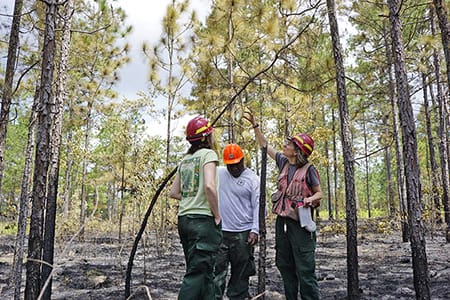
Beginning back in 1978, Dr. William Platt initiated a long-term study of the trees of the Wade Tract. Platt and his colleagues staked out a 130-acre plot within the tract and then proceeded to map and measure every single tree – all 22,000. Platt, an ecologist at Tall Timbers when the study was initiated, has since moved over to LSU, but he’s back this fall with colleagues conducting the thirty-fifth anniversary census of the Wade Tract.
“It takes about 2-3 minutes on average to measure each tree,” Platt notes. “So, we are able to work on 250-300 trees in a typical 10-hour day.”
“Over time, the census has helped to document the long-lived nature of longleaf pines as well as how pines, fire, storms, and lightning interact over time to shape the stand.”
“Of course some of the old giants fall each year but new recruits also come along, and one intriguing observation in this thirty-fifth anniversary census is the manner in which the clusters of young pines seem to be growing slowly outward along the edges,” Platt says. “It’s much like the cypress domes you find in Florida.”
The Wade Tract census has resulted in over 20 publications describing longleaf stand dynamics. The data also are used in many university classrooms to help teach about the analysis of complex spatial data. Each tree has been mapped as precisely as possible, so the interactions between growth, recruitment, and tree densities can be assessed in stunning detail for a living forest.
In the April 1952 issue of the Journal of Forestry, the Society of American Foresters' Committee on Natural Areas issued a request for locations of virgin forest types. They were beginning their search for specific undisturbed areas that might serve as a comprehensive base of knowledge about the natural developments within natural associations and to study the growth and change of these forests over time. Most of the original longleaf landscape was lost at this point, but, thanks to decisions made by the Wade family, collecting the type of long-term data needed for understanding century-old forests was made possible. Thanks to Platt and his colleagues, the possibility became reality.
Support for this thirty-fifth anniversary census has been kindly provided by the Arcadia Research Foundation in addition to staff and departments at Tall Timbers Research Station & Land Conservancy. Support for long-term research projects is one of the most important things we can do as an independent biological research entity.
By Kevin Robertson, PhD, Fire Ecology Program Director
In October, the Fire Ecology lab completed the eight annual census of the plant communities burned at various fire frequencies in half-acre plots on Pebble Hill Plantation. Within two 100 m2 plots per whole plot, we identify the species of every plant that can be found. The long-term objective is to determine how burning at different fire frequencies influences plant species composition, and how those changes relate to the fires themselves versus changes in plant competition during the fire-free intervals. The study was recently streamlined to focus on three fire frequencies, those with 2-year, 3-Year, and 5-year fire return intervals.
On average, the 100 m2 plots contain 97 species, and 367 species have been identified within the plots as a whole. After a few more years and a summary analysis, the project will identify ideal fire frequencies for maximizing plant biodiversity while shedding light on life history characteristics of many individual species as they relate to fire.
Published at the end of last year, The Legacy of a Red Hills Hunting Plantation: Tall Timbers Research Station & Land Conservancy by Robert L. Crawford and William R. Brueckheimer traces the evolution of Tall Timbers benefactor Henry Beadel from sportsman and naturalist to conservationist. Complemented by a wealth of previously unpublished, rare vintage photographs, it follows the transformation of the plantation into what its founders envisioned — a long-term research station, independent of government or academic funding and control. The book can be ordered from Tall Timbers.
147 million additional reasons to love the Red Hills!
By Neil Fleckenstein, Red Hills Planning Coordinator
One year ago, Tall Timbers reached out to many local land owners asking their help with an ambitious project — the first ever comprehensive economic impact analysis of working rural lands in the Red Hills Region. Tall Timbers, along with our project partner the Center for Economic Forecasting and Analysis (CEFA) at Florida State University, undertook this initiative because despite the Red Hills playing a vital role protecting our drinking water, clean air, and wildlife habitat, the messages that truly resonate with many officials and others who make decisions that directly affect the Red Hills region are “jobs” and “economic impact.”
Quail hunting generates a $147 million impact on Red Hills’ economies.
The most important part of this study was our survey of the owners of 110 Red Hills’ hunting properties and other working rural lands, each over 500 acres. We received detailed responses from more than 66 percent of the owners surveyed, which is a fantastic response rate. Survey respondents reported owning well over 300,000 acres in the Red Hills. A huge “Thanks” to the many landowners who helped us with this project!
CEFA’s economic analysis found that in 2012, the regional economic impact of Red Hills’ hunting properties exceeded $147 million. This tremendous impact is the result of a wide range of operating, capital improvement, and discretionary spending as well as local charitable contributions that benefit every Red Hills’ community. In addition, over 1,400 jobs are directly or indirectly related to Red Hills’ hunting properties. These 1,400 jobs generated more than $51 million in total employment income meaning they paid more than the average wage in nearly every Red Hills’ county.
One unique aspect of this project is a county-specific focus on the economic and employment impacts for individual Red Hills’ counties. This provided unique insights into the importance of working rural lands are for small and medium sized businesses throughout the Region.
The results of the study are contained in a publication titled The Economic Impact of the Red Hills Region of Southwest Georgia and North Florida(click here for a PDF file of this publication). This study will play an important role in Tall Timbers’ efforts to educate elected officials, other community leaders, landowners, and the general public about the tremendous economic impact and job creation generated by Red Hills’ hunting lands and other working properties.
Photo, above, right. GT Metal Works, co-owned by Todd Ferrell and Dallas Wilcox, is one of many local businesses supported by Red Hills’ working rural lands
As an aside, we will soon undertake a similar project for the hunting lands in the greater Albany, Georgia area and look forward to working with landowners in those communities.
Please contact Red Hills Planning Coordinator Neil Fleckenstein at 850-893-4153, ext. 335 or Neil@ttrs.org if you have any questions about this important project.
Chick survival and late quail hatch result in above average fall quail numbers
By Theron Terhune, PhD, Game Bird Program Director
Covey call counts on many properties in the Red Hills region and Albany area indicate populations are up from last year about 30% on average with some areas seeing even higher bumps than others. We attribute this uptick to both solid over-winter survival, carrying good bird numbers into the breeding season from the previous fall, and decent amounts of rainfall, which was fairly well distributed throughout the nesting season. Our new research using thermal imagery to count bobwhite chicks indicated that chick survival was good throughout the season with the exception of a short period in early July; more than 9 inches of rain occurred in 10 days with no respite of sunny days, which moderately taxed chicks on the ground during that time. Click on the following link to view a bobwhite chick brood via a FLIR thermal camerahttps://vimeo.com/80478365. (This video has been slowed down 25% to facilitate counting of the 12-day old chicks scattering when approached.)
In addition to good chick survival, we also observed a stellar late hatch this year. Greater than 40% of hens (Figure 1) in late-August and early-September were incubating nests and a large proportion of those successfully hatched. Many managers in the Albany and Red Hills regions corroborated this late hatch by seeing lots of young birds in September and October, which bodes well for fall recruitment.
Figure 1. Daily proportion of radio-tagged hens incubating nests during the 2013 breeding season. The red arrows in this graph indicate 3 primary peaks in nest incubation in terms of proportion of radio-tagged hens incubating nests.
Typically when good over-winter survival, good chick survival, a good late hatch, and favorable weather align in the same breeding season one would expect an increase in fall bobwhite abundance. However, looking at fall bobwhite densities on Tall Timbers (Figure 2), we did not observe the 30% increase like many other sites in the Red Hills region.
Figure 2. Autumn bobwhite density on Tall Timbers Research Station, 2007 – 2013.
We believe this is linked to high predator abundance reducing the amount of successful nesting attempts on Tall Timbers. In fact, we observed one of the lowest nest success rates (39%) ever documented at Tall Timbers this breeding season. High nest predation resulted in a very low overall brood (chick) production (see Figure 4) on Tall Timbers. Predator abundance on Tall Timbers this year was higher than our long-term average and much higher than the recommended predator index threshold (Figure 3).
Figure 3.Predator index estimated using scent stations on Tall Timbers, 2003 – 2013.
We have found that a predator index below 15% is the preferred range for optimal bobwhite production. For more information on how to implement scent stations and how to estimate the predator index click here.
During 2004 – 2006, as part of a larger research project on the effects of mammalian nest predation on northern bobwhite populations, Tall Timbers underwent an extensive trapping program to remove mammalian nest predators. However, since this time no trapping has occurred. Figure 3 demonstrates how quickly the predator population can respond when predation management ceases. In this study, we were interested in determining how changes in predator abundance influenced nesting success. Since 2006, despite higher than recommended predator indices, nesting success was relatively high (e.g., above 50%; see Figure 4).
Figure 4.Number of nests and broods per 100 hens on Tall Timbers, 2008 – 2013.
A key lesson here is that, despite high predator abundance and low nesting success, quail abundance remained above one quail per acre. This underpins the importance of sound management including maintenance of quality habitat and supplemental feeding, which are critically important to sustaining high survival of adults. When adult birds survive they can re-nest and ultimately produce young. At the same time, to maximize quail abundance, or grow a new or recovering quail population from low numbers, predator management is often necessary. In addition to high survival, this was a year of favorable weather, good chick survival, and a stellar late hatch (despite the predators) counterbalancing low nest productivity.
The M-CORES program, which includes the proposed Suncoast Connector Toll Road in Jefferson County, passed through the Florida Legislature at breakneck speed with little review or analysis. Tall Timbers has a number of concerns given the potential for significant and wide spread impacts. These include fragmenting public and private conservation lands, robbing business from Main Street Monticello, impacting our rivers and other water resources, and making prescribed fire more difficult and costly.
Join us in asking the Jefferson County Board of County Commissioners to OPPOSE the Suncoast Connector toll road and its path through Jefferson County.
Take action now with our easy email form.
Send an email to all five Jefferson County Board of County Commissioners with one click!
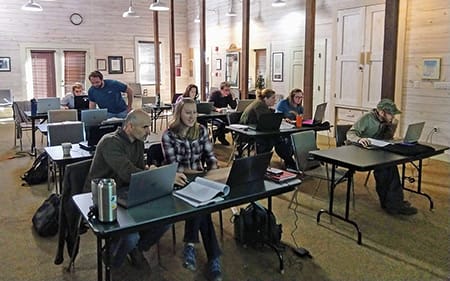
Burn prioritization modeling seminars and fire modeling tools are supported by Wildland Fire Science to train managers in the important planning stages of prescribed fires.
Educating and guiding the next generation of fire researchers and managers is a key goal of Wildland Fire Science and a resource for testing new ideas in fire research.
Tall Timbers hosts the premier fire technology transfer organization—the Southern Fire Exchange. This JFSP funded effort helps connect research to management through webinars, workshops, and support of the Prescribed Fire Science Consortium.
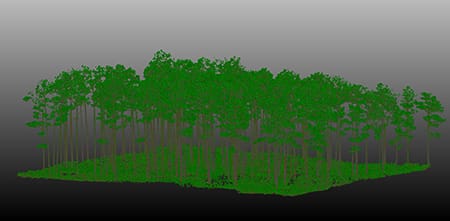
Working with partners in the Prescribed Fire Science Consortium, the program is building nexgen 3-D fuel beds using terrestrial LiDAR and novel sampling techniques to power new fire behavior models for prescribed fire managers. This work links to Tall Timbers work in wildlife habitat usage and ecological forestry.
The Longleaf Legacy landscape prescribed fire burn team arm of Wildland Fire Science works directly with landowners and partners to effectively put fire on the ground and promote prescribed fire throughout the region.
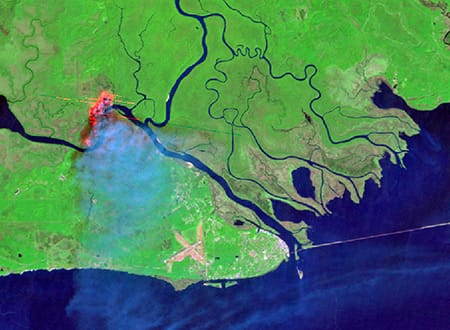
Tall Timbers is leading an effort to map fire regimes at the landscape scale. Staff work with numerous agencies to evaluate fire records and satellite imagery to build this critical conservation database. https://skfb.ly/6DqOY
Tall Timbers hosts the Prescribed Fire Science Consortium, a national network of researchers and managers who promote integrated research and management to advance next generation tools for fire practitioners. https://arcg.is/1DSjDT
We are linking physics and field observations to understand the fluid dynamics of fire behavior surface fire regimes. Our work combines field observations using advanced thermal imaging techniques, laboratory studies, and coupled fire-atmospheric modeling to help managers improve outcomes of managed fire regimes.
Selected Publications authored by Wildland Fire Science staff.
Staff and researchers support Federal fire training by serving as a cadre for NWCG training courses, ranging from basic wildland fire to advanced fire effects.
(PFTC) specializes in training fire fighters the principles and techniques of prescribed fire through practical hands-on experience. https://www.fws.gov/fire/pftc/
Private land owners are the largest source of prescribed fire in the country. These land owners and the culture of fire that was maintained by them during decades of suppression are a part of why Tall Timbers is a world-wide center for prescribed fire science. Workshops and fire training are a critical focus of the Longleaf Legacy Landscape Burn Team and our support of the Georgia Forestry Commission Prescribed Fire Center in Marion County.
The conserved lands of the Greater Red Hills region are found on working, income-producing properties that support agriculture, forestry, and recreational hunting. These properties contribute $272 million annually to local economies and support 2,300 jobs. [link to Planning & Advocacy section] The landowners’ strong stewardship ethic preserves their working lands while replenishing drinking water supplies, protecting water quality, and providing wildlife habitat for dozens of rare and endangered species. Tall Timbers’ conservation easements on these working properties encourage landowners to retain their traditional livelihood by keeping farms in family ownership.
Home to world-class wild quail populations, the Greater Red Hills region contains the largest concentration of gamebird preserves in the United States. These preserves also support the largest community of Red-cockaded woodpeckers on private lands. Indicators of high quality habitat found here include the gopher tortoise, Bachman’s sparrow, fox squirrel, and many amphibians. Tall Timbers’ conservation easements identify and protect the critical habitats of these species.
The region also boasts outstanding aquatic resources. Large river systems, like the Flint/Apalachicola, Ochlockonee, and Aucilla, flow from Georgia and feed into the Gulf of Mexico to support some of the world’s most productive estuaries. Large disappearing sinkhole lakes, like Iamonia, Miccosukee, and Jackson, provide habitat for an array of aquatic species and migratory birds. Tall Timbers’ conservation easements protect these vital watersheds and wetlands that are the lifeblood for the ecological health of the region.
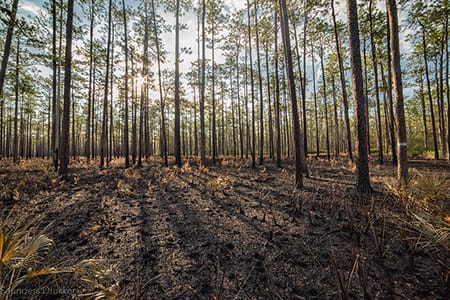
Once dominated by longleaf pine, our pine woodlands support abundant wildlife and local economies. These forests need prescribed fire to stay healthy. Herbert L. Stoddard and his associates Ed and Roy Komarek were pioneers in this emerging scientific field during the mid-20th century. Tall Timbers continues that legacy with applied research on prescribed fire and land management. Today, there is a tremendous need to expand prescribed fire use beyond the Red Hills to ensure ecosystem health and reduce wildfire risk. Additionally, Tall Timbers uses conservation easements to permanently protect private woodlands while balancing the need for economic return from selective timbering.

 The study in question is the long-term census of trees on the Wade Tract. The Wade Tract is listed as a National Natural Landmark by the National Park Service and has been called a “…national treasure…” by noted author and Harvard-based ecologist E.O. Wilson.


 CEFA’s economic analysis found that in 2012, the regional economic impact of Red Hills’ hunting properties exceeded $147 million. This tremendous impact is the result of a wide range of operating, capital improvement, and discretionary spending as well as local charitable contributions that benefit every Red Hills’ community. In addition, over 1,400 jobs are directly or indirectly related to Red Hills’ hunting properties. These 1,400 jobs generated more than $51 million in total employment income meaning they paid more than the average wage in nearly every Red Hills’ county.
 Photo, above, right. GT Metal Works, co-owned by Todd Ferrell and Dallas Wilcox, is one of many local businesses supported by Red Hills’ working rural lands