Tall Timbers featured as Hearth & Soul’s February Non-Profit Partner
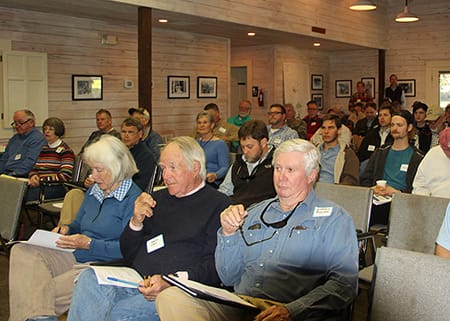
Tall Timbers would like to thank Hearth & Soul for featuring us as their February non-profit partner. Hearth & Soul is “a unique concept in retail that is reminiscent of the home as a gathering place.” On Thursday, February 17, they hosted a Meet the Makers event at their store featuring Tall Timbers. Over 100 participants attended the event and learned about Tall Timbers’ programs. Throughout the month of February, Hearth & Soul sold a special candle—Sea Pines—with one-hundred percent of the net proceeds benefitting Tall Timbers. Makers of local artisan goods were on hand. Tim Edmonds, an artisan of handcrafted serving boards, Lisa Phipps designer of Chic Verte jewelry and P. W. Bryant of Bespoke Feather Hats displayed and sold their items at the event. On the patio, Tall Timbers displayed its outreach and education animals, which included bobwhite quail, box turtles, a gopher tortoise and several non-venomous snakes—a big hit with the kids. Inside, Dr. Monica Rother showcased the beautiful longleaf pine sections that show fire history. Additionally, Rose Rodriguez, Director of Communications for Tall Timbers and co-author of the book, George M. Sutton’sWatercolors for Georgia Birds: A New Look, signed copies that were for sale at the event. It was a wonderful evening celebrating Tall Timbers and its mission.
Tall Timbers’ Georgia-Florida Turkey Invitational Benefits the Game Bird Program
For the 13th year, teams of two hunters will take to the woods in the Red Hills, talking turkey to attract a winning gobbler. This year the Georgia-Florida Turkey Invitational is April 12 and 13. Special guest Joe Hutto is the speaker at the Kick-off Supper & Registration, Thursday, April 12, at 6:00 PM held at Osceola Plantation Lodge in Thomas County, Georgia.
Joe Hutto is a nationally-known naturalist and author of Illumination in the Flatwoods, where he revealed the secret lives of wild turkeys to great critical acclaim; Hutto’s book resulted in the Emmy Award–winning PSB documentary My Life as a Turkey.
Friday, April 13, hunters will meet at the Osceola Plantation Barn at 12 noon for the Weigh-In & Awards Luncheon. Ricky Lackey, Florida Fish and Wildlife Conservation turkey biologist will serve as the offcial judge. There will be a Calcutta and raffle with prizes for first, second and third place. The first place winner will have their team engraved on the Perpetual Trophy and have their bird mounted by Harden’s Taxidermy. Each winner receives an engraved silver cup.
Tall Timbers thanks the host committee for this year’s invitational: Knox Parker (chair), Stephen Demott, Shane Drew, Robbie Green, Jay Kimbrel, Tim Miles and Bubba White.
For more information, to become a sponsor or register a team, contact Development Director, Crystal Davis: Phone 850.5452162.4153 or email. For details, including a registration form, click here.
Bills are moving forward through the Georgia General Assembly that would dedicate a portion of the current sales and use tax collected on outdoor recreation equipment to land conservation – an estimated $40 million annually. This change from appropriated to dedicated funding would allow the state to more effectively manage its land acquisition program and to leverage additional private and philanthropic investment.
The Georgia Outdoor Stewardship Act (GOSA, HB332), along with legislation calling for a voter referendum in November 2018 (HR238) would dedicate 75% of all tax revenue collected annually from the sale of outdoor recreation equipment for the purpose of the protection and preservation of conservation land. If approved by voters the Act would:
Provide for the acquisition of critical areas for the provision or protection of clean water, game, wildlife, or fisheries, or natural-resource-based outdoor recreation.
Aid local governments in the acquisition and improvement of local parks and trails.
Provide for the stewardship of conservation lands through maintenance and restoration projects.
Outdoor Industry Association (OIA), the nation’s leading trade association for the outdoor recreation industry supports the Georgia Outdoor Stewardship Act.
“Outdoor recreation is a significant sector of the nation’s economy. In Georgia alone it drives $27 billion in consumers spending annually and is responsible for 238,000 jobs across the state,” said Cailin O’Brien-Feeney, State and Local Policy Manager for OIA. “Investments that protect and ensure continued access to lands, waters and recreational areas will not only grow this industry, but also support healthy lifestyles in local communities. We support the Georgia Outdoor Stewardship Act because it will make greater investment in the outdoors without raising taxes, creating fees or putting any additional burden on retailers.”
Tall Timbers supports GOSA as it will provide greater opportunities for land conservation and public recreation in southwest Georgia. This complements our conservation easement program. If you have an opportunity – please reach out and tell your State Representative or State Senator that you want them to support dedicated funding for land conservation and acquisition in Georgia in 2018.
R to L: Kevin McGorty, Tall Timbers Land Conservancy Director; Representative Sam Watson (R – Moultrie); Shane Wellendorf, Tall Timbers Conservation Coordinator at the Georgia Land Conservancy’s Legislative Breakfast at State Capitol on January 29. Representative Watson is one of the lead sponsors of the Georgia Outdoor Stewardship Act.
Tall Timbers welcomes new Stewardship Manager to the Land Conservancy
Tall Timbers welcomes Josh Gamblin as the new Stewardship Manager in the Land Conservancy. Josh comes to us from a large private landowner in central Florida where he managed the property and wildlife. He has also worked for Florida Fish & Wildlife and Georgia DNR. A native of Georgia, Josh attended Abraham Baldwin Agricultural College and then received his Master’s degree in Forest Resources and Conservation from the University of Florida. Josh is experienced in land management practices, including prescribed burning, heavy equipment operations, and timber operations. He is also proficient in a number of wildlife management techniques, including bobwhite whistle counts and covey calls, gobbling surveys, alligator nest surveys, Boone and Crockett scoring, and other threatened and endangered species surveys. Josh is experienced with GIS and GPS technology and map making and can assist our easement landowners with those needs. Josh will be serving our existing conservation easement landowners by providing a suite of extension services and completing annual monitoring visits.
When you meet Josh, welcome him to the Tall Timbers family.
The Stoddard Bird Lab distributed bird boxes in south Florida last month in prep for our exciting and novel attempt to reintroduce the Brown-headed Nuthatch to Jonathan Dickinson State Park. Thirty-five of the simple-to-make structures were placed on St. Sebastian River Preserve State Park where there is a healthy nuthatch population. The boxes nearly double nesting success for this declining species and should make about 20 juvenile nuthatches available for translocation later this year, just 70 miles south to Jonathan Dickinson State Park.
The nuthatch disappeared from Jonathan Dickinson State Park and other nearby public lands in the late 1950s. Given its sedentary habits, the bird has not recolonized sites that now contain suitable habitat. The state of Florida has conserved over 40,000 acres of pinelands in areas once occupied by nuthatches in south Florida, and this could be a chance to re-establish a very large population capable of bolstering other fragmented populations in south Florida.
We will also be investigating whether individual nuthatches differ in their translocation potential. We plan to assess exploratory behavior for each individual prior to shipping them off to Jonathan Dickinson. This behavior can be quantified by placing individuals in a large cloth tent and watching how they respond to the novel environment. Some jump around anxiously and explore the new environs while others perch quietly and simply stare at the novel surroundings. Do those anxious, exploratory birds make better colonists, or will the birds that behave more cautiously be the ones that we find at Jonathan Dickinson a year after their release? Recent studies have found these individual behavioral traits have a genetic basis and can be reliably scored using some brief tent time prior to translocation.
The Stoddard Bird Lab is also pleased to welcome Rob Meyer as its new woodpecker conservation specialist. Rob completed his MSc at Mississippi State University working on the interactions of Flying Squirrels and Red-cockaded Woodpeckers. He’s also a seasoned bird bander, and has already provided great help with outreach activities and some of our on-going work with Henslow’s Sparrows. Rob inventory cavity trees in the region and help to install scores of new artificial cavities on properties with Safe Harbor Agreements. We’re also in the early stages of planning to reintroduce the woodpecker to Dixie Plantation and other properties.
The M-CORES program, which includes the proposed Suncoast Connector Toll Road in Jefferson County, passed through the Florida Legislature at breakneck speed with little review or analysis. Tall Timbers has a number of concerns given the potential for significant and wide spread impacts. These include fragmenting public and private conservation lands, robbing business from Main Street Monticello, impacting our rivers and other water resources, and making prescribed fire more difficult and costly.
Join us in asking the Jefferson County Board of County Commissioners to OPPOSE the Suncoast Connector toll road and its path through Jefferson County.
Take action now with our easy email form.
Send an email to all five Jefferson County Board of County Commissioners with one click!
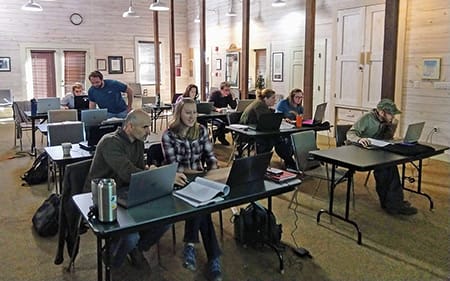
Burn prioritization modeling seminars and fire modeling tools are supported by Wildland Fire Science to train managers in the important planning stages of prescribed fires.
Educating and guiding the next generation of fire researchers and managers is a key goal of Wildland Fire Science and a resource for testing new ideas in fire research.
Tall Timbers hosts the premier fire technology transfer organization—the Southern Fire Exchange. This JFSP funded effort helps connect research to management through webinars, workshops, and support of the Prescribed Fire Science Consortium.
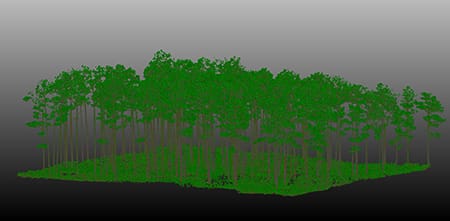
Working with partners in the Prescribed Fire Science Consortium, the program is building nexgen 3-D fuel beds using terrestrial LiDAR and novel sampling techniques to power new fire behavior models for prescribed fire managers. This work links to Tall Timbers work in wildlife habitat usage and ecological forestry.
The Longleaf Legacy landscape prescribed fire burn team arm of Wildland Fire Science works directly with landowners and partners to effectively put fire on the ground and promote prescribed fire throughout the region.
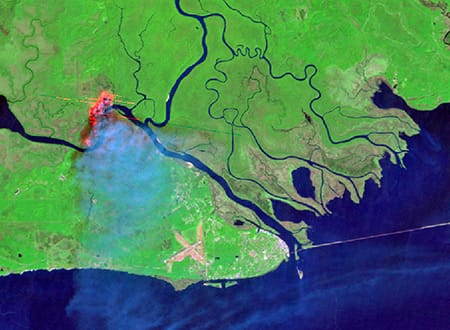
Tall Timbers is leading an effort to map fire regimes at the landscape scale. Staff work with numerous agencies to evaluate fire records and satellite imagery to build this critical conservation database. https://skfb.ly/6DqOY
Tall Timbers hosts the Prescribed Fire Science Consortium, a national network of researchers and managers who promote integrated research and management to advance next generation tools for fire practitioners. https://arcg.is/1DSjDT
We are linking physics and field observations to understand the fluid dynamics of fire behavior surface fire regimes. Our work combines field observations using advanced thermal imaging techniques, laboratory studies, and coupled fire-atmospheric modeling to help managers improve outcomes of managed fire regimes.
Selected Publications authored by Wildland Fire Science staff.
Staff and researchers support Federal fire training by serving as a cadre for NWCG training courses, ranging from basic wildland fire to advanced fire effects.
(PFTC) specializes in training fire fighters the principles and techniques of prescribed fire through practical hands-on experience. https://www.fws.gov/fire/pftc/
Private land owners are the largest source of prescribed fire in the country. These land owners and the culture of fire that was maintained by them during decades of suppression are a part of why Tall Timbers is a world-wide center for prescribed fire science. Workshops and fire training are a critical focus of the Longleaf Legacy Landscape Burn Team and our support of the Georgia Forestry Commission Prescribed Fire Center in Marion County.
The conserved lands of the Greater Red Hills region are found on working, income-producing properties that support agriculture, forestry, and recreational hunting. These properties contribute $272 million annually to local economies and support 2,300 jobs. [link to Planning & Advocacy section] The landowners’ strong stewardship ethic preserves their working lands while replenishing drinking water supplies, protecting water quality, and providing wildlife habitat for dozens of rare and endangered species. Tall Timbers’ conservation easements on these working properties encourage landowners to retain their traditional livelihood by keeping farms in family ownership.
Home to world-class wild quail populations, the Greater Red Hills region contains the largest concentration of gamebird preserves in the United States. These preserves also support the largest community of Red-cockaded woodpeckers on private lands. Indicators of high quality habitat found here include the gopher tortoise, Bachman’s sparrow, fox squirrel, and many amphibians. Tall Timbers’ conservation easements identify and protect the critical habitats of these species.
The region also boasts outstanding aquatic resources. Large river systems, like the Flint/Apalachicola, Ochlockonee, and Aucilla, flow from Georgia and feed into the Gulf of Mexico to support some of the world’s most productive estuaries. Large disappearing sinkhole lakes, like Iamonia, Miccosukee, and Jackson, provide habitat for an array of aquatic species and migratory birds. Tall Timbers’ conservation easements protect these vital watersheds and wetlands that are the lifeblood for the ecological health of the region.
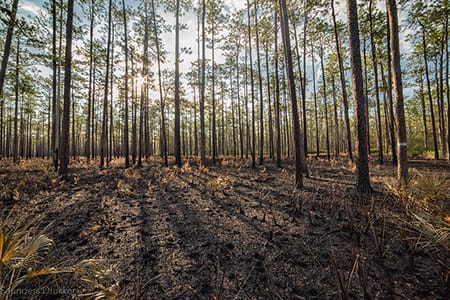
Once dominated by longleaf pine, our pine woodlands support abundant wildlife and local economies. These forests need prescribed fire to stay healthy. Herbert L. Stoddard and his associates Ed and Roy Komarek were pioneers in this emerging scientific field during the mid-20th century. Tall Timbers continues that legacy with applied research on prescribed fire and land management. Today, there is a tremendous need to expand prescribed fire use beyond the Red Hills to ensure ecosystem health and reduce wildfire risk. Additionally, Tall Timbers uses conservation easements to permanently protect private woodlands while balancing the need for economic return from selective timbering.



 The Stoddard Bird Lab distributed bird boxes in south Florida last month in prep for our exciting and novel attempt to reintroduce the Brown-headed Nuthatch to Jonathan Dickinson State Park. Thirty-five of the simple-to-make structures were placed on St. Sebastian River Preserve State Park where there is a healthy nuthatch population. The boxes nearly double nesting success for this declining species and should make about 20 juvenile nuthatches available for translocation later this year, just 70 miles south to Jonathan Dickinson State Park.