Old longleaf pines will assist with tree-ring study of historical fires
By Monica Rother, PhD, Fire Ecologist
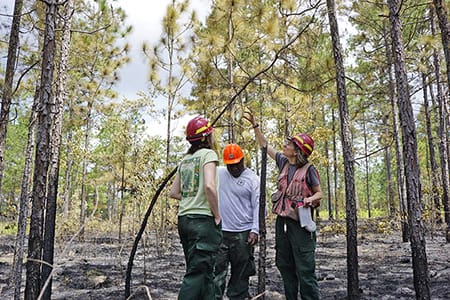
Members of the Fire Ecology and Wildland Fire Science Programs at Tall Timbers recently collected tree-ring data from old live trees on the Lathrop Bayou Tract, Florida. The team included Monica Rother (Fire Ecologist), Kevin Robertson (Fire Ecology Program Director), and Saunders Drukker (Wildland Fire Science Technician). The Bureau of Land Management owns the tract, which is located on a small peninsula in the panhandle of Florida. Access is limited because private land on the eastern side prohibits access to the western side, except by boat. This research was conducted with assistance from Dann Childs of Tyndall Air Force Base and Melanie Kaeser of the US Fish and Wildlife Service.
Kevin Robertson and Monica Rother of the Fire Ecology Program after a short boat ride to Lathrop Bayou Tract. Photo by Saunders Drukker.
Sampling efforts targeted older looking longleaf pines, with flat tops or thick upper branches. We used increment borers to extract a pencil thin sample of wood from each tree of interest. This sampling method does not harm the live tree and allows the researcher to not only learn the tree’s age, but also to examine tree-ring patterns throughout the life of the tree. Most trees in a given location will exhibit similar patterns of narrow and wide rings related to year-to-year variability in climate, including periods of drought and abundant rainfall.
Kevin Robertson director of the Fire Ecology Program enters a flatwoods site known as the Lathrop Bayou Tract. Photo by Monica Rother.
In all, we cored 19 longleaf pine on the Lathrop Bayou Tract and two additional slash pine growing at a nearby location. The cores were placed in paper straws and transported back to Tall Timbers for processing and analysis. Fire Ecology interns Joshua Faylo and Dylan Lockard are now assisting with the mounting, sanding, and tree-ring analysis of the cores.
At left, Wildland Fire Science technician Saunders Drukker uses an increment borer to collect a pencil-thin sample of wood from a living longleaf pine on the Lathrop Bayou Tract. Photo by Monica Rother. At right, a tree core from an old longleaf pine sampled on the Lathrop Bayou Tract. Photo by Monica Rother.
Once processed, we will use the tree cores along with previously collected wood from dead trees to build a multi-century site-level representation of annual tree-ring width patterns. This record, known as a tree-ring chronology, is needed to date fire-scarred stumps that were collected in October of 2017. See: http://talltimbers.org/news/news.php?news_id=644 . Monica Rother, Kevin Robertson, and Jean Huffman (Tall Timbers Research Associate), will ultimately use the fire scars in the stumps to learn about the historical frequency and season of fires for the study area. This research complements similar work led by Jean Huffman on the St. Joseph Bay State Buffer Preserve.
Parasitic Chatter: addressing concerns of recent parasite findings in Northern Bobwhite
By Dr. Theron M. Terhune, Game Bird Program Director at Tall Timbers
A recent article in the the Sporting Classics Daily cited the eyeworm (Oxyspirura petrowi) and a parasitic cecal worm (Aulonecephalus pennula) as the cause for population declines in Texas. Naturally these reports of parasites in bobwhites has created a flurry of concern and questions relevant to bobwhite populations here in the Red Hills and Albany plantation area. The eyeworm reported in Texas and Oklahoma has not been detected so far in our area or on the East Coast to our knowledge—we have and will continue to send samples annually to be tested for disease and parasites. Whereas we value and support all research aimed at advancing the needle forward in understanding the ecology, conservation and management of bobwhite, we caution the interpretation of these findings as unequivocal explanations for quail declines in the Southeast or other regions.
The most recent findings of presence and prevalence of parasites in bobwhite is not by any stretch novel. Parasites are not only relatively common in quail and other game birds but have been known to exist since the early 1900s (Kobayashi 1927, Cram 1937), and more ubiquitously reported in quail in the 1960s and 70s (Kellogg and Calpin 1971). Recent claims not only contradict past findings that parasitic worms are an infrequent cause of mortality (Davidson et al. 1980, 1982, and 1991, and Brennan 1999), but do so without empirical data linking the presence of said parasites to survival, reproduction and recruitment in bobwhite populations. One big difference in western bobwhite populations compared to the Red Hills is the “boom or bust” cycles common in Texas, which is linked tightly to rainfall. Environmental conditions during periods of extended drought may render bobwhite more vulnerable to disease and parasites due potential altered physiological tolerances related to heat and water stress. Regardless of these environmental stressors, the lack of data on the demographic effects limits inference on how these parasites truly impact bobwhite populations in Texas and other parts of the range.
Despite range-wide bobwhite declines, properties in the Red Hills continue to experience some of the highest bobwhite densities ever recorded historically, which is a direct testament that habitat management still works when applied correctly. We recognize that research on this topic is ongoing, but we have not yet seen evidence of population-level impacts on bobwhites. Therefore, we urge you to stay the course in continuing to implement sound habitat management as well as incorporate supplemental feeding and predation management to mitigate natural cyclic declines common in bobwhite populations.
By Scott Pokswinski, Research Biologist and Kevin Hiers, Wildland Fire Scientist
In the Southeast, most objectives for prescribed fire seek to topkill shrubs or promote pine regeneration, but how species differ in tradeoffs between investment in evolutionary defenses that aid in survival versus rapid growth to escape fire remain poorly understood. For instance, are hardwoods that are repeatedly top killed capable of altering bark thickness? How does frequency of canopy loss alter photosynthetic rates and underground storage? How does the shape of individual shrubs alter fire’s heat transfer to vulnerable tissues such as cambium and buds? A new twelve-year experiment in joint collaboration of the USDA Forest Services Pacific Northwest Research Station and Tall Timbers Wildland Fire Program is investigating mechanisms of fire resistance in pyrophytic trees (trees that are resistant to fire) and hopes the work will connect mechanisms of plant response to observations of reprouting and survival noted in previous Tall Timbers research.
Seven species of hardwoods and three pine species were chosen to be planted in a two-acre area south of Tower Course under the shadow of the former television tower at Tall Timbers. These trees will be treated with fire and clipping at different intervals, with individuals of each species burned or clipped every two, four or six years. Novel observations of heat flux from fires on individuals will be compared to growth and patterns of tree damage. Other trees will be excavated to compare physical characteristics such as underground mass, bark thickness and texture, and branching. This experiment will allow us to see if increased rate of fire or clipping stimulates an increased investment in fire resistant strategies over controlled trees that were neither burned or clipped. We will also be able to compare these characteristics across species. The three pine species; longleaf (Pinus palustris), slash (P. elliottii), and loblolly (P. taeda) will be compared in one experiment and seven hardwoods; turkey oak (Quercus laevis), white oak (Q. alba), southern red oak (Q. falcata), sand live oak (Q. geminata), laurel oak (Q. hemisphaerica), red maple (Acer rubrum) and blackgum (Nyssa sylvatica) will be compared in the other.
In all, over 900 two-year-old trees were planted in two days by members of the Pacific Northwest Research lab and the Wildland Fire Program with the assistance of Tall Timbers land manager Eric Staller. With the substantial effort to get the trees in the ground over, trees will be given a few months of tender loving care before researchers begin to try to kill them with fire.
Ten species of trees are planted randomly in rows across the two-acre field. Over 900 individual trees were planted over two days.
A picture of a two-year-old turkey oak (Quercus laevis) showing bark texture at the time of initial establishment in the garden.
Wildland Fire Science technician Saunders Drukker mulching a laurel oak (Quercus hemisphaerica).
Paul Grimes hired as full-time game bird biologist for the Carolina region
The Tall Timbers Board of Trustees approved a full-time biologist position in the Carolinas as part of the recently updated Strategic Plan. Mr. Paul Grimes was selected for this position and began working full-time on January 16, 2018.
Paul grew up on the Georgia/South Carolina line and lives with his wife Rita and daughter Kathleen (Kati-Jo) near Augusta, Georgia. He earned his BS and MS Degrees in Forest Resources from the University of Georgia (UGA) in 2008 and 2012, respectively. His thesis research focused on northern bobwhite population response to habitat improvements associated with red-cockaded woodpecker restoration efforts. Paul is no newcomer to Tall Timbers having served as an intern in Central Florida as part of a bobwhite research project. Since graduating from UGA, Paul worked for seven years at Ft. Gordon Army Base and then for three years as the project leader for the Georgia Wildlife Resources Division’s Bobwhite Quail Initiative. With extensive education and field experience Paul has excellent technical skills, including GIS and mapping, and a strong practical knowledge of managing and monitoring bobwhite habitats and populations. Last but certainly not least, he is an avid quail and upland bird hunter and a proven bird dog trainer!
We are excited to have Paul join the Game Bird Program team and look forward to the future expansion of wild bobwhite lands in the Carolinas as a result. Paul can be contacted by phone at 706-825-0451 or email at dpgrimes@talltimbers.org.
2018 Continental Field Trial: Separating Fact from Fiction
Dixie Plantation and the Continental Field Trial Club were proud to host the 123rd running of the Continental Field Trial in late January—the 82nd consecutive year the trial has been held at Dixie. An entry of 25 derby and 75 all-age dogs made for a good field that took 11 days to complete. Congratulations to this year’s winners (see photo). A special thanks goes to the Continental Field Trial Club board members led by club president (and Dixie Plantation manager) Randy Floyd. Thanks as well to the many sponsors, donors, and volunteers who help make the trial a success, and to the Dixie Plantation staff that spends two weeks out of their busy year consumed by the activities of the trial.
As most of you know, Dixie Plantation is owned by Tall Timbers, but operated as a separate LLC with its own budget; it has to pay its own way. This is a challenging proposition, but one we have been able to accomplish now for our four years of ownership. The leasing of quail hunts is an important part of our income, so it is not insignificant to give up two weeks of the season to host a field trial. To make up for this, the Continental Field Trial Club has made a sizable donation each year from the proceeds of the trial that go directly to the operation of the property. The majority of these funds come from sponsorships, donations, and fundraisers held by the club, as entry fees alone just do cover the cost of putting on the trial and paying out of prize money.
From the very beginning of Tall Timbers’ tenure at Dixie, there were concerns from the trial participants about increased hunting on the property and what effect it would have on the field trial. Our new lease hunters likewise expressed concern about the effects the trial may have on their hunt quality after the event. We have been very careful to manage the hunting activity on the plantation, and have researched the effects of the trial on hunt quality. In fact, we published a paper in last year’s National Quail Symposium, which documented the lack of effect the Continental had on quail survival or post-hunt quality. Despite this, we still hear comments every year during the trial about the birds being wild and hard to find and/or point. These comments seemed to be more prevalent than normal this year, as adverse weather through the weekend made things tough. Unfortunately, this is also the time of the largest galleries and the birds did not show well for a couple of days. It is easy to blame this on hunting pressure, but this conclusion is uninformed. Hunting pressure is carefully controlled and evenly distributed on the 10 half-day hunting courses at Dixie, with each course hunted only once in a 2-week period. This results in these courses being hunted 3-4 times in the two months of the season prior to the trial. This level of hunting is typical of hunting on any private property and not enough pressure to affect the field trial.
The field trial itself runs over these same courses 12-14 days in a row. It’s no surprise then that coveys can be more difficult to find and/or point with this level of disturbance. They are pure wild quail—one of only a handful of field trial venues left in the country where this is the case. Our telemetry during the trial has demonstrated that coveys shift their use into heavier cover after the trial has been going a few days. It does not take long for the birds to settle down and resume their normal pattern once things have quieted. In fact, one of our lease groups hunted for two days, one week after the trial, and saw 46 coveys, pointing 40 of them. They left happy and expressed their appreciation for being able to use and enjoy the property.
Each year we receive a lot of positive comments from field trial participants for the progress made on habitat over the past three years. Occasionally, however, a few concerns are heard and rumors make the rounds during and after the Continental. This year’s rumors centered on Dixie having run out of money and that we quit feeding quail because we spent so much money on the main house that we can no longer afford to buy sorghum. It is humorous to us, but when we continue to hear these comments circulate weeks after the trial, we figured we better set the record straight. Rest assured neither of these is anywhere close to the truth. Dixie is fed exactly in line with the “industry standard” on plantations—1.5 bushels per acre/year, once every two weeks, year round. A diverter shield on the spreader puts the feed in the cover and not on the trails where it can be easily seen. It’s true we are rehabilitating the main house, which was badly needed. Most of the funding for the renovation has come from two Florida Department of State, Bureau of Historic Preservation Special Category grants secured by Tall Timbers, as well as significant private donations. Dixie has contributed some matching funds, but none of them has come from our quail management budget. In fact thanks to local donations, we have been able to expand our work on quail and now employ a full-time biologist at Dixie to help improve our efforts there.
Habitat on Dixie is an exciting work progress. There is still work to do on several fronts, including finishing the hardwood cleanup, thinning of CRP pines (they come out of the program in 2019), continuing to reduce the Predator Index, controlling Bahia grass, modifying the farming program as well as completing the Main House restoration. We remain committed to our primary objective of having a world-class wild quail hunting operation and field trial grounds—we are doing all we can afford to do to get there. We have a hard-working and dedicated staff. If you are fortunate to visit the property please thank them for what they do next time you have a chance. We appreciate the support and encouragement we have received from many of you and look forward to a long and beneficial relationship.
The M-CORES program, which includes the proposed Suncoast Connector Toll Road in Jefferson County, passed through the Florida Legislature at breakneck speed with little review or analysis. Tall Timbers has a number of concerns given the potential for significant and wide spread impacts. These include fragmenting public and private conservation lands, robbing business from Main Street Monticello, impacting our rivers and other water resources, and making prescribed fire more difficult and costly.
Join us in asking the Jefferson County Board of County Commissioners to OPPOSE the Suncoast Connector toll road and its path through Jefferson County.
Take action now with our easy email form.
Send an email to all five Jefferson County Board of County Commissioners with one click!
Burn prioritization modeling seminars and fire modeling tools are supported by Wildland Fire Science to train managers in the important planning stages of prescribed fires.
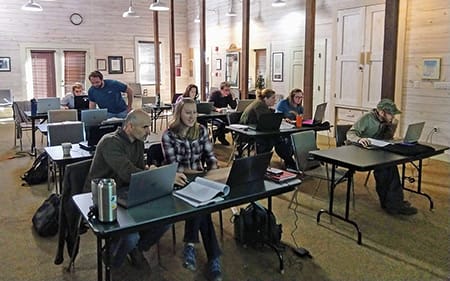
Educating and guiding the next generation of fire researchers and managers is a key goal of Wildland Fire Science and a resource for testing new ideas in fire research.
Tall Timbers hosts the premier fire technology transfer organization—the Southern Fire Exchange. This JFSP funded effort helps connect research to management through webinars, workshops, and support of the Prescribed Fire Science Consortium.
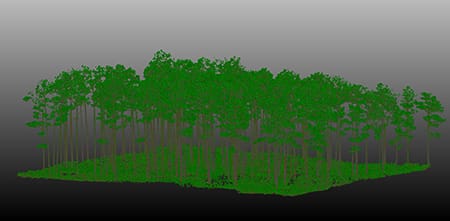
Working with partners in the Prescribed Fire Science Consortium, the program is building nexgen 3-D fuel beds using terrestrial LiDAR and novel sampling techniques to power new fire behavior models for prescribed fire managers. This work links to Tall Timbers work in wildlife habitat usage and ecological forestry.
The Longleaf Legacy landscape prescribed fire burn team arm of Wildland Fire Science works directly with landowners and partners to effectively put fire on the ground and promote prescribed fire throughout the region.
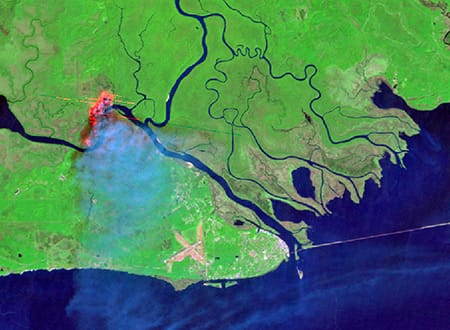
Tall Timbers is leading an effort to map fire regimes at the landscape scale. Staff work with numerous agencies to evaluate fire records and satellite imagery to build this critical conservation database. https://skfb.ly/6DqOY
Tall Timbers hosts the Prescribed Fire Science Consortium, a national network of researchers and managers who promote integrated research and management to advance next generation tools for fire practitioners. https://arcg.is/1DSjDT
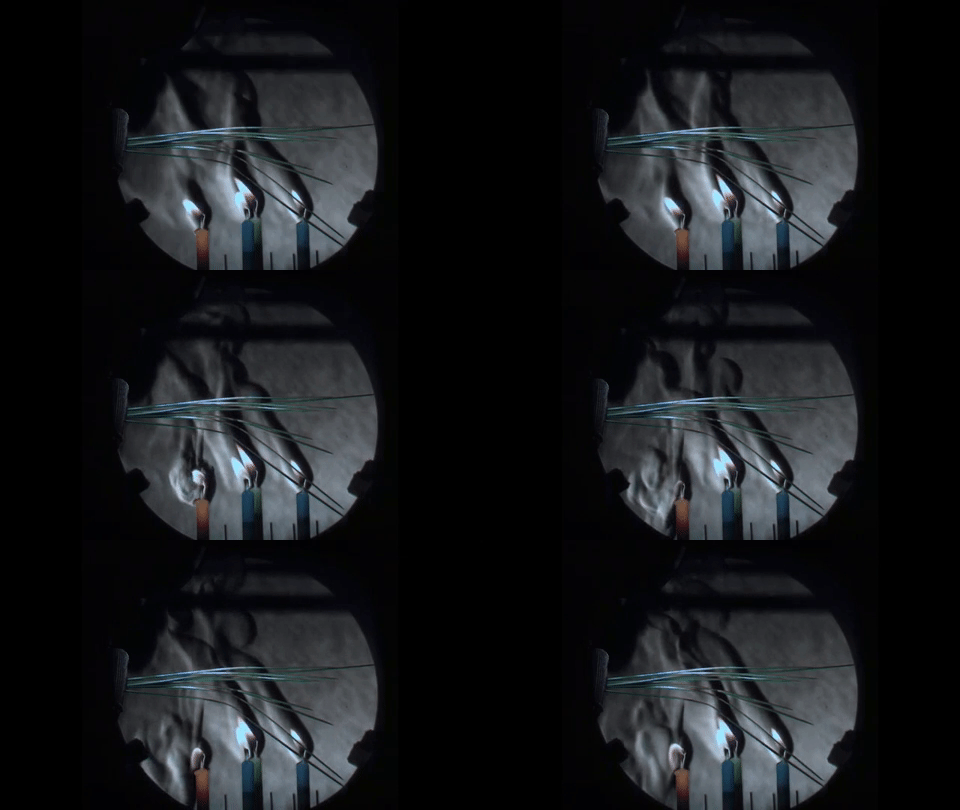
We are linking physics and field observations to understand the fluid dynamics of fire behavior surface fire regimes. Our work combines field observations using advanced thermal imaging techniques, laboratory studies, and coupled fire-atmospheric modeling to help managers improve outcomes of managed fire regimes.
Selected Publications authored by Wildland Fire Science staff.
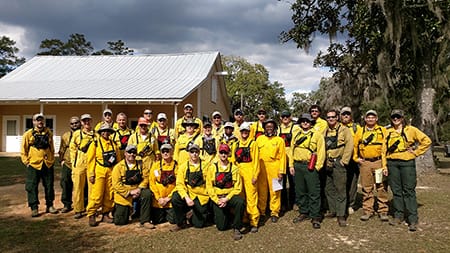
Staff and researchers support Federal fire training by serving as a cadre for NWCG training courses, ranging from basic wildland fire to advanced fire effects.
(PFTC) specializes in training fire fighters the principles and techniques of prescribed fire through practical hands-on experience. https://www.fws.gov/fire/pftc/
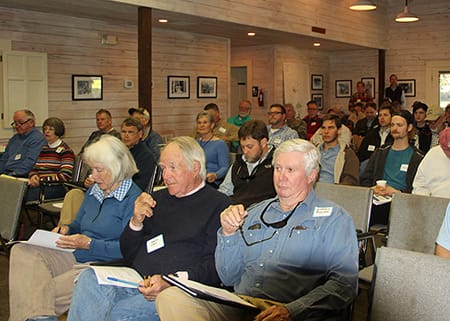
Private land owners are the largest source of prescribed fire in the country. These land owners and the culture of fire that was maintained by them during decades of suppression are a part of why Tall Timbers is a world-wide center for prescribed fire science. Workshops and fire training are a critical focus of the Longleaf Legacy Landscape Burn Team and our support of the Georgia Forestry Commission Prescribed Fire Center in Marion County.
The conserved lands of the Greater Red Hills region are found on working, income-producing properties that support agriculture, forestry, and recreational hunting. These properties contribute $272 million annually to local economies and support 2,300 jobs. [link to Planning & Advocacy section] The landowners’ strong stewardship ethic preserves their working lands while replenishing drinking water supplies, protecting water quality, and providing wildlife habitat for dozens of rare and endangered species. Tall Timbers’ conservation easements on these working properties encourage landowners to retain their traditional livelihood by keeping farms in family ownership.
Home to world-class wild quail populations, the Greater Red Hills region contains the largest concentration of gamebird preserves in the United States. These preserves also support the largest community of Red-cockaded woodpeckers on private lands. Indicators of high quality habitat found here include the gopher tortoise, Bachman’s sparrow, fox squirrel, and many amphibians. Tall Timbers’ conservation easements identify and protect the critical habitats of these species.
The region also boasts outstanding aquatic resources. Large river systems, like the Flint/Apalachicola, Ochlockonee, and Aucilla, flow from Georgia and feed into the Gulf of Mexico to support some of the world’s most productive estuaries. Large disappearing sinkhole lakes, like Iamonia, Miccosukee, and Jackson, provide habitat for an array of aquatic species and migratory birds. Tall Timbers’ conservation easements protect these vital watersheds and wetlands that are the lifeblood for the ecological health of the region.
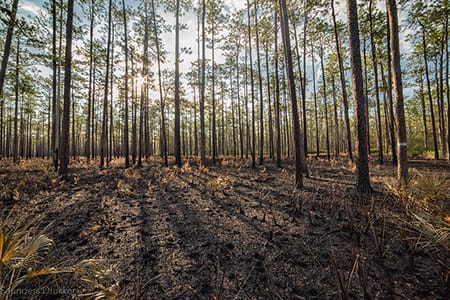
Once dominated by longleaf pine, our pine woodlands support abundant wildlife and local economies. These forests need prescribed fire to stay healthy. Herbert L. Stoddard and his associates Ed and Roy Komarek were pioneers in this emerging scientific field during the mid-20th century. Tall Timbers continues that legacy with applied research on prescribed fire and land management. Today, there is a tremendous need to expand prescribed fire use beyond the Red Hills to ensure ecosystem health and reduce wildfire risk. Additionally, Tall Timbers uses conservation easements to permanently protect private woodlands while balancing the need for economic return from selective timbering.