Animals We Love To Paint — spring exhibit at Tall Timbers
If you are an animal lover and you love good watercolor paintings, you will not want to miss this exhibit. The Tallahassee Area Watercolor Society and Tall Timbers are proud to present “Animals We Love to Paint” at the Webster Gallery in the historic Beadel House.* Approximately 35 paintings have been selected from local artists for this show; it features both wild and domestic animals. The opening and “Meet the Artists” reception is scheduled for 2:15 – 4:30 on March 11.
The exhibit remains up until May 30, 2018. Gallery hours are Tuesday and Thursday from 2:00 – 4:00 pm. Groups may schedule special tours by calling Juanita Whiddon at 850-893-4153, ext. 236 or 850-566-3390.
*The second floor gallery is not yet handicapped accessible.
Tall Timbers hosted the second Red Hills Fire Festival on January 27. The event was designed to attract individuals and families not already knowledgeable about prescribed fire by featuring live music, food, activities for all ages, and live fire demonstrations. Fire Festival is also an opportunity to showcase the many partner organizations working hard to study and apply prescribed fire in Georgia and Florida.
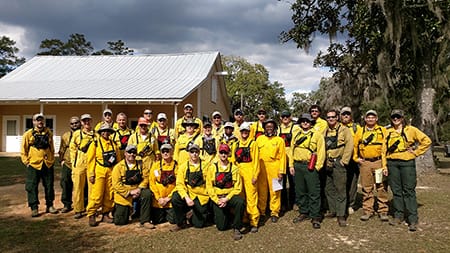
After a great start in 2017 with 650 guests, the 2018 Fire Festival grew to include 30 different partner organizations and 950 guests. A large rain event held off long enough for our all-star burn teams to do three separate prescribed fire demonstrations, right next to the main event grounds. Eric Staller, Tall Timbers Natural Resource Coordinator, led the burn teams with representation from many of the organizations participating in the festival.
Local graphics designer Eric Pate donated a wonderful poster design for the event this year, complete with the tagline of “conservation through partnerships.” Posters with all thirty participating organizations listed on the back were sold at the festival to help cover event costs.
Local band Two Foot Level provided a fantastic soundtrack for the day, playing from the porch of the historic Beadle House. Guests explored over twenty-five exhibits highlighting local ecology, fire, and live wildlife. Guided wagon rides carried festival goers out into the fire managed pine forest at Tall Timbers for a firsthand look at how prescribed fire improves wildlife habitat.
Neil Fleckenstein, Tall Timbers Planning Coordinator, led our tireless team of guides and drivers who successful ran 29 wagon tours with over 700 riders. Wagon tour guides estimated that about 70% of their guests reported that Fire Festival was their first visit to Tall Timbers—a good indicator that we are connecting with a new audience and spreading the word about the importance of prescribed for ecosystem health and reduced wildfire risk.
By Dr. Theron M. Terhune, Game Bird Program Director
Mid-to-late February typically results in a prevalence of wild flushes and running coveys, but this year male birds are already tuning their vocal chords. Yes, that’s right, we have already heard bobwhite calling activity here at Tall Timbers, along with reports from several managers in the Red Hills region indicating the same. What does this mean?
Although it is common knowledge that the bob-white call is used to attract mates, this early calling behavior does not necessarily signal the onset of breeding season. However, with global warming or climate change at the forefront of many minds, one might argue that the breeding season window is expanding at both ends—starting earlier and ending later. Historically, sporadic calling activity often begins as early as April and ramps up from there with the peak calling occurring typically in May and early June. Spring call counts can provide an index of the breeding “capital” during early spring and can also generally serve as a barometer for breeding success such that more calling often indicates more bachelor males, which implies more females sitting on nests. Our previous research has demonstrated that bob-white calling activity is most informative when identifying the peak of calling in May/June, which correlates strongly with fall abundance. In addition, distinct peaks and valleys in calling often indicate synchronized nesting and hatching (see Figure 1), respectively, but continuous calling (a plateau with not much cyclicity; see Figure 2) or erratic, rapid fluctuation in calling behavior often indicates irregular hatching caused by nest depredation followed by mating and re-nesting. However, history shows that bobwhite calling in February and March is typically sporadic and short-lived – often cold snaps in March stymie the males’ desires to get the breeding show on the road and birds remain in covey groups until spring break-up dictated by an extended photoperiod.
Tall Timbers, owner of Dixie Plantation on the Aucilla River in Jefferson County, helped with the ownership transfer of 160 acres of wetlands along the Aucilla River to the Suwannee River Water Management District (SRWMD). On Wednesday, Feb. 14, the transfer signing occurred in a ceremony at Dixie plantation.
The newly acquired parcel is located in eastern Jefferson County adjacent to Sneads Smokehouse Lake, a public recreation area owned and managed by the District. The 160-acre tract will connect two existing District properties and increase the portion of Sneads Smokehouse Lake in public ownership. The southern portion of the tract contains extensive stands of high quality mature cypress. “The District will be the best owners and stewards of this property as they will ensure the long-term protection of its water and timber resources,” said Dr. Bill Palmer, President/CEO of Tall Timbers.
The 160-acre cypress tract was under contract to be extensively logged in the near future. However, given the property’s proximity to existing public lands and its outstanding quality, there was much interest in having the parcel protected. “Many people and organizations have worked hard over the last two years to get this land into public ownership,” said Palmer.
David Ward, lifelong Jefferson County resident and co-founder of the Aucilla/Wacissa River Group, spearheaded the effort to find a conservation outcome for the property. “Finding funding for the purchase was difficult given the high value of the standing timber,” said Ward.
Tom Weller, owner of Pine Haven Plantation in Jefferson County, played a crucial role in the transaction by contributing significant funds for its purchase and negotiating the initial sale with Ware Forest Inc. In the fall of 2017, Weller toured the property with homeowners from the Ashville Area Property Owners Association (AAPOA) and was struck by the quality of the mature cypress forest and its role in protecting water quality of the Aucilla River, a designated Outstanding Florida Waterbody. He became actively involved and served as an intermediary landowner until it was sold to the District. “Frankly, this transaction would not have happened without Mr. Weller’s personal commitment to protecting the tract and his investment of time and money for its acquisition,” said Dr. Palmer.
The District has had an interest in acquiring the parcel for several years. Work was completed by the District’s Governing Board, staff and the former Executive Director, Noah Valenstein, to ensure funding was available for the purchase. “We are proud to partner with Tall Timbers to move the Ware Forest tract into public ownership for long-term conservation. The land provides valuable water resource protection for the Aucilla River, helping it to remain pristine and untouched for years to come,” commented Hugh Thomas, current Executive Director of the Suwannee River Water Management District. “The District’s commitment to acquiring the property gave everyone time to pull together funds from multiple partners,” said Palmer, who further stated, “We appreciate the work of Florida Department of Environmental Protection Secretary Valenstein who spearheaded this project during his time at the District.”
Tall Timbers used its new Red Hills Land Conservation Opportunity Fund to provide funding to assist Mr. Weller and the District to bring the deal to a close. Tall Timbers created the Opportunity Fund in 2016 to strategically invest in high quality land conservation projects in the Red Hills Region. Tall Timbers also received a grant from the Felburn Foundation, a non-profit organization with a long record of supporting land conservation projects that protect water resources, to complete the funding puzzle.
Mr. Ward reflected on the collaborative effort to save this important piece of Jefferson County. “The commitment by Jefferson County’s Tom Weller, the District, the AAPOA, the Aucilla/Wacissa River Group, Tall Timbers, and the Felburn Foundation represents conservation at its finest—diverse stakeholders working together to protect our water resources for this generation and those to come.”
It was good day to burn and Dr. Clifton (Bud) Bailey, a certified burner in Florida and Georgia and a longleaf pine ecosystem aficionado, was ready to set a prescribed fire on his property, Shade Farm in Gadsden County, Florida. Before he lit his drip torch, Dr. Bailey—a pulmonologist practicing in Tallahassee—discussed the endowment he setup with Tall Timbers from the sale of his pecan grove, and how it came about.
When Dr. Bailey and his partners donated a conservation easement on their property to Tall Timbers in 2011, there were costs associated with the transaction (legal fees, defense fund, etc.) that he says exceeded $25,000. He calls it “give and pay to take the easement.” Dr. Bailey is an advocate for conservation easements, but because the cost of easement donation is not possible for those who he says are “land rich but cash poor,” Dr. Bailey decided to do something about it. That something was selling a pecan grove he had purchased in 1989, establishing the Clifton J. Bailey Endowment. The grove had appreciated in value, so last year (2017) he offered to donate it to Tall Timbers, so it could then be sold to setup an endowment for conservation easement donors.
Dr. Bailey was interested in supporting conservation easements, but also, he has a passion for the longleaf ecosystem. His generous gift brought $550,000 dollars to Tall Timbers Foundation to support both. Our goal is to grow the fund to $1 million so that it can support top graduate students, as well as help conserve the region.
The pecan grove was purchased by Joey Collins, who managed the grove for Dr. Bailey; 2017 was expected to be a good year for pecan growers. Three days before the sale of the pecan grove in September, Hurricane Irma was blowing her way up the peninsula of Florida, headed for the Tallahassee/Thomasville area as a devastating category 5 storm. A direct hit was expected, which would have severely damaged the grove (and everything else in its path!). But Mr. Collins, the gentleman farmer he is, didn’t back out of the sale. But instead the hurricane tracked to the east much diminished in strength, giving the area a glancing blow as a tropical storm. The pecan grove was undamaged and had the biggest yield in 15 years! And, Dr. Bailey is guaranteed a lifetime supply of pecans!
The M-CORES program, which includes the proposed Suncoast Connector Toll Road in Jefferson County, passed through the Florida Legislature at breakneck speed with little review or analysis. Tall Timbers has a number of concerns given the potential for significant and wide spread impacts. These include fragmenting public and private conservation lands, robbing business from Main Street Monticello, impacting our rivers and other water resources, and making prescribed fire more difficult and costly.
Join us in asking the Jefferson County Board of County Commissioners to OPPOSE the Suncoast Connector toll road and its path through Jefferson County.
Take action now with our easy email form.
Send an email to all five Jefferson County Board of County Commissioners with one click!
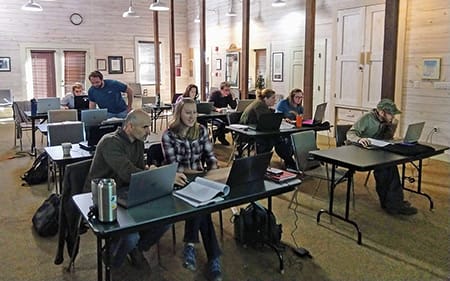
Burn prioritization modeling seminars and fire modeling tools are supported by Wildland Fire Science to train managers in the important planning stages of prescribed fires.
Educating and guiding the next generation of fire researchers and managers is a key goal of Wildland Fire Science and a resource for testing new ideas in fire research.
Tall Timbers hosts the premier fire technology transfer organization—the Southern Fire Exchange. This JFSP funded effort helps connect research to management through webinars, workshops, and support of the Prescribed Fire Science Consortium.
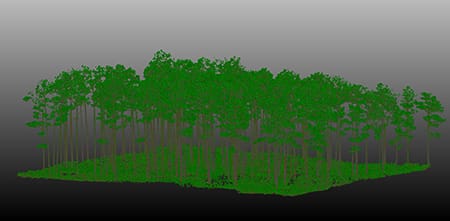
Working with partners in the Prescribed Fire Science Consortium, the program is building nexgen 3-D fuel beds using terrestrial LiDAR and novel sampling techniques to power new fire behavior models for prescribed fire managers. This work links to Tall Timbers work in wildlife habitat usage and ecological forestry.
The Longleaf Legacy landscape prescribed fire burn team arm of Wildland Fire Science works directly with landowners and partners to effectively put fire on the ground and promote prescribed fire throughout the region.
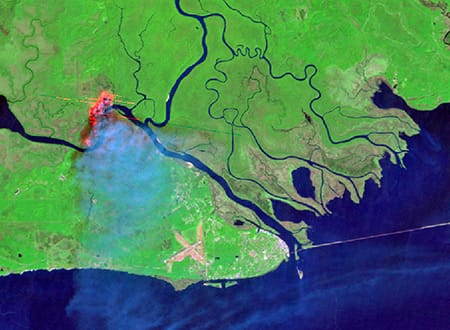
Tall Timbers is leading an effort to map fire regimes at the landscape scale. Staff work with numerous agencies to evaluate fire records and satellite imagery to build this critical conservation database. https://skfb.ly/6DqOY
Tall Timbers hosts the Prescribed Fire Science Consortium, a national network of researchers and managers who promote integrated research and management to advance next generation tools for fire practitioners. https://arcg.is/1DSjDT
We are linking physics and field observations to understand the fluid dynamics of fire behavior surface fire regimes. Our work combines field observations using advanced thermal imaging techniques, laboratory studies, and coupled fire-atmospheric modeling to help managers improve outcomes of managed fire regimes.
Selected Publications authored by Wildland Fire Science staff.
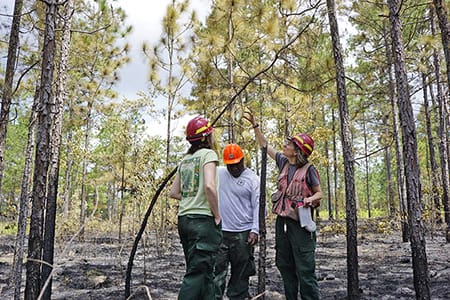
Staff and researchers support Federal fire training by serving as a cadre for NWCG training courses, ranging from basic wildland fire to advanced fire effects.
(PFTC) specializes in training fire fighters the principles and techniques of prescribed fire through practical hands-on experience. https://www.fws.gov/fire/pftc/
Private land owners are the largest source of prescribed fire in the country. These land owners and the culture of fire that was maintained by them during decades of suppression are a part of why Tall Timbers is a world-wide center for prescribed fire science. Workshops and fire training are a critical focus of the Longleaf Legacy Landscape Burn Team and our support of the Georgia Forestry Commission Prescribed Fire Center in Marion County.
The conserved lands of the Greater Red Hills region are found on working, income-producing properties that support agriculture, forestry, and recreational hunting. These properties contribute $272 million annually to local economies and support 2,300 jobs. [link to Planning & Advocacy section] The landowners’ strong stewardship ethic preserves their working lands while replenishing drinking water supplies, protecting water quality, and providing wildlife habitat for dozens of rare and endangered species. Tall Timbers’ conservation easements on these working properties encourage landowners to retain their traditional livelihood by keeping farms in family ownership.
Home to world-class wild quail populations, the Greater Red Hills region contains the largest concentration of gamebird preserves in the United States. These preserves also support the largest community of Red-cockaded woodpeckers on private lands. Indicators of high quality habitat found here include the gopher tortoise, Bachman’s sparrow, fox squirrel, and many amphibians. Tall Timbers’ conservation easements identify and protect the critical habitats of these species.
The region also boasts outstanding aquatic resources. Large river systems, like the Flint/Apalachicola, Ochlockonee, and Aucilla, flow from Georgia and feed into the Gulf of Mexico to support some of the world’s most productive estuaries. Large disappearing sinkhole lakes, like Iamonia, Miccosukee, and Jackson, provide habitat for an array of aquatic species and migratory birds. Tall Timbers’ conservation easements protect these vital watersheds and wetlands that are the lifeblood for the ecological health of the region.
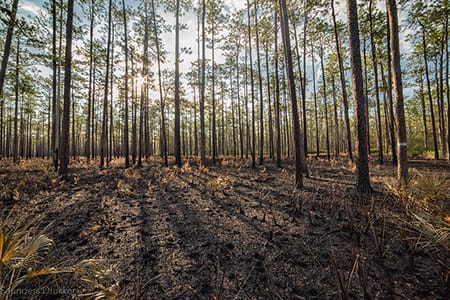
Once dominated by longleaf pine, our pine woodlands support abundant wildlife and local economies. These forests need prescribed fire to stay healthy. Herbert L. Stoddard and his associates Ed and Roy Komarek were pioneers in this emerging scientific field during the mid-20th century. Tall Timbers continues that legacy with applied research on prescribed fire and land management. Today, there is a tremendous need to expand prescribed fire use beyond the Red Hills to ensure ecosystem health and reduce wildfire risk. Additionally, Tall Timbers uses conservation easements to permanently protect private woodlands while balancing the need for economic return from selective timbering.



 Local graphics designer Eric Pate donated a wonderful poster design for the event this year, complete with the tagline of “conservation through partnerships.” Posters with all thirty participating organizations listed on the back were sold at the festival to help cover event costs.


 Mid-to-late February typically results in a prevalence of wild flushes and running coveys, but this year male birds are already tuning their vocal chords. Yes, that’s right, we have already heard bobwhite calling activity here at Tall Timbers, along with reports from several managers in the Red Hills region indicating the same. What does this mean?


 The District has had an interest in acquiring the parcel for several years. Work was completed by the District’s Governing Board, staff and the former Executive Director, Noah Valenstein, to ensure funding was available for the purchase. “We are proud to partner with Tall Timbers to move the Ware Forest tract into public ownership for long-term conservation. The land provides valuable water resource protection for the Aucilla River, helping it to remain pristine and untouched for years to come,” commented Hugh Thomas, current Executive Director of the Suwannee River Water Management District. “The District’s commitment to acquiring the property gave everyone time to pull together funds from multiple partners,” said Palmer, who further stated, “We appreciate the work of Florida Department of Environmental Protection Secretary Valenstein who spearheaded this project during his time at the District.”