Tall Timbers Auction & Golf Tournament is September 22 – 23
Glen Arven Country Club in Thomasville, GA will once again be the site of the Tall Timbers Auction & Golf Tournament. Exceptional hunting and fishing trips, great family vacations, fine art, and so much more will be availabe to bid on at the auction dinner, Sunday, September 22. An individual dinner ticket is $150; a table of six is $750; a table of eight is $1000.
Invitations to the Auction Dinner will be mailed in mid-August to Tall Timbers members and donors. Dinner tickets can be reserved by emailing Starr Askew or calling her at 850.893.4153, x249. Or you can purchase tickets online at http://www.talltimbers.org/support-golf.html.
The next day, the Kate Ireland Memorial Golf Tournament will test your skill at Glen Arven’s historic links. Secure a playing spot for $600 or put together a team of 4 for $1500. Hole sponsorhsips are $350, perfect for a corporate sponsor who wants to support Tall Timbers. For information on how you can be a Player, Team or Hole Sponsor, email Starr Askew or call her at 850.893.4153, x249, or you can register at http://www.talltimbers.org/support-golf.html.
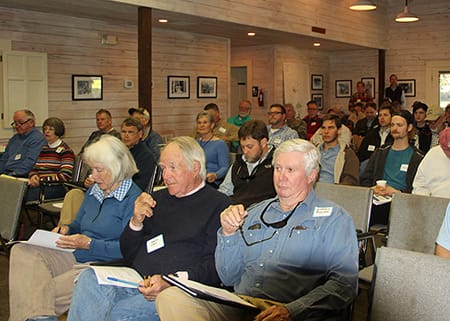
2012 Dinner & Auction attendees socialize before the bidding began for the live Auction.
With only a few short weeks left in 2013, our annual Membership campaign is drawing to a close. To support our research, conservation and education programs we have a goal of $425,000 for the year. With your help, we can reach that goal. Please consider renewing your membership today. You can do so securely online at: http://www.talltimbers.org/membership.html. If you have already done so, we hope that you might consider giving a gift of membership to a friend or colleague that you think would enjoy the benefits of becoming a member.
In this time of giving, we wish to give thanks to each and every one of you who have given of your time, talents and treasure to Tall Timbers in 2013.
Happy Holidays!
The Beadel House living room decorated for the holidays. Sunday, December 8 at 2:15 there will be a tour of the Beadel House and Jones Family Tenant Farm. Come see the rest of the house dressed for Christmas.
Published at the end of last year, The Legacy of a Red Hills Hunting Plantation: Tall Timbers Research Station & Land Conservancy by Robert L. Crawford and William R. Brueckheimer traces the evolution of Tall Timbers benefactor Henry Beadel from sportsman and naturalist to conservationist. Complemented by a wealth of previously unpublished, rare vintage photographs, it follows the transformation of the plantation into what its founders envisioned — a long-term research station, independent of government or academic funding and control. The book can be ordered from Tall Timbers.
A new Director of Development hired at Tall Timbers
We are pleased to announce that Dale Fuller has joined Tall Timbers as its new Director of Development. She will plan, implement and coordinate all development activities at Tall Timbers as well as implement our marketing program to increase the visibility and reach of the organization. An avid outdoors woman, Dale is a native of the Red Hills region with experience in fundraising, marketing, communication and public relations, and a proven record of engaging volunteers, creating beneficial partnerships and soliciting funds. As you encounter Dale in her capacity as the Director of Development for Tall Timbers, please make her feel welcome.
“I am excited about this opportunity, and I look forward to working with staff, volunteers and the community to move forward the important work and mission of Tall Timbers.” Dale
Tall Timbers Map Collection Digitized and Cataloged
By Carol Kimball, Librarian
Newly available through our online library catalog are digital versions of our map collection. They range from aerial photographs of the Red Hills region, to historic maps of Leon and Thomas Counties. There are hand drawn timber maps of the various plantations from the 1940s and ‘50s, and many other maps of regional interest.
Using grant money from the Panhandle Library Access Network (PLAN) and Capital City Bank Group Foundation, we were able to get the historic, one-of-a-kind maps scanned, and cataloged. The scanned maps are linked to the library record, and are accessible to the public, online. Visit the library page on our website to find the catalog link: http://www.talltimbers.org/info-library.html
The M-CORES program, which includes the proposed Suncoast Connector Toll Road in Jefferson County, passed through the Florida Legislature at breakneck speed with little review or analysis. Tall Timbers has a number of concerns given the potential for significant and wide spread impacts. These include fragmenting public and private conservation lands, robbing business from Main Street Monticello, impacting our rivers and other water resources, and making prescribed fire more difficult and costly.
Join us in asking the Jefferson County Board of County Commissioners to OPPOSE the Suncoast Connector toll road and its path through Jefferson County.
Take action now with our easy email form.
Send an email to all five Jefferson County Board of County Commissioners with one click!
Burn prioritization modeling seminars and fire modeling tools are supported by Wildland Fire Science to train managers in the important planning stages of prescribed fires.
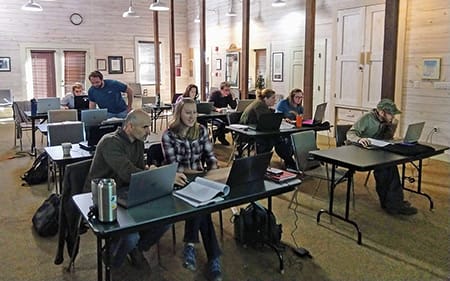
Educating and guiding the next generation of fire researchers and managers is a key goal of Wildland Fire Science and a resource for testing new ideas in fire research.
Tall Timbers hosts the premier fire technology transfer organization—the Southern Fire Exchange. This JFSP funded effort helps connect research to management through webinars, workshops, and support of the Prescribed Fire Science Consortium.
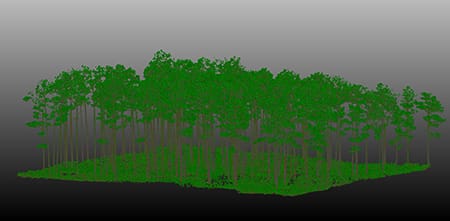
Working with partners in the Prescribed Fire Science Consortium, the program is building nexgen 3-D fuel beds using terrestrial LiDAR and novel sampling techniques to power new fire behavior models for prescribed fire managers. This work links to Tall Timbers work in wildlife habitat usage and ecological forestry.
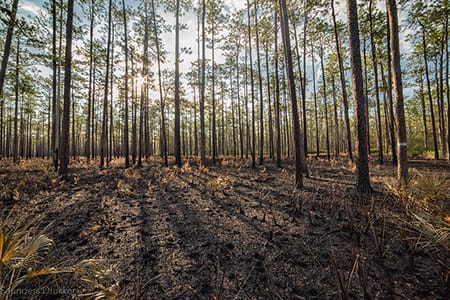
The Longleaf Legacy landscape prescribed fire burn team arm of Wildland Fire Science works directly with landowners and partners to effectively put fire on the ground and promote prescribed fire throughout the region.
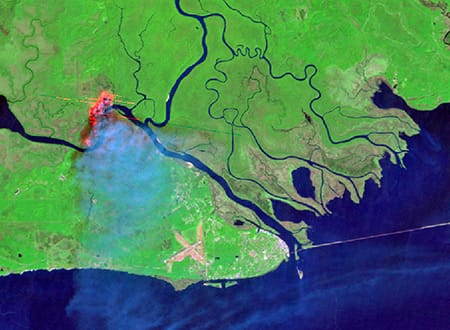
Tall Timbers is leading an effort to map fire regimes at the landscape scale. Staff work with numerous agencies to evaluate fire records and satellite imagery to build this critical conservation database. https://skfb.ly/6DqOY
Tall Timbers hosts the Prescribed Fire Science Consortium, a national network of researchers and managers who promote integrated research and management to advance next generation tools for fire practitioners. https://arcg.is/1DSjDT
We are linking physics and field observations to understand the fluid dynamics of fire behavior surface fire regimes. Our work combines field observations using advanced thermal imaging techniques, laboratory studies, and coupled fire-atmospheric modeling to help managers improve outcomes of managed fire regimes.
Selected Publications authored by Wildland Fire Science staff.
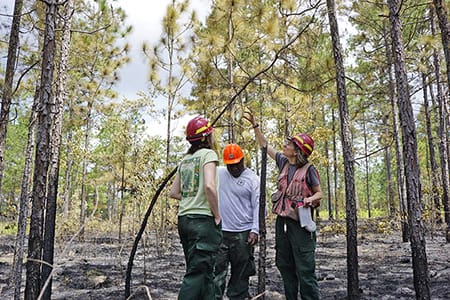
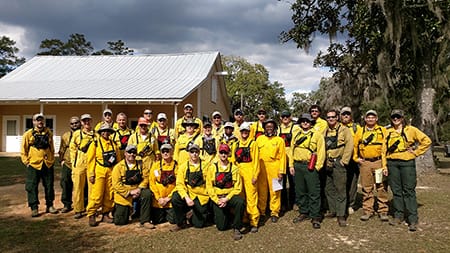
Staff and researchers support Federal fire training by serving as a cadre for NWCG training courses, ranging from basic wildland fire to advanced fire effects.
(PFTC) specializes in training fire fighters the principles and techniques of prescribed fire through practical hands-on experience. https://www.fws.gov/fire/pftc/
Private land owners are the largest source of prescribed fire in the country. These land owners and the culture of fire that was maintained by them during decades of suppression are a part of why Tall Timbers is a world-wide center for prescribed fire science. Workshops and fire training are a critical focus of the Longleaf Legacy Landscape Burn Team and our support of the Georgia Forestry Commission Prescribed Fire Center in Marion County.
The conserved lands of the Greater Red Hills region are found on working, income-producing properties that support agriculture, forestry, and recreational hunting. These properties contribute $272 million annually to local economies and support 2,300 jobs. [link to Planning & Advocacy section] The landowners’ strong stewardship ethic preserves their working lands while replenishing drinking water supplies, protecting water quality, and providing wildlife habitat for dozens of rare and endangered species. Tall Timbers’ conservation easements on these working properties encourage landowners to retain their traditional livelihood by keeping farms in family ownership.
Home to world-class wild quail populations, the Greater Red Hills region contains the largest concentration of gamebird preserves in the United States. These preserves also support the largest community of Red-cockaded woodpeckers on private lands. Indicators of high quality habitat found here include the gopher tortoise, Bachman’s sparrow, fox squirrel, and many amphibians. Tall Timbers’ conservation easements identify and protect the critical habitats of these species.
The region also boasts outstanding aquatic resources. Large river systems, like the Flint/Apalachicola, Ochlockonee, and Aucilla, flow from Georgia and feed into the Gulf of Mexico to support some of the world’s most productive estuaries. Large disappearing sinkhole lakes, like Iamonia, Miccosukee, and Jackson, provide habitat for an array of aquatic species and migratory birds. Tall Timbers’ conservation easements protect these vital watersheds and wetlands that are the lifeblood for the ecological health of the region.
Once dominated by longleaf pine, our pine woodlands support abundant wildlife and local economies. These forests need prescribed fire to stay healthy. Herbert L. Stoddard and his associates Ed and Roy Komarek were pioneers in this emerging scientific field during the mid-20th century. Tall Timbers continues that legacy with applied research on prescribed fire and land management. Today, there is a tremendous need to expand prescribed fire use beyond the Red Hills to ensure ecosystem health and reduce wildfire risk. Additionally, Tall Timbers uses conservation easements to permanently protect private woodlands while balancing the need for economic return from selective timbering.