Senah Plantation in southwest Georgia Friday, October 28
Senah Plantation is an 8,000-acre property in Lee County, Georgia. The plantation is a prime example of a property where intention and intensive management, combined with translocation, can re-establish a self-sustaining, huntable population of wild quail.
Orton Plantation in North Carolina Friday, November 4
Orton Plantation is an ~11,000-acre property near Wilmington, North Carolina. The plantation is currently a quail translocation site where we are conducting an intensive research project.
5 Stand is a type of shotgun sport shooting similar to sporting clays, trap and skeet. There are five stations, or stands and six to eighteen strategically placed clay target throwers(called traps). Shooters shoot in turn at various combinations of clay birds. Each station will have a menu card that lets the shooter know the sequence of clay birds he or she will be shooting at (i.e. which trap the clay bird will be coming from). The shooter is presented with 5 targets at each station, first a single bird followed by two pairs. Pairs can be either “report pairs,” in which the second bird will be launched after the shooter fires at the first; or “true pairs” when both birds launch at the same time. After shooting at the 5 birds on the menu at that station, the shooter proceeds to the next stand, where they find a new menu of 5 targets.
Typical five stand targets are a rabbit, chandelle, overhead, standard skeet high house and low house shots, teal (launched straight up into the air), trap (straight ahead from ground level), and an incoming bird.
Rotation starts at 9am – Brunch served
Limited to 40 participants
Pre-registration required by 4pm on Friday, September 16th
Five Stand Shoot – 50 targets
Any gauge gun, 1-ounce shot or less
$100 Entry Fee
Rules will be provided upon inquiry/registration.
Prizes award to:
1st place – $500, engraved Yeti cup
2nd place – $300, engraved Yeti cup
3rd place – $200, engraved Yeti cup
10th place – engraved Yeti cup
To register for 5 Stand Sporting Shoot, click here.
Winners will be announced at the 19th Annual Kate Ireland Memorial Dinner & Auction on Sunday, September 18th, Glen Arven Country Club – tickets additional – Register online at talltimbers.org
For More Information
Contact:Dale Fuller, Tall Timbers Research Station & Land Conservancy 850-893-4153 ext. 343 | dfuller@ttrs.org
Tall Timbers 19th Annual
Kate Ireland Memorial Dinner & Auction
and Inaugural 5 Stand Sporting Shoot
Please join Tall Timbers for our 19th Annual Kate Ireland Memorial Dinner & Auction benefiting the Tall Timbers Foundation, Inc. for Tall Timbers research and conservation programs.
The festivities include a cocktail reception, a silent and live auction, and a dinner. The event attracts bidders, not only from within the Red Hills Region, but due to auction items unique to this event, our auction attracts a national audience. Each year the auction features an inspiring collection of world class artwork, unparalleled hunting and fishing opportunities, and unique offerings from the Red Hills Region and beyond. The auction will also be available online beginning August 29. Look for an email soon with the dedicated link.
This year’s event honors Cornelia (Cornie) G. Corbett, longtime Tall Timbers Board Trustee; we are very grateful for her many years of service and support.
Dinner & Auction
When: Sunday, Sept. 18, 2016 | 6:00-10:00 PM
Where: Glen Arven Country Club, 1700 Old Monticello Road | Thomasville, GA
Kate Ireland Level Four Oaks Plantation Kate Ireland Foundation
North Florida Animal Hospital
A Friend, in honor of Martha and Eddie Gerry and their managers of 70 years,
Carl Joiner and Herbert Demott
Bobwhite Quail Level
Jon Kohler & Associates A Red Hills Friend A Friend of Tall Timbers Parker Poe Charitable Trust Elbridge T. Gerry, Jr.
JMJ Outdoors LLC
Longleaf Level Baker & Hostetler Highland Associates
Tarva Plantation The Wright Group
Red Hills Level Mr. and Mrs. Redmond Ingalls Dr. and Mrs. Jerry Ford Mr. and Mrs. Edward A. Davis, Jr. DuBose Ausley Family Allen, Mooney & Barnes Barnes Capital Group Childers Construction Co. Mr. and Mrs. C. Martin Wood, III Lanigan and Associates, P.C. Messer Caparello, P.A. CenturyLink Turners Creek Farm Southwest Georgia Farm Credit/Farm Credit of Northwest Florida Plantation Petroleum
Davis King Family Farm Properties
Wiregrass Level Blackwater Timber Co.
Rebecca Chubb Strickland/Chubb Realty
MMHP Investment Advisors
Mr. and Mrs. Michael Ledyard
Commercial Bank
Streamline Roofing and Construction, Inc.
Mr. and Mrs. Russell Chubb
Dennis and Terry Darryl
A Friend of Tall Timbers
Jonathan Vines Landscape Design
Griffin Timber Services, LLC
A Chapter and Coalition Devoted to Seeing Wild Quail Back on Public Lands in Georgia
By Paul Grimes, Georgia DNR State Quail Coordinator
The Florida-Georgia Quail Coalition (Quail Coalition), formed in 2015, provides Florida and Georgia Quail Forever Chapters and members a vehicle to turn dollars into habitat on public lands. The Quail Coalition is comprised of the Florida Fish and Wildlife Commission, Georgia Wildlife Resources Division, Tall Timbers Research Station & Land Conservancy, and Quail Forever. While anyone can donate to the Quail Coalition, the Southwest Georgia Quail Forever Chapter has poured the fuel to the fire when it comes to making donations for creating quail habitat on Georgia public lands. As a resounding result of Southwest Georgia Chapter’s donations, the Quail Coalition has smashed through financial barriers and added to the habitat being created on public lands where the objective is to achieve huntable densities of wild quail. Achieving huntable densities of quail requires intensive management activities and serious habitat renovations in the right landscape over a relatively short period. Having these funds available allows for managers to increase the amount of habitat work accomplished each year.
This year an additional 900 acres have been prescribe burned, and more than 50 acres have been converted to brood range on wildlife management areas in Southwest Georgia, bringing managers closer to meeting their objective. Coupled with frequent burning, this essential habitat component, often referred to as “brood habitat” should generally make up 20 percent of the uplands to contribute noticeable value to local populations. One of the more effective methods to achieve optimum brood habitat on a property is through creating open fields (two to five acres), dedicated to providing natural weedy growth where broods can be raised with plenty of food and cover directly adjacent to nesting habitat. To maximize cover and food (mostly insects), in these open fields, managers plow during the winter months of each year. Sounds easy enough? Well in Georgia where pine trees reign, you can’t create an opening that can be plowed during the winter without removing the stumps first. This leaves managers with two options after harvesting pines from these newly created two to five-acre openings.
Option #1. Wait several years for the stumps to rot and essentially forgo needed brood temporarily, or, Option #2. Bring in some serious machinery and trained operators to remove the stumps, and expedite brood habitat taking a giant step toward achieving huntable densities of quail on public land. Stump removal at this scale takes time and money neither of which is in surplus at state wildlife agencies. The Quail Coalition, powered by chapters like the Southwest Georgia Quail Forever chapter allowed the Georgia Wildlife Resources Division to go with Option #2 and expedite brood range.
The Quail Coalition worked with Georgia Wildlife Resources Division Region Staff to contract trained equipment operators, who successfully created more than 50 acres of new, stumped, open fields on Silver Lake Wildlife Management Area. These open fields are now ready to be disked next winter, and many will already add brood habitat this breeding season for quail on Silver Lake Wildlife Management Area, all thanks to the dedicated chapter members of the Southwest Georgia Chapter and functionality of the Quail Coalition.
Stump removal to expedite brood habitat. Photos by Heidi Ferguson, Georgia Department of Natural Resources
But it doesn’t stop there! Good quail habitat in Georgia is always two years away from being lost because of aggressive plant succession. The Southwest Georgia Chapter and other Quail Forever members know this and continue to build on more than $60,000 donated to the Quail Coalition. These additional funds are already being allocated to help achieve necessary prescribed burning activities on multiple public lands managed for quail in Southwest Georgia.
For more information on how you or your chapter can donate to the Florida-Georgia Quail Coalition, and help break barriers, and make a difference to restore and maintain huntable densities of wild quail on public lands in Florida and Georgia, contact Kenny Barker at (850)251-0638 or kbarker@pheasantsforever.org. For more information on how you can enjoy the fruits of these labors, check out GoHuntGeorgia.com and learn how you can apply for a quota quail hunt this year.
Southwest Georgia Chapter of Quail Forever Helps Bring Back Bobwhites
D. Clay Sisson, Director, Albany Quail Project
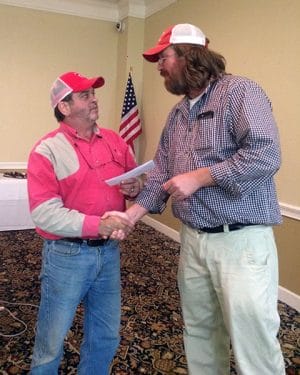
In just a little over two years as a chapter, the Southwest Georgia Chapter of Quail Forever has become a major player in quail restoration efforts. Through chapter banquets and the annual Georgia Quail Invitational hunt event held annually in January, the chapter has donated nearly $170,000 to habitat, youth, and public awareness programs in southwest Georgia. Over $60,000 has gone to the Florida-Georgia Quail Coalition (described below) for quail habitat work on public lands. Other funds have gone to support the work of the Albany Quail Project program at Tall Timbers, youth shooting sports, and other worthy programs such as the Wounded Veterans Hunt. Tall Timbers wanted to take this opportunity to thank this group of conservationist and recognize their efforts. The officers of the chapter are listed below; tell them thank you if you get the chance. For more information on the Southwest Georgia Quail Forever Chapter go to quail@swgaquailforever.org or call 229-435-7721 and ask for Sandy Gregors.
President – Robert Chester
Vice President – Bo Henry
Secretary/Treasurer – Tommy Gregors
Habitat & Youth Chairman – Ross Harrison
Past President – Bobby McKinney
Photo: Southwest Georgia Quail Forever officer Bo Henry presenting check to Clay Sisson of Tall Timbers Albany Quail Project
The M-CORES program, which includes the proposed Suncoast Connector Toll Road in Jefferson County, passed through the Florida Legislature at breakneck speed with little review or analysis. Tall Timbers has a number of concerns given the potential for significant and wide spread impacts. These include fragmenting public and private conservation lands, robbing business from Main Street Monticello, impacting our rivers and other water resources, and making prescribed fire more difficult and costly.
Join us in asking the Jefferson County Board of County Commissioners to OPPOSE the Suncoast Connector toll road and its path through Jefferson County.
Take action now with our easy email form.
Send an email to all five Jefferson County Board of County Commissioners with one click!
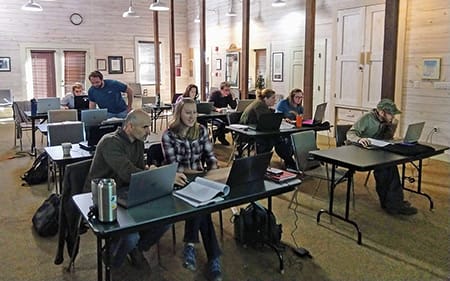
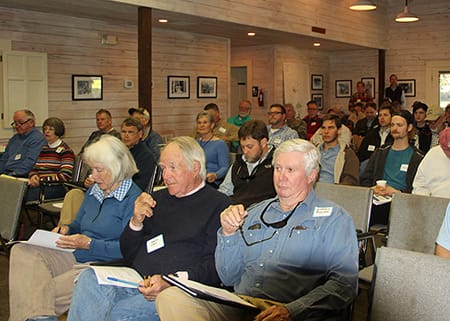
Burn prioritization modeling seminars and fire modeling tools are supported by Wildland Fire Science to train managers in the important planning stages of prescribed fires.
Educating and guiding the next generation of fire researchers and managers is a key goal of Wildland Fire Science and a resource for testing new ideas in fire research.
Tall Timbers hosts the premier fire technology transfer organization—the Southern Fire Exchange. This JFSP funded effort helps connect research to management through webinars, workshops, and support of the Prescribed Fire Science Consortium.
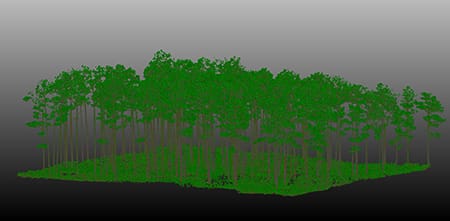
Working with partners in the Prescribed Fire Science Consortium, the program is building nexgen 3-D fuel beds using terrestrial LiDAR and novel sampling techniques to power new fire behavior models for prescribed fire managers. This work links to Tall Timbers work in wildlife habitat usage and ecological forestry.
The Longleaf Legacy landscape prescribed fire burn team arm of Wildland Fire Science works directly with landowners and partners to effectively put fire on the ground and promote prescribed fire throughout the region.
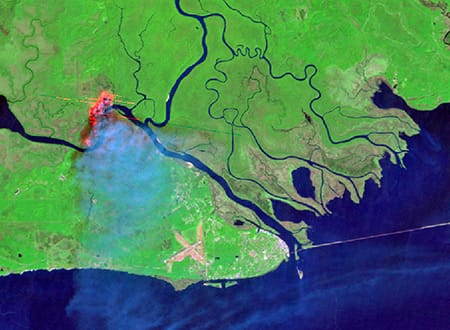
Tall Timbers is leading an effort to map fire regimes at the landscape scale. Staff work with numerous agencies to evaluate fire records and satellite imagery to build this critical conservation database. https://skfb.ly/6DqOY
Tall Timbers hosts the Prescribed Fire Science Consortium, a national network of researchers and managers who promote integrated research and management to advance next generation tools for fire practitioners. https://arcg.is/1DSjDT
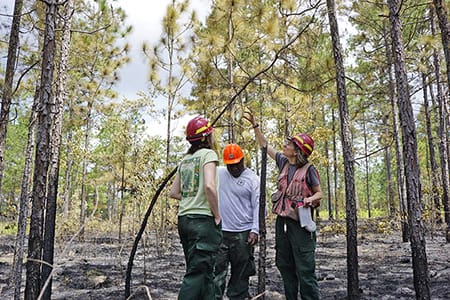
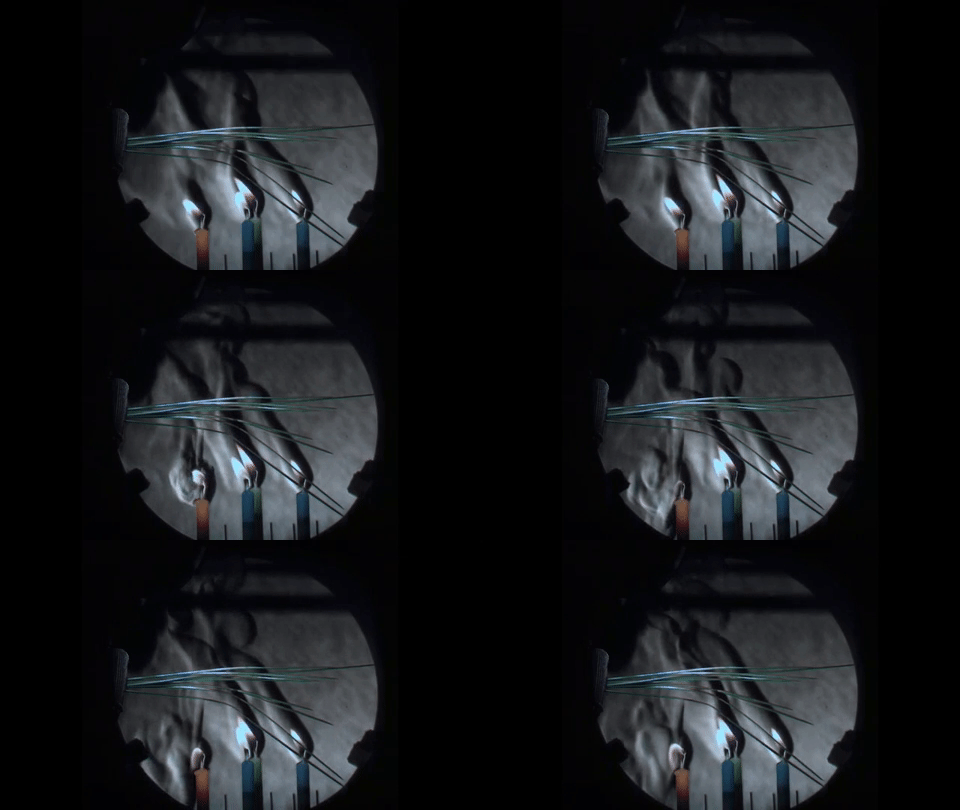
We are linking physics and field observations to understand the fluid dynamics of fire behavior surface fire regimes. Our work combines field observations using advanced thermal imaging techniques, laboratory studies, and coupled fire-atmospheric modeling to help managers improve outcomes of managed fire regimes.
Selected Publications authored by Wildland Fire Science staff.
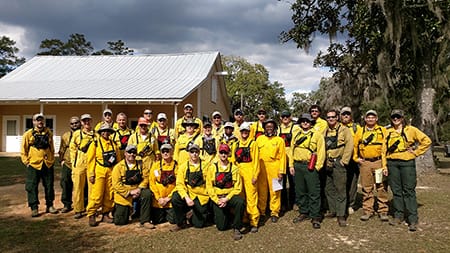
Staff and researchers support Federal fire training by serving as a cadre for NWCG training courses, ranging from basic wildland fire to advanced fire effects.
(PFTC) specializes in training fire fighters the principles and techniques of prescribed fire through practical hands-on experience. https://www.fws.gov/fire/pftc/
Private land owners are the largest source of prescribed fire in the country. These land owners and the culture of fire that was maintained by them during decades of suppression are a part of why Tall Timbers is a world-wide center for prescribed fire science. Workshops and fire training are a critical focus of the Longleaf Legacy Landscape Burn Team and our support of the Georgia Forestry Commission Prescribed Fire Center in Marion County.
The conserved lands of the Greater Red Hills region are found on working, income-producing properties that support agriculture, forestry, and recreational hunting. These properties contribute $272 million annually to local economies and support 2,300 jobs. [link to Planning & Advocacy section] The landowners’ strong stewardship ethic preserves their working lands while replenishing drinking water supplies, protecting water quality, and providing wildlife habitat for dozens of rare and endangered species. Tall Timbers’ conservation easements on these working properties encourage landowners to retain their traditional livelihood by keeping farms in family ownership.
Home to world-class wild quail populations, the Greater Red Hills region contains the largest concentration of gamebird preserves in the United States. These preserves also support the largest community of Red-cockaded woodpeckers on private lands. Indicators of high quality habitat found here include the gopher tortoise, Bachman’s sparrow, fox squirrel, and many amphibians. Tall Timbers’ conservation easements identify and protect the critical habitats of these species.
The region also boasts outstanding aquatic resources. Large river systems, like the Flint/Apalachicola, Ochlockonee, and Aucilla, flow from Georgia and feed into the Gulf of Mexico to support some of the world’s most productive estuaries. Large disappearing sinkhole lakes, like Iamonia, Miccosukee, and Jackson, provide habitat for an array of aquatic species and migratory birds. Tall Timbers’ conservation easements protect these vital watersheds and wetlands that are the lifeblood for the ecological health of the region.
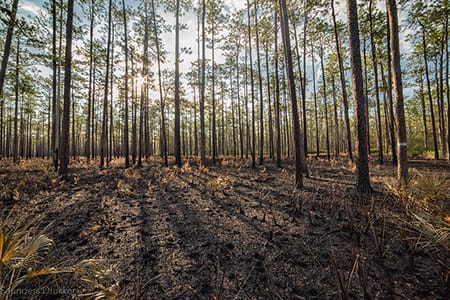
Once dominated by longleaf pine, our pine woodlands support abundant wildlife and local economies. These forests need prescribed fire to stay healthy. Herbert L. Stoddard and his associates Ed and Roy Komarek were pioneers in this emerging scientific field during the mid-20th century. Tall Timbers continues that legacy with applied research on prescribed fire and land management. Today, there is a tremendous need to expand prescribed fire use beyond the Red Hills to ensure ecosystem health and reduce wildfire risk. Additionally, Tall Timbers uses conservation easements to permanently protect private woodlands while balancing the need for economic return from selective timbering.

 Upcoming Fall Field Days
 Upcoming Fall Field Days


 In just a little over two years as a chapter, the Southwest Georgia Chapter of Quail Forever has become a major player in quail restoration efforts. Through chapter banquets and the annual Georgia Quail Invitational hunt event held annually in January, the chapter has donated nearly $170,000 to habitat, youth, and public awareness programs in southwest Georgia. Over $60,000 has gone to the Florida-Georgia Quail Coalition (described below) for quail habitat work on public lands. Other funds have gone to support the work of the Albany Quail Project program at Tall Timbers, youth shooting sports, and other worthy programs such as the Wounded Veterans Hunt. Tall Timbers wanted to take this opportunity to thank this group of conservationist and recognize their efforts. The officers of the chapter are listed below; tell them thank you if you get the chance. For more information on the Southwest Georgia Quail Forever Chapter go to