By Juanita Whiddon, Historic Resources and Archives Coordinator
In Memory of Harold Odom — The Return and Restoration of a Beadel House Original Fixture
Matt Howard, Harold Odom’s grandson and his family from Jacksonville joined about 25 guests and volunteers on March 26, 2017 to dedicate the restored original Beadel House, Bradley and Hubbard light fixture to the memory of Harold. His many works as a volunteer and his boyhood love of living on Tall Timbers were an inspiration to those who worked with him at Tall Timbers. We appreciate that Matt and his family thought that the restoration of this fixture would be a loving tribute to his grandfather. We also appreciate that Matt’s children want to get old enough to be the next family volunteers at Tall Timbers. As they departed, a return trip was being planned for December.
The Odom family lived on Tall Timbers when Harold was a young boy. His father was employed by Henry Beadel as the assistant manager. During that time, Mrs. Genevieve Beadel replaced the dining room light fixture and gave this Bradley & Hubbard ceiling lamp to Harold’s mother. As a boy, Harold remembered doing his school work under this fixture. The Odom family moved during the mid-1930s and Harold’s mother eventually gave the fixture to Harold. By this time, the globe had been broken and it was packed away in the attic.
During his retirement, Harold became an active member of the volunteer history group at Tall Timbers Research Station & Land Conservancy. He loved doing tours of the Beadel House and transcribed several years of Henry Beadel’s diaries. In 2015, Harold gave the light fixture back to Tall Timbers and after his death in 2016, his eldest grandson, Matthew Howard and his family had the fixture restored in memory of Harold.
Webster Gallery to Feature William H. McKeown for its Summer Exhibit
Tall Timbers and the Tallahassee Watercolor Society are proud to feature the art of William H. McKeown in the summer exhibit at the Webster Gallery. The exhibit opens June 25, 2017 with a “Meet the Artist” reception at 2:00. Bill is not only locally known, but he is a signature member of the National Watercolor Society. He was one of the first local artists to support the Webster Gallery. Not only did he contribute works for almost every show, but he has made himself available to help hang the shows and assist with the artists’ receptions. This exhibit will be up until August 13, 2017. We hope you will make plans to see Bill’s work. The gallery is open every Tuesday and Thursday afternoon between 2:00 and 4:00 p.m. For a special tour, call Juanita Whiddon at 850-566-3390.
Your Support Needed forConservation Easement Funding in Florida
Contact your Senator to seek funding for Florida Forever AND the Rural & Family Lands Protection Program
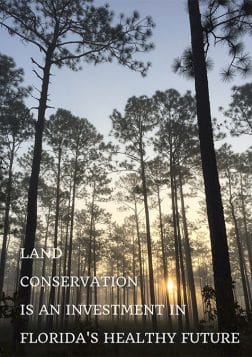
Conservation easements are an important part of Tall Timbers’ work to protect the Red Hills region. Public funding to purchase easements will help protect key areas and accelerate conservation efforts. Join private landowners from across Florida in asking your Senator and Representatives to fund these critical land conservation programs and the use of conservation easements to protect special places like the Red Hills region.
In 2014 the Florida Water and Land Conservation Initiative (Amendment 1) was approved by 75% of voters. This constitutional amendment sets aside 33% of Florida’s existing “doc-stamp tax” paid when real estate is sold, and places it in the Land Acquisition Trust Fund for conservation purposes. However, these key programs with the ability to support conservation easements in the Red Hills are not being funded. For reference, Florida Forever was historically funded at $300 million a year and RFLPP was funded last year at $35 Million.
A wide range of conservation allies including the Florida Cattlemen’s Association, Florida Forestry Association, and other conservation groups are working to rally landowners to let Florida legislators know how important funding conservation easements is to our future.
Please use the link below to identify your State House Representative and State Senator and let them know that you support funding for Florida Forever and the Rural & Family Lands Protection Program.
Conservation easements are the most cost effective way to preserve our water resources and help declining native wildlife species
Florida Forever is the key program for public support of purchase easements in the Red Hills
Rural and Family Lands Protection Program is key for the protection of working rural lands that complement our conservation efforts
Conservation easements protect land for a fraction of the cost of outright purchase, while maintaining private ownership to sustain rural economies and jobs connected to working rural lands
These lands support our surrounding communities; they clean our water, provide flood control, storm protection, food, recreation, and clean air
Scenes from the Red Hills IV at the Webster Gallery
By Juanita Whiddon, Archivist and Historical Resources Coordinator
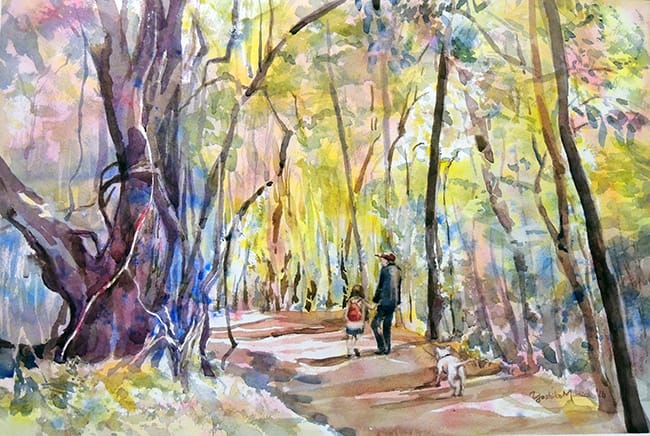
The fall exhibit at Tall Timbers’ Webster Gallery has traditionally been paintings set in our Red Hills region. This year over 20 artists have submitted more than 30 paintings dealing with some of the plants, animals, buildings, and activities in this South Georgia and north Florida setting. Make plans to see what these talented and imaginative artists have displayed in the second floor Beadel House gallery.*
The exhibit will open September 10, 2017, and will remain up until November 10, 2017. There will be a “Meet the Artists” reception on Sunday, September 10 from 2:30 – 4:30 p.m. at the historic Beadel House.
*There is currently no lift to the second floor, the gallery must be accessed by stairs. Gallery hours are Tuesdays and Thursdays from 2:00 – 4:00 p.m. during the exhibit.
Below is a selection from the upcoming exhibit. Hover over the image with your cursor for the name of the artist/painting.
By Eric Staller, Land Manager and Natural Resources Coordinator
Thinning of pine stands and removal of off-site upland hardwoods (mainly live oaks) has a large effect on all early successional species such as northern bobwhite, red cockaded woodpeckers, Bachman’s sparrows, gopher tortoises, and many others. Thinning of pines in an uneven-aged management regime improves ground cover by increasing grasses, herbaceous plants, and woody vegetation (hardwood saplings), due to increased light reaching the ground. This in turn reduces search/hunting efficiency for avian predators, while reducing perch sites. Upland hardwood removal also improves ground cover, for the same reasons, while reducing abundance of the meso-mammal nest predators (raccoons, opossums, armadillos, etc.) and arboreal reptiles (gray rat and corn snakes) due to decreased denning sites. These timber management practices increase adult annual survival, nest success, and juvenile/brood survival, which will bolster the abundance of the early successional species mentioned above.
Most of the properties in Red Hills region and the southeastern coastal plain that have wildlife management objectives, will thin pines on a 7-10 year return interval to maintain basal areas ranging from 40-60. Upland hardwood reduction is on a much longer return interval (20-50 years) depending on past land use, fire frequency, and mechanical and chemical applications to manage the hardwood component in the ground cover, and keep it from escaping into the mid-story and ultimately over-story of the forest.
In 2017, we initiated the initial phase of a pine thinning and hardwood reduction on approximately 650 acres of Tall Timbers. As part of a 5-year research project, the Game Bird Program, directed by Dr. Theron Terhune, is currently monitoring scores of species to quantify bobwhite response to hardwood reduction, and to better understand predator-prey interactions in relation to timber management. Kristen Malone, a University of Florida PhD candidate, is coordinating the field work by collecting data (pre, present, and post treatment) on demographics and abundance of bobwhites, Bachman’s sparrows, meso-mammals, avian predators, small mammals (rats and mice), and reptiles(snake). Look for more information on this as data is compiled, analyzed, and summarized by the Game Bird Program.
Photo top right: Feller buncher thinning an upland pine system in an uneven-aged management regime to return forest to 40-60 basel area.
Above: Pre-hardwood reduction of an erosion gully made by past land use running through the upland pine system.
Above: Post-hardwood reduction of an erosion gully running through the upland pine system.
Above: Pre-Live oak reduction in an upland pine system which escaped fire ~ 30-50 years ago.
Above: Post-Live oak reduction in an upland pine system.
Join Tall Timbers under the tent and in the field at Little Hobcaw Plantation for our annual Carolina field day on Friday, October 6.
Little Hobcaw Plantation is a 3,680-acre property near Kingstree, South Carolina, formally owned by Bernard Baruch, later by James Sigmon and now by Southern Pine Plantations. It provides one example of how the Carolina Regional Quail Project (CRQP) delivers Tall Timbers’ science-based quail management to help guide and ensure the greatest return on investment. A CRQP plan for intensive habitat renovation is being applied on Little Hobcaw with the ultimate goal being a fully restored high density wild bobwhite population. This is being conducted in a multi-phase process where intensive habitat renovation will be coupled with supplemental feeding and predator management. Once habitat renovations are in place and cover has adequately responded we will conduct translocation of wild birds to jump start the population recovery.
Look for an email with registration information in a few weeks.
Foresters join us; 2.5 hours Continuing Forestry Education Credits have been assigned to the CRQP Field Day.
For Field Day Sponsorship Information, click here.
The M-CORES program, which includes the proposed Suncoast Connector Toll Road in Jefferson County, passed through the Florida Legislature at breakneck speed with little review or analysis. Tall Timbers has a number of concerns given the potential for significant and wide spread impacts. These include fragmenting public and private conservation lands, robbing business from Main Street Monticello, impacting our rivers and other water resources, and making prescribed fire more difficult and costly.
Join us in asking the Jefferson County Board of County Commissioners to OPPOSE the Suncoast Connector toll road and its path through Jefferson County.
Take action now with our easy email form.
Send an email to all five Jefferson County Board of County Commissioners with one click!
Burn prioritization modeling seminars and fire modeling tools are supported by Wildland Fire Science to train managers in the important planning stages of prescribed fires.
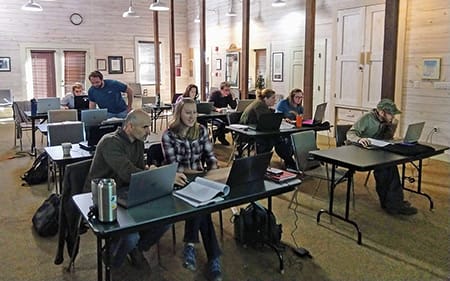
Educating and guiding the next generation of fire researchers and managers is a key goal of Wildland Fire Science and a resource for testing new ideas in fire research.
Tall Timbers hosts the premier fire technology transfer organization—the Southern Fire Exchange. This JFSP funded effort helps connect research to management through webinars, workshops, and support of the Prescribed Fire Science Consortium.
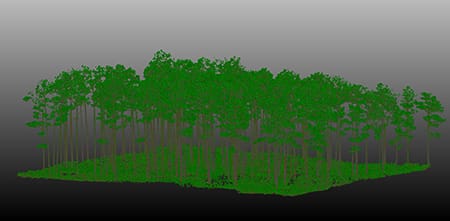
Working with partners in the Prescribed Fire Science Consortium, the program is building nexgen 3-D fuel beds using terrestrial LiDAR and novel sampling techniques to power new fire behavior models for prescribed fire managers. This work links to Tall Timbers work in wildlife habitat usage and ecological forestry.
The Longleaf Legacy landscape prescribed fire burn team arm of Wildland Fire Science works directly with landowners and partners to effectively put fire on the ground and promote prescribed fire throughout the region.
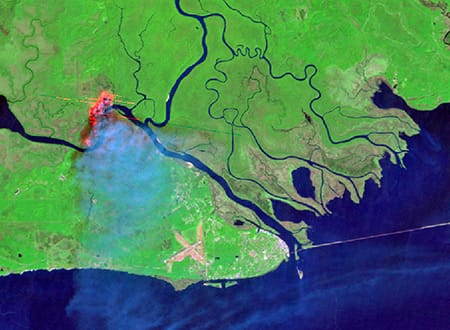
Tall Timbers is leading an effort to map fire regimes at the landscape scale. Staff work with numerous agencies to evaluate fire records and satellite imagery to build this critical conservation database. https://skfb.ly/6DqOY
Tall Timbers hosts the Prescribed Fire Science Consortium, a national network of researchers and managers who promote integrated research and management to advance next generation tools for fire practitioners. https://arcg.is/1DSjDT
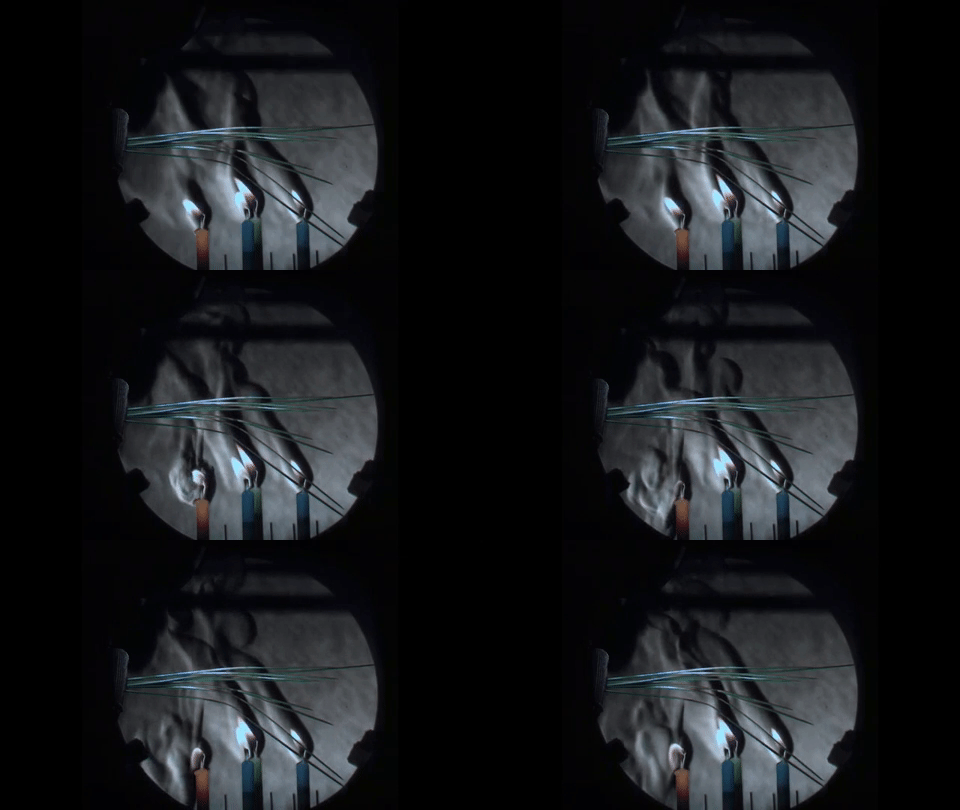
We are linking physics and field observations to understand the fluid dynamics of fire behavior surface fire regimes. Our work combines field observations using advanced thermal imaging techniques, laboratory studies, and coupled fire-atmospheric modeling to help managers improve outcomes of managed fire regimes.
Selected Publications authored by Wildland Fire Science staff.
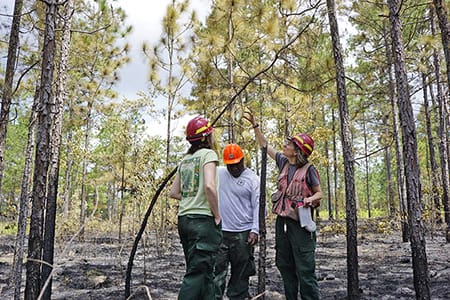
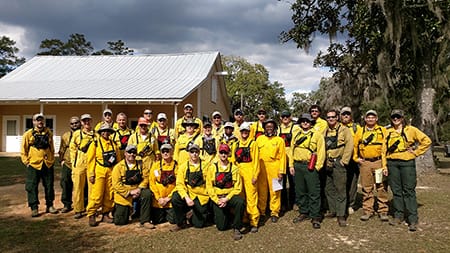
Staff and researchers support Federal fire training by serving as a cadre for NWCG training courses, ranging from basic wildland fire to advanced fire effects.
(PFTC) specializes in training fire fighters the principles and techniques of prescribed fire through practical hands-on experience. https://www.fws.gov/fire/pftc/
Private land owners are the largest source of prescribed fire in the country. These land owners and the culture of fire that was maintained by them during decades of suppression are a part of why Tall Timbers is a world-wide center for prescribed fire science. Workshops and fire training are a critical focus of the Longleaf Legacy Landscape Burn Team and our support of the Georgia Forestry Commission Prescribed Fire Center in Marion County.
The conserved lands of the Greater Red Hills region are found on working, income-producing properties that support agriculture, forestry, and recreational hunting. These properties contribute $272 million annually to local economies and support 2,300 jobs. [link to Planning & Advocacy section] The landowners’ strong stewardship ethic preserves their working lands while replenishing drinking water supplies, protecting water quality, and providing wildlife habitat for dozens of rare and endangered species. Tall Timbers’ conservation easements on these working properties encourage landowners to retain their traditional livelihood by keeping farms in family ownership.
Home to world-class wild quail populations, the Greater Red Hills region contains the largest concentration of gamebird preserves in the United States. These preserves also support the largest community of Red-cockaded woodpeckers on private lands. Indicators of high quality habitat found here include the gopher tortoise, Bachman’s sparrow, fox squirrel, and many amphibians. Tall Timbers’ conservation easements identify and protect the critical habitats of these species.
The region also boasts outstanding aquatic resources. Large river systems, like the Flint/Apalachicola, Ochlockonee, and Aucilla, flow from Georgia and feed into the Gulf of Mexico to support some of the world’s most productive estuaries. Large disappearing sinkhole lakes, like Iamonia, Miccosukee, and Jackson, provide habitat for an array of aquatic species and migratory birds. Tall Timbers’ conservation easements protect these vital watersheds and wetlands that are the lifeblood for the ecological health of the region.
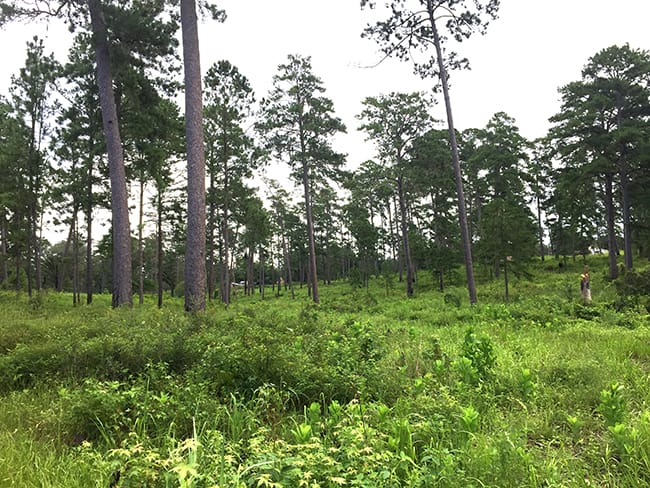
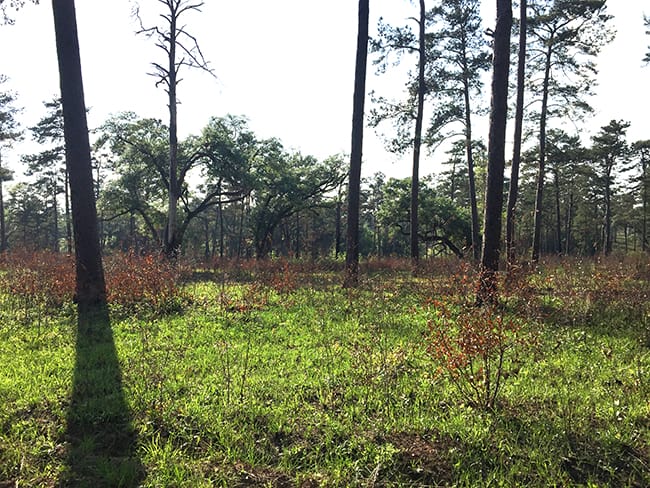
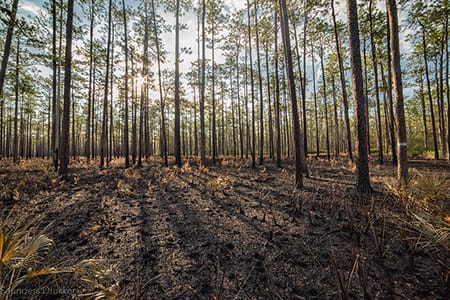
Once dominated by longleaf pine, our pine woodlands support abundant wildlife and local economies. These forests need prescribed fire to stay healthy. Herbert L. Stoddard and his associates Ed and Roy Komarek were pioneers in this emerging scientific field during the mid-20th century. Tall Timbers continues that legacy with applied research on prescribed fire and land management. Today, there is a tremendous need to expand prescribed fire use beyond the Red Hills to ensure ecosystem health and reduce wildfire risk. Additionally, Tall Timbers uses conservation easements to permanently protect private woodlands while balancing the need for economic return from selective timbering.

 In Memory of Harold Odom — The Return and Restoration of a Beadel House Original Fixture


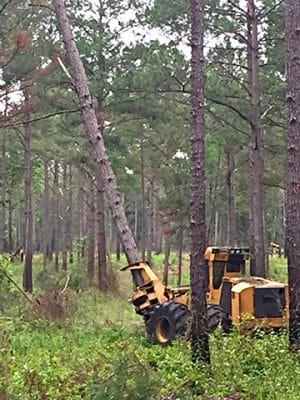 Thinning of pine stands and removal of off-site upland hardwoods (mainly live oaks) has a large effect on all early successional species such as northern bobwhite, red cockaded woodpeckers, Bachman’s sparrows, gopher tortoises, and many others. Thinning of pines in an uneven-aged management regime improves ground cover by increasing grasses, herbaceous plants, and woody vegetation (hardwood saplings), due to increased light reaching the ground. This in turn reduces search/hunting efficiency for avian predators, while reducing perch sites. Upland hardwood removal also improves ground cover, for the same reasons, while reducing abundance of the meso-mammal nest predators (raccoons, opossums, armadillos, etc.) and arboreal reptiles (gray rat and corn snakes) due to decreased denning sites. These timber management practices increase adult annual survival, nest success, and juvenile/brood survival, which will bolster the abundance of the early successional species mentioned above.