The land trust accreditation program recognizes land conservation organizations that meet national quality standards for protecting important natural places and working lands forever. Tall Timbers is pleased to announce it is applying for renewal of accreditation. A public comment period is now open.
The Land Trust Accreditation Commission, an independent program of the Land Trust Alliance, conducts an extensive review of each applicant’s policies and programs. As one of the leading land trusts in the Southeast, Tall Timbers has conserved over 136,000 acres of land in North Florida and South Georgia. The organization became accredited in 2009 and renewed its accreditation in 2014. This second renewal of accreditation will ensure that the public can continue to trust Tall Timbers’ work in protecting the greater Red Hills region.
The Commission invites public input and accepts signed, written comments on pending applications. Comments must relate to how Tall Timbers complies with national quality standards. These standards address the ethical and technical operation of a land trust. For the full list of standards see http://www.landtrustaccreditation.org/help-and-resources/indicator-practices.
To learn more about the accreditation program and to submit a comment, visit www.landtrustaccreditation.org, or email your comment to info@landtrustaccreditation.org. Comments may also be faxed or mailed to the Land Trust Accreditation Commission, Attn: Public Comments: (fax) 518-587-3183; (mail) 36 Phila Street, Suite 2, Saratoga Springs, NY 12866.
Comments on Tall Timbers’ application will be most useful by September 14, 2019.
Tall Timbers Receives Grant Funding for Dixie House Restoration Project
The Florida Legislature appropriated $500,000 for FY2020 to restore and rehabilitate the historic Dixie House. The grant was awarded under the Florida Department of State, Division of Historical Resources’ Special Category Grant program, with the guidance of the Florida Historical Commission. Some 54 projects competed for grant funds, and 19 received funding. The Dixie House was ranked 6th. Other area projects that received funding include Christ Episcopal Church (Monticello), Gretna Common School (Gretna), and the Hays-Hood House (Tallahassee).
This grant will complete all the interior work at the Dixie House, including painting, restoring paneled rooms, plumbing, asbestos and lead paint abatement, and addressing life safety issues. It was originally built in 1938 as a private residence designed by acclaimed architect John Russell Pope, who also designed the Jefferson Memorial, National Archives, and National Gallery of Art in Washington, D.C. The 14,200-square-foot Dixie House will open for public use, and it will provide overnight accommodations for visiting scientists, students and other Tall Timbers guests. The house will host scientific and land management seminars, training workshops, and it will be available for community cultural events and civic organization fundraisers.
The project is slated to be completed in 2020.
Tour of Dixie with American Friends of Attingham, March 2019
Linking Land Conservation and Historic Preservation in the Red Hills
By Jessica Coker, Tall Timbers Program Analyst
Tall Timbers hosted its biennial Red Hills Spring Dinner on April 4 at Dixie Plantation. In addition to celebrating land conservation in the Red Hills, the event also raised funds to help complete the Dixie House restoration and rehabilitation project.
Stephanie Meeks
Stephanie Meeks, former president and CEO of the National Trust for Historic Preservation, spoke to attendees about the interconnection between land conservation and historic preservation. Meeks’ prior 18-year career with The Nature Conservancy influenced her passion to unite land conservation and historic preservation. As storms threatened the warm spring evening, she recounted her family’s immigrant experience on the 19th century Kansas prairie, surviving winters in an underground dug-out. Their trials on that harsh, sublime landscape connected Meeks to other American stories with a sense of place oriented through both preservation and conservation.
Meeks explained that while the two fields are coming closer, there was once distance between them in the United States. She noted, “While we were the first country in the world to set aside lands for conservation, for five decades after the National Park System was created, we were also the only major western nation that had no national historic preservation policy.” Fortunately, conservation and preservation are merging, with “roughly two-thirds of our more than 400 national park units…created as historical parks, sites, monuments, or memorials,” according to Meeks. Watch as Stephanie Meeks discusses the importance of Dixie Plantation and the link between land conservation and historic preservation.
Meeks’ involvement with both the National Trust and The Nature Conservancy shaped her insight into what remains to bridge land conservation and historic preservation. As the crowd of landowners, government officials, community leaders, and conservation and preservation professionals listened, she observed:
While preservationists and land conservationists often have distinct focuses, use different tools, and have their own unique cultures, I am more often struck today by the commonalities between our two movements. Both are built on a keen appreciation of the fragility of our heritage, be it natural or man-made, and a strong desire to preserve the unique and irreplaceable. Both movements are committed to sustainable solutions and focused on helping communities take action to preserve what matters to them. Both are full of people who recognize the power of a mutually beneficial partnership. The ingredients are there to come together as a cohesive movement, and it is even more fundamental to our mutual success going forward than ever before.
Meeks illustrated this need for unification with South Carolina’s Drayton Hall. The oldest preserved plantation house in the United States that is open to the public, Drayton also holds the nation’s oldest African-American cemetery still in use. In 2010, Drayton Hall faced threats of golf course development, which could have destroyed “the most significant undisturbed historic landscape in America.” The National Trust joined with local conservationists seeking to protect the Ashley River, a scenic and historic state river corridor. With this partnership, the two allies blocked the development.
As Meeks eloquently described, “the historic and cultural reasons for protecting natural landscapes are intertwined and…inseparable. The story of the land is the story of the American people, and vice versa.” So true is the narrative of the Red Hills. The unique landscape is dotted with historic tenant houses, community churches, and mansions that both landowners and the public cherish. The Red Hills’ cultural and natural heritage is being protected thanks to its inhabitants and organizations like Tall Timbers.
With thunder rolling in the background, Meeks praised Tall Timbers’ work at Dixie Plantation “to care equally about the historic resources that are integrated into the landscapes [land trusts] seek to protect.” Restoring the historic Dixie House will enable Tall Timbers to bring more scientists, government officials, and the general public to this working Red Hills landscape, spreading the critical message of linking land conservation and historic preservation. While Tall Timbers works to close the gap between protected lands in the Red Hills, its work also closes the gap between two seemingly disparate, but actually connected, disciplines.
Area Landowners Honored at Red Hills Spring Dinner
At the recent Red Hills Spring Dinner at Dixie Plantation, Tall Timbers honored landowners who have made significant contributions to the organization or donated conservation easements in 2017 and 2018.
Board Chairman Tom Rankin presented attorney Ken Hart of the Ausley-McMullen law firm with a plaque recognizing his outstanding contribution of assisting the Geraldine C. M. Livingston Foundation in gifting Dixie Plantation to Tall Timbers in 2013. Mr. Hart gave all the accolades to Geraldine M. Livingston:
Geraldine wanted the property to continue to reflect and be like other properties in the Red Hills. She wanted it to be a safe place for wildlife. She wanted the Continental Field Trial to continue here. She wanted the Dixie House preserved. We knew what she wanted, and I think Geraldine would be extremely pleased if she saw how things are now. Not only is her property preserved, but Tall Timbers research now allows her property to influence the management of properties throughout the Red Hills. It gives Tall Timbers a chance to not only give scientific advice but for area landowners to ask “did you do that?” and “did it work?”
L-R, Tom Rankin and Ken Hart
The dinner program also recognized Tall Timbers’ 2017-2018 donors of 12 conservation easement properties.
2017
Bountiful 487 acres – Terrell County, GA Dr. James Griffith
Heard’s Pond 588 acres – Thomas County, GA The Jackson Family
VLTC 854 acres – Miller County, GA Mark Boatright, Samuel Boatright, & Russell Henley
Wallington Plantation 500 acres – Baker County, GA The Drawdy Family
2018
Docwood Farm 908 acres – Mitchell County, GA Richard & Ann Vann
Live Oak Plantation, Phase V 244 acres – Thomas County, GA Daphne & Marty Wood
Old Growth Woods 1,108 acres – Grady County, GA June White, Barbara White, Jane White, & Family
Patterson Tract 1,004 acres – Madison County, FL Wade & Debra Patterson
Searcy Place 515 acres – Thomas County, GA Daphne & Marty Wood, & Maury Shields
Finally, Tall Timbers Land Conservancy Committee Chairman George Watkins presented a special recognition of the Ware Forest Acquisition Project. The 160-acre mature growth cypress tract in the Aucilla River was threatened by extensive logging. Homeowners from the Ashville Area Property Owners Association held off the logging trucks for as long as they could. The property’s location next to the Sneads Smokehouse Recreational Area made it a great conservation candidate for increased public access. David Ward, co-founder of the Aucilla/Wacissa River Group, spearheaded the effort to find a conservation outcome. Tom Weller, a Jefferson County landowner, played a crucial role in the transaction by contributing significant funds for the purchase and eventual transfer to the Suwannee River Water Management District. According to Mr. Watkins, “Tall Timbers used its new Red Hills Land Conservation Opportunity Fund to provide funding to assist Mr. Weller and the District to close the deal. Tall Timbers also received a grant from the Felburn Foundation.” Tall Timbers is grateful to all the parties who played a role in saving this majestic cypress tract on the beautiful Aucilla River.
At left, Shane Wellendorf, Tall Timbers Conservation Coordinator and at right, Hugh Thomas with the Suwannee River Water Management District
The Dixie House event concluded with an elegant dinner catered by Rev Café of Monticello, Florida, using locally-sourced ingredients with a modern Southern flair. Guests enjoyed venison meatballs, fresh salad, shrimp and grits, and prime rib, topped off with satsuma cheesecake.
Tall Timbers wishes to thank the sponsors of this fundraising event, which directly contributed to completing the Dixie House restoration and rehabilitation project. The event drew 44 sponsors and around 200 guests.
Additional sponsors included Chas Cannon and David Ferro.
Tall Timbers’ continued partnership with Yale School of Forestry
For a few years the Fire Ecology Program has interacted with the Yale School of Forestry and Environmental Studies, first through an invitation to program director, Dr. Kevin Robertson, to present at the Yale Forest Forum, facilitated by board member and Yale alumnus Redmond Ingalls. That meeting led to the joint Yale-Tall Timbers Fire Ecology Conference and Journal of Sustainable Forestry special issue titled The Fire Ecology of the Northeast in 2014. Since then students from the School of Forestry have annually visited Tall Timbers as part of their Southern Forest Field Course. Last year one of the students (Charlie Faires) returned to do field work and help write a paper on longleaf pine regeneration on the Wade Tract (see Winter 2019 eNews issue), which is now published in the journal Forests.
Kevin Robertson at the Wade Tract Preserve as he and his team begin a prescribed burn.
In April, Dr. Robertson was invited back to Yale to present results from the longleaf regeneration project at another Yale Forest Forum. Charlie Faires also arranged a special gathering of three Yale special interest groups — the Western Group, Fire Group, and Southern Group — for a presentation by Dr. Robertson on competing fire history paradigms in North American. He outlined differences between the anthropogenic fire versus lightning fire explanations for pine savanna origins, and presented examples of research using a comprehensive approach that considers both. The presentations were well attended and enthusiastically received, resulting in more students wanting to work with Tall Timbers in the future. Charlie and others hope that this association will contribute to a trend of more focus on the South by the School of Forestry, reflected by land management fellowships offered to Yale Forestry students on other properties in the Red Hills Region.
The M-CORES program, which includes the proposed Suncoast Connector Toll Road in Jefferson County, passed through the Florida Legislature at breakneck speed with little review or analysis. Tall Timbers has a number of concerns given the potential for significant and wide spread impacts. These include fragmenting public and private conservation lands, robbing business from Main Street Monticello, impacting our rivers and other water resources, and making prescribed fire more difficult and costly.
Join us in asking the Jefferson County Board of County Commissioners to OPPOSE the Suncoast Connector toll road and its path through Jefferson County.
Take action now with our easy email form.
Send an email to all five Jefferson County Board of County Commissioners with one click!
Selected Publications authored by Wildland Fire Science staff.
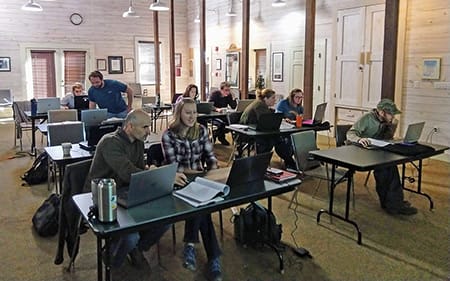
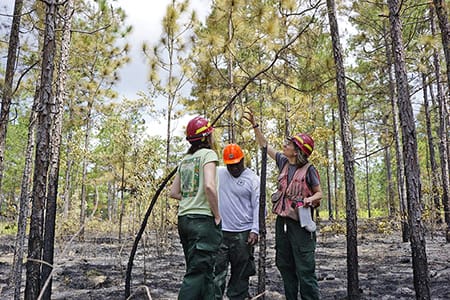
Educating and guiding the next generation of fire researchers and managers is a key goal of Wildland Fire Science and a resource for testing new ideas in fire research.
Tall Timbers hosts the Prescribed Fire Science Consortium, a national network of researchers and managers who promote integrated research and management to advance next generation tools for fire practitioners. https://arcg.is/1DSjDT
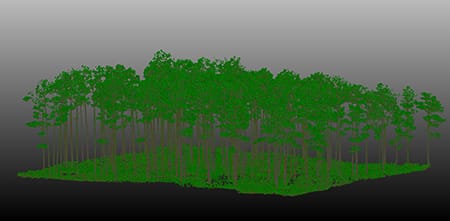
Working with partners in the Prescribed Fire Science Consortium, the program is building nexgen 3-D fuel beds using terrestrial LiDAR and novel sampling techniques to power new fire behavior models for prescribed fire managers. This work links to Tall Timbers work in wildlife habitat usage and ecological forestry.
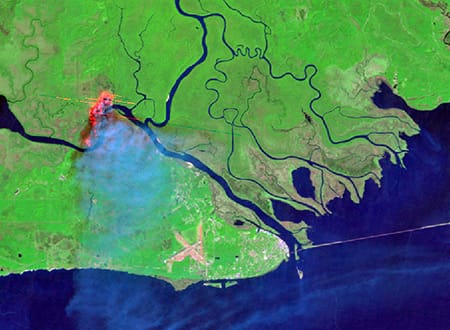
Tall Timbers is leading an effort to map fire regimes at the landscape scale. Staff work with numerous agencies to evaluate fire records and satellite imagery to build this critical conservation database. https://skfb.ly/6DqOY
We are linking physics and field observations to understand the fluid dynamics of fire behavior surface fire regimes. Our work combines field observations using advanced thermal imaging techniques, laboratory studies, and coupled fire-atmospheric modeling to help managers improve outcomes of managed fire regimes.
Burn prioritization modeling seminars and fire modeling tools are supported by Wildland Fire Science to train managers in the important planning stages of prescribed fires.
The conserved lands of the Greater Red Hills region are found on working, income-producing properties that support agriculture, forestry, and recreational hunting. These properties contribute $272 million annually to local economies and support 2,300 jobs. [link to Planning & Advocacy section] The landowners’ strong stewardship ethic preserves their working lands while replenishing drinking water supplies, protecting water quality, and providing wildlife habitat for dozens of rare and endangered species. Tall Timbers’ conservation easements on these working properties encourage landowners to retain their traditional livelihood by keeping farms in family ownership.
Home to world-class wild quail populations, the Greater Red Hills region contains the largest concentration of gamebird preserves in the United States. These preserves also support the largest community of Red-cockaded woodpeckers on private lands. Indicators of high quality habitat found here include the gopher tortoise, Bachman’s sparrow, fox squirrel, and many amphibians. Tall Timbers’ conservation easements identify and protect the critical habitats of these species.
The region also boasts outstanding aquatic resources. Large river systems, like the Flint/Apalachicola, Ochlockonee, and Aucilla, flow from Georgia and feed into the Gulf of Mexico to support some of the world’s most productive estuaries. Large disappearing sinkhole lakes, like Iamonia, Miccosukee, and Jackson, provide habitat for an array of aquatic species and migratory birds. Tall Timbers’ conservation easements protect these vital watersheds and wetlands that are the lifeblood for the ecological health of the region.
Once dominated by longleaf pine, our pine woodlands support abundant wildlife and local economies. These forests need prescribed fire to stay healthy. Herbert L. Stoddard and his associates Ed and Roy Komarek were pioneers in this emerging scientific field during the mid-20th century. Tall Timbers continues that legacy with applied research on prescribed fire and land management. Today, there is a tremendous need to expand prescribed fire use beyond the Red Hills to ensure ecosystem health and reduce wildfire risk. Additionally, Tall Timbers uses conservation easements to permanently protect private woodlands while balancing the need for economic return from selective timbering.
Tall Timbers hosts the premier fire technology transfer organization—the Southern Fire Exchange. This JFSP funded effort helps connect research to management through webinars, workshops, and support of the Prescribed Fire Science Consortium.
The Longleaf Legacy landscape prescribed fire burn team arm of Wildland Fire Science works directly with landowners and partners to effectively put fire on the ground and promote prescribed fire throughout the region.
Staff and researchers support Federal fire training by serving as a cadre for NWCG training courses, ranging from basic wildland fire to advanced fire effects.
(PFTC) specializes in training fire fighters the principles and techniques of prescribed fire through practical hands-on experience. https://www.fws.gov/fire/pftc/
Private land owners are the largest source of prescribed fire in the country. These land owners and the culture of fire that was maintained by them during decades of suppression are a part of why Tall Timbers is a world-wide center for prescribed fire science. Workshops and fire training are a critical focus of the Longleaf Legacy Landscape Burn Team and our support of the Georgia Forestry Commission Prescribed Fire Center in Marion County.