Reintroducing an extirpated bird (locally extinct) can be a time consuming endeavor. For decades, biologists favored the use of holding pens on recipient sites to ensure translocated birds had time to acclimate after translocation. Biologists also have often been pretty selective with the individuals they tried to translocate, often insisting that complete family groups be captured and moved rather than an individual here or there.
These were indeed the strategies used in an early attempt to reintroduce the Brown-headed Nuthatch to south Florida. Thanks to the extensive timber harvesting that took place early in the twentieth century, the nuthatch has been extirpated from many areas south of Orlando, including Everglades National Park near Miami.
Pinelands on Everglades Park had recovered by the early 1990s, and the improved conditions led park officials to consider a nuthatch reintroduction effort. As was the trend at the time, biologists attempted to net and translocate complete family groups and also held birds in small pens on Everglades National Park for an acclimation period.
Although it ultimately was successful, it sure required a lot of time.
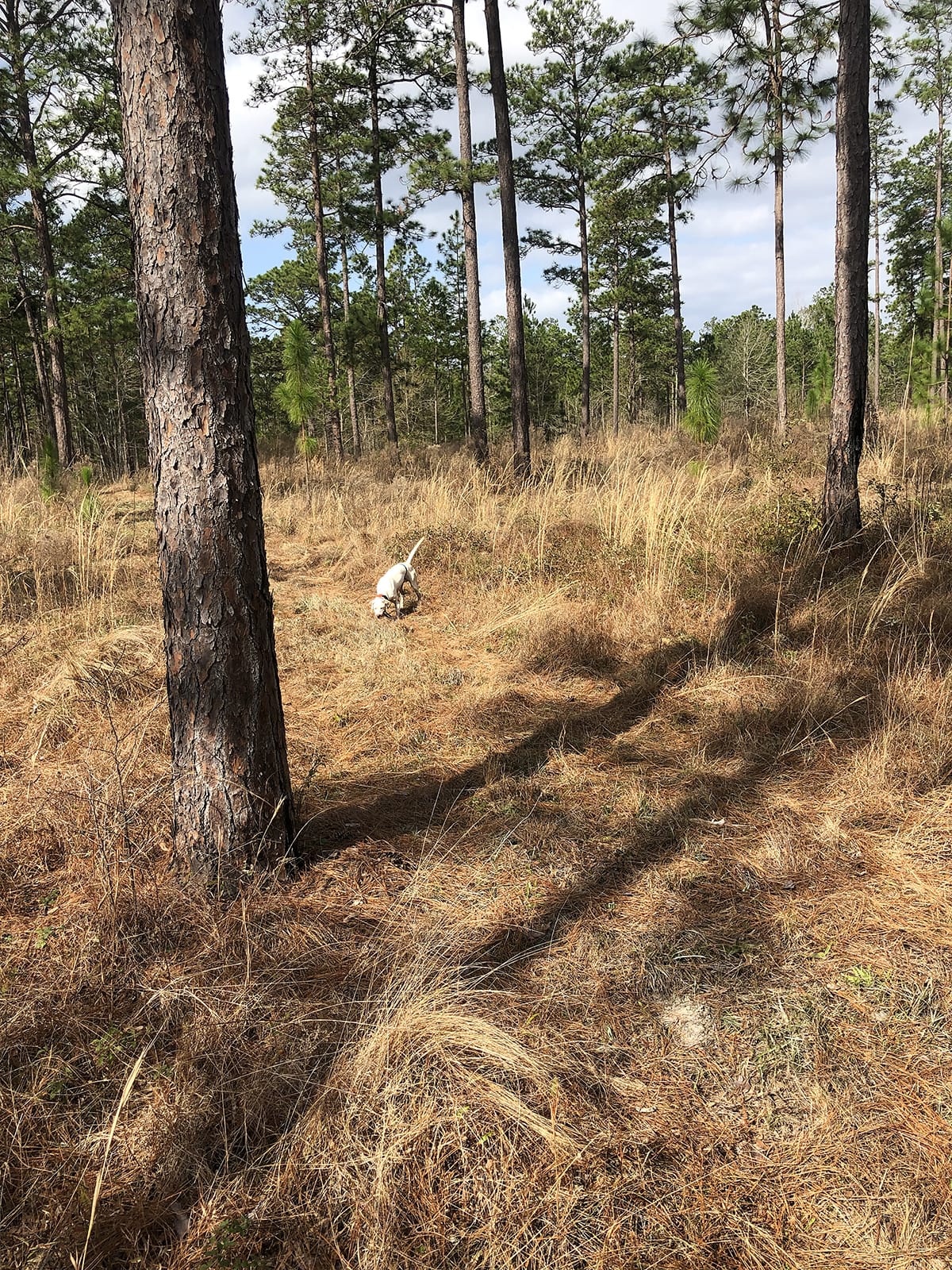
Brown-headed Nuthatch about to be reintroduced to Jonathan Dickinson State Park near Jupiter, Florida.
Our long-term study of nuthatches on Tall Timbers has shown that young of the year make a decision to disperse pretty early in life. Young birds start to leave home about 2 months after fledging, and it’s easy to distinguish young males and females at this time of the year based on their calls as well as their distinctive juvenile plumage. These insights led us to test a less time-consuming method of nuthatch reintroduction, basically catching young males and females at a time when they are normally dispersing and then simply guiding their dispersal (via a truck) to an unoccupied habitat.
Last August, we netted and transported 5 juvenile males and 5 juvenile females from St. Sebastian Preserve State Park to Jonathan Dickinson State Park near Jupiter, Florida. (See video of nuthatch release.) The nuthatch had disappeared from Jonathan Dickinson site before it became a state park in the early 1950s. The habitat has recovered and is looking great under park management, but the site is isolated by large areas of urban development throughout south Florida, 2 major highways, and other impediments to nuthatch dispersal.
Brown-headed Nuthatch at Jonathan Dickinson State Park that was translocated in August 2018.
Of the 10 individuals moved, 8 were still on the site in early December. At least 3 potential breeding groups had also set up territories near the release sites, and we’ll be watching carefully for signs of nesting over the next few weeks. Volunteers and park personnel have reported seeing cavity excavations taking place, and we set out 8 nest boxes in January in hopes of helping the first nest attempt go more smoothly.
If this method works, it could make a lot of other nuthatch reintroduction efforts under consideration go much more easily. Translocation of a few juveniles each year could also help overcome some of the genetic consequences the loss of nuthatch habitat has created. Nuthatch populations in south Florida show subtle signs of a loss of genetic diversity, and translocating a few juveniles each year could help to reinvigorate isolated populations.
The return of the nuthatch could also mean good news for other local birds. The nuthatch is an important cavity excavator that creates cavities used in turn by Tufted Titmouse, Eastern Bluebirds, Great Crested Flycatchers, and other cavity-nesting birds. The tree top acrobatics of nuthatches are also appealing to birders, too, making reintroductions a boon for birders and the bird.
Great conditions produce excellent bobwhite hunting
By Dr. Theron M. Terhune, Game Bird Program Director
Coming off the heels of a year full of rainfall, some 25+ inches above average, the 2018-19 hunting season granted us ample cover and good hunting with premium scenting conditions right out of the gate and well through January. However, heavy rains and high winds knocked a lot of cover down early, as well as lots of trees and limbs on the ground, especially in the Albany and Bainbridge areas. This has translated to slightly below average overwinter survival in those areas hit the hardest by Hurricane Michael.
We have been hearing lots of reports of great hunting and excellent bird numbers with some places up as high as 55-60% in coveys moved per hour. We have been observing coveys frequently using “brush piles” where they are available and numerous coveys have been pointed directly in pine tops or downed trees or piles, making for some sporty wing-shooting. The wet summer and fall also filled most creek beds, drains and ephemeral wet areas, reducing many bobwhite “hideouts” and typical escape sites used to avoid hunters, making the birds more accessible and potentially increasing the opportunity to encounter them throughout the hunting season.
As the hunting seasons winds down and burning season approaches, a carefully thought out plan that leaves plenty of cover is recommended. Knocking down too much cover and burning too much can dramatically impact over-winter bobwhite survival and diminish the number of birds entering the breeding season, particularly if raptor migration stalls out on us in February, March and April, which has been known to happen. Maintaining small burn blocks (<50 acres) and staggering burns in a course to allow cover to respond before burning additional blocks is ideal. A goal is to leave 45-50% unburned area, and if timely rains permit expedient cover response following burning, then extra clean-up and burning can be conducted in April and May. Keeping these unburned areas well fed will further help to improve survival during a key pinch-point for bobwhites heading into breeding season. A carefully executed plan, with proper burn distribution, can result in as high as 65-70% of the area burned with minimal impacts on survival, but we recommend only doing this if the weather permits — it is better to be careful and cautious than to be too aggressive and risk crippling the breeding population.
By Dr. Theron M. Terhune, Game Bird Program Director
Weather is one of those uncontrollable factors that can have major impacts on bobwhite abundance. For instance, hot dry summers can impede insect production, depriving bobwhite chicks of the protein-rich diet they need early in life. Also, drought conditions can inhibit vegetation growth reducing the amount and quality of cover heading into the hunting season — as seen this year. We know that precipitation is essential to producing the quality cover needed for good survival, but we also have learned that too much at the wrong time can be the difference between a great and poor quail reproduction year, which we observed last year (2018) in North Carolina, as Hurricane Florence annihilated chick survival and fall recruitment of young birds, as well as put an end to the breeding season six weeks earlier than usual.
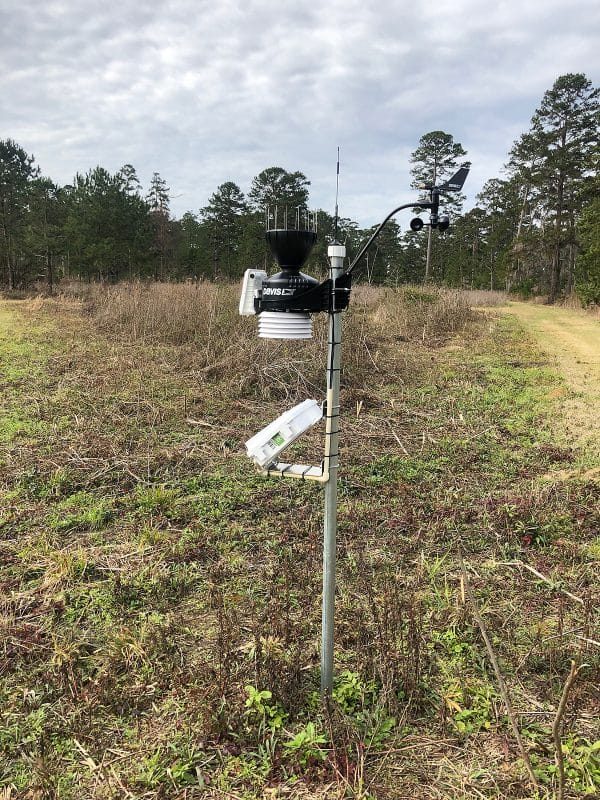
We often think about regional weather events or rainfall at a regional level, but during the summer, micro-climate variation is common in Florida and southwest Georgia. So how variable are localized rainfall events? And, how does the heterogeneity in weather across the regions influence bobwhite abundance? Or does it? These are questions we hope to pull back the curtain on beginning this summer. We have begun deploying weather stations (see photo), with the goal of having 25 stations distributed throughout the Red Hills to capture temperature, rainfall, humidity, and solar radiation, and linking this information to our radio-tagged populations at Tall Timbers and Dixie Plantation. This weather station network will afford more relevant application of our research findings across the region. If you would like to learn more about these weather stations or if you are interested in putting some on your property please contact me (tterhune@talltimbers.org).
Fire Behavior Models Critical to Prescribed Fire Planning for Land Managers
By Kevin Hiers and Casey Teske
Tall Timbers is at the center of a revolution in fire science to advance models of fire behavior critical to prescribed fire planning. Nearly all fire modeling tools available to guide fire fighters and prescribed fire planners are built on a faulty assumption about how fire spreads. While these tools are calibrated by users when fires begin, they cannot meet the needs of fire prediction in advance. Coupled fire-atmospheric modeling tools have been available for nearly 20 years, but since many of these required high performing “super computers” to run, they were dismissed as research only.
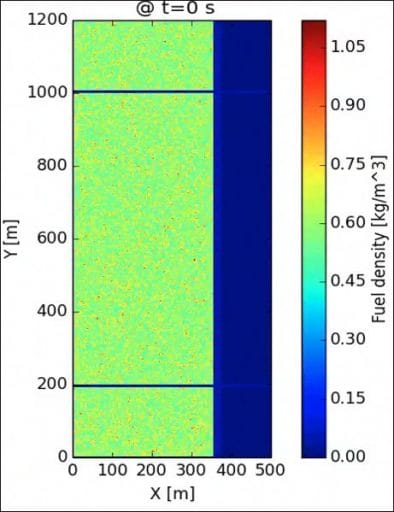
Recently, Tall Timbers has supported three related efforts to bring these better modeling tools to managers. FIRETEC, a tool developed by Tall Timbers’ Board Member Dr. Rod Linn, has been used by James Furman (formerly Fire Program Manager at Eglin AFB) to develop teaching tools for managers to compare complex ignition patterns in longleaf pine forests.
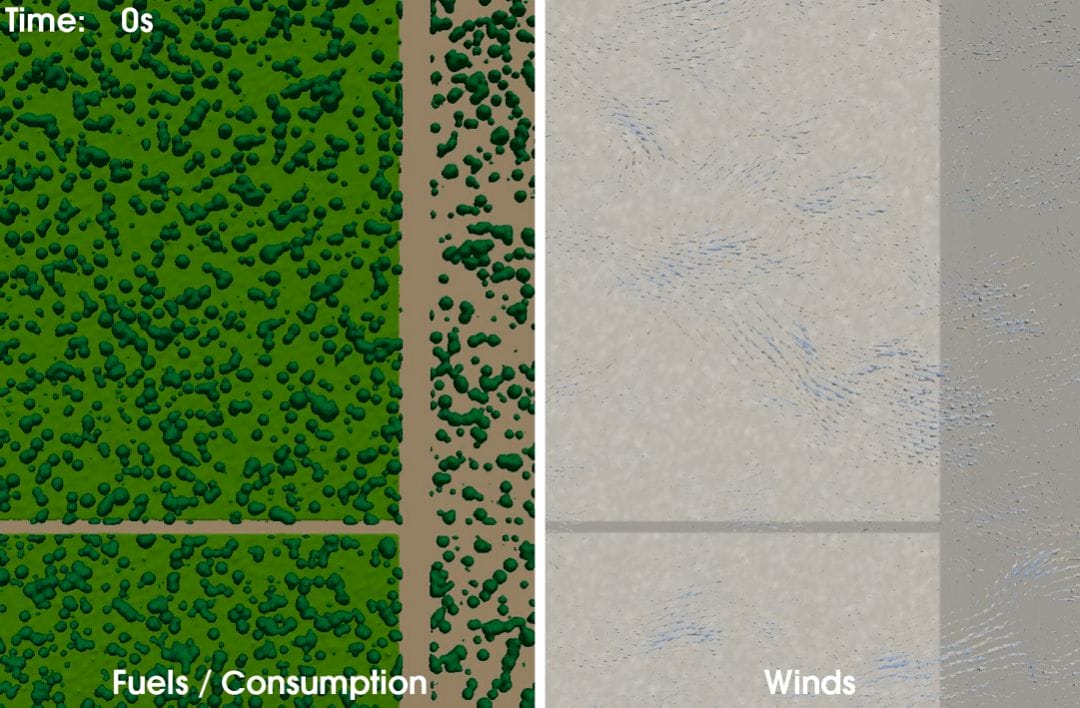
FIRETEC (Los Alamos National Lab) is a super computer model that capture detailed fire behavior and winds in and around complex ignitions (Image courtesy James Furman).
This project represents a quantum leap forward in teaching prescribed fire managers and firefighters about the fluid dynamic drivers responsible for observed fire behavior. Leveraging these complex modeling tools for teaching is a means of operationalizing research on prescribed fire that represents a missed opportunity in wildfire fire technology transfer and fire research.
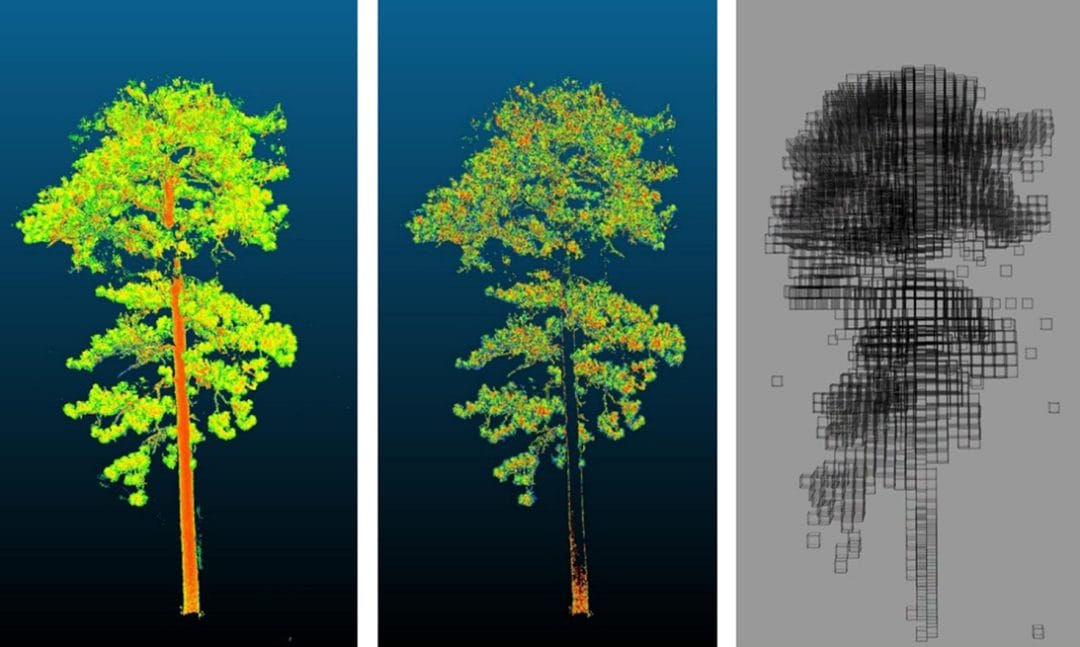
As the next step in advancing our understanding of fire behavior, Tall Timbers researcher Dr. Eric Rowell (along with USFS colleagues in Seattle, WA and Athens, GA) is leading two DoD-funded research projects to develop more accurate 3D fuel models to run these complex fire tools over real terrain. Like fire behavior modeling, fuels have been oversimplified and cannot capture important fluid dynamics drivers of fire behavior driven by heterogeneous fuels. He envisions a day in the not-too-distant future, when forest-scanning techniques like LIDAR and drone imagery will produce model-relevant outputs at a landscape scale, thus allowing fire managers to build forests in a virtual realm, and set realistic fires for planning prescriptions and smoke management. This “Fuelcraft” concept (think Minecraft) will not only leverage high resolution scanning, but will produce critical fuel moisture drivers related to forest structure such as sunlight driven drying patterns and the channeling in wind through and around forest stands.
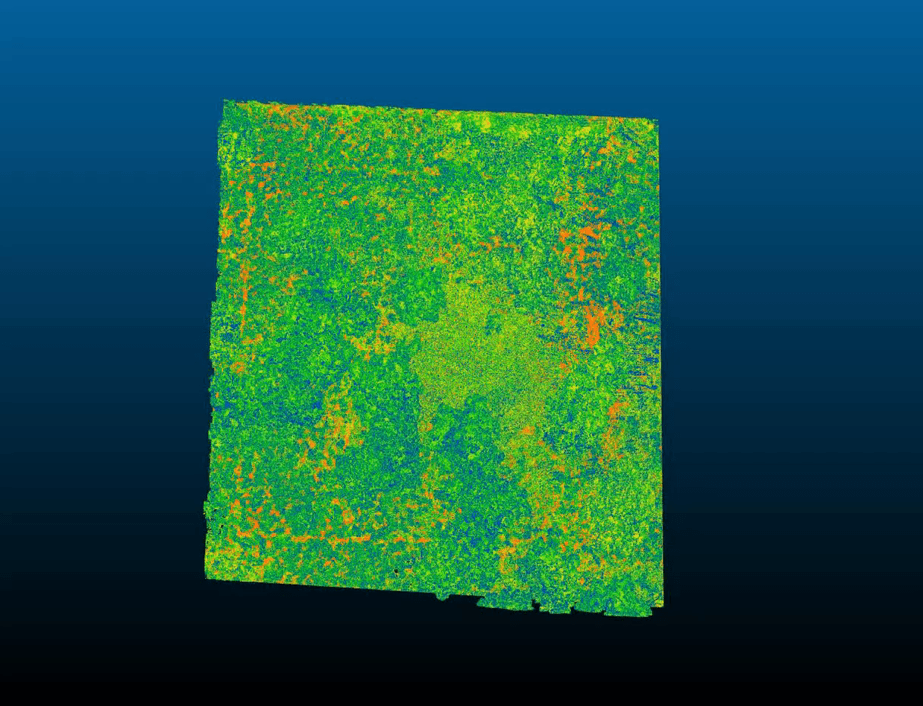
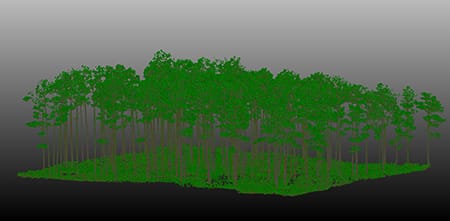
3D fuel scans can capture critical variation in forest that drive both stand level and finer grain changes in wind flow and fire behavior.
Terrestrial laser scanning is being used to both identify vegetation structure, but also components like leaf area, surface to volume ratios, and bulk density. Converting these scans into “voxels” (i.e., cubes) of fuel that models can use is a critical step in our work.
Lastly, Florida State University graduate student Daniel Rosales is working with Dr. Rod Linn, Dr. Scott Goodrick (USFS), and Tall Timbers Fire Scientist Kevin Hiers to develop and test a desktop coupled fire-atmospheric model called QUIC-Fire. This tool blends a rapid wind-solver from Los Alamos National Lab with a new physics-rules based fire spread model to generate fire outputs in near real-time. This tool is capable of running on a laptop and using the 3D fuels from the DoD-funded projects above. The hope is to develop a real-time operational planning tool for prescribed fire that allows users to quickly modify ignition patterns and potential winds to evaluate fire behavior within burn units.
Operationalizing fire models is critical for advancing fire science. QUIC-Fire is able to use FIRETEC inputs of 3D fuels and complex ignitions to produce fire behavior and wind flow. Click on model or caption to view.
Ultimately these tools will help managers around the country expand the use of prescribed fire in complex terrain and communicate to the public accurate risks and potential fire behavior. Having the right physics gives the confidence to expand the fire culture that is already ingrained in the Red Hills and across the Southeast.
New insights into longleaf pine natural regeneration
By Kevin Robertson, PhD, Fire Ecology Program Director
How a multiple-century-old longleaf pine tree gets its start in a frequently burned pineland has been subject of debate since the beginning of longleaf research. It has long been observed that longleaf pine juveniles (between the “grass stage” near the ground to about head-high) tend to become established in dense clusters limited to open areas away from canopy trees. In the traditional model of forest regeneration, one or a few trees die and create a gap in the otherwise continuous canopy, letting in enough light for new seedlings to become established and grow. However, longleaf communities are better described as savannas than forests, where even under mature longleaf pines only about 50% of the sky is covered, so that light is hardly limiting. Other variables thought to drive this pattern include root competition from canopy trees, higher soil moisture and nutrients in gaps, pine needle mulching, fire severity associated with pine needle litter, and, in sandhill communities, facilitation by young broadleaf trees such as turkey oak.
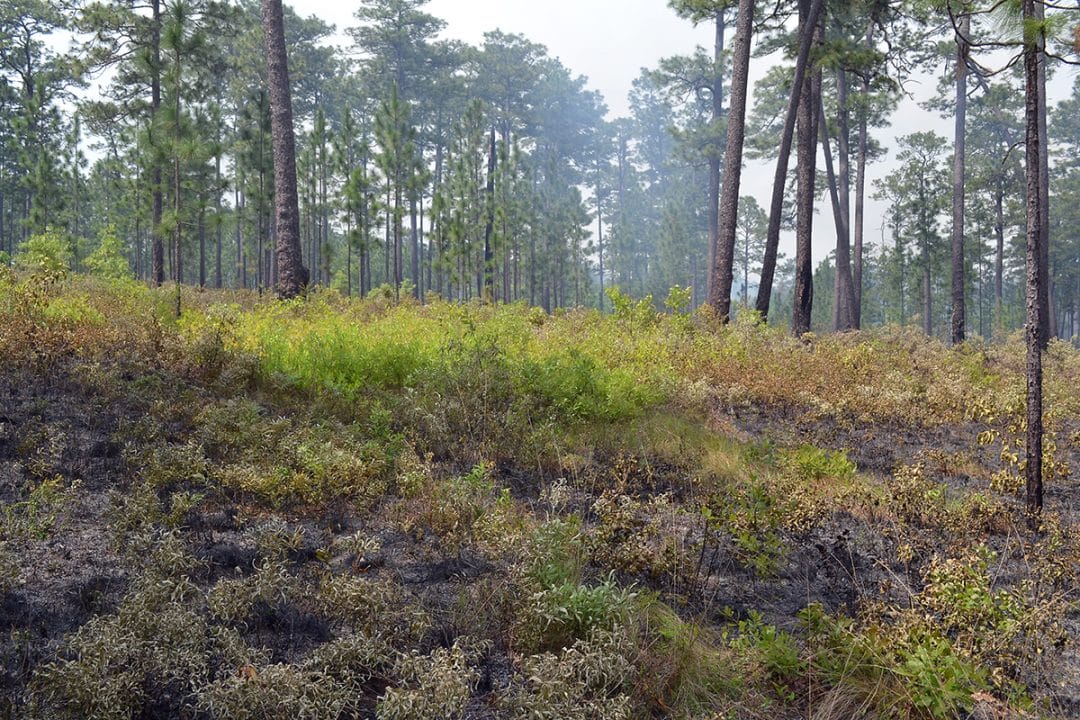
Unburned patch in a gap following a burn on the Wade Tract, with an cluster of longleaf pine that became established about 20 years earlier in the background.
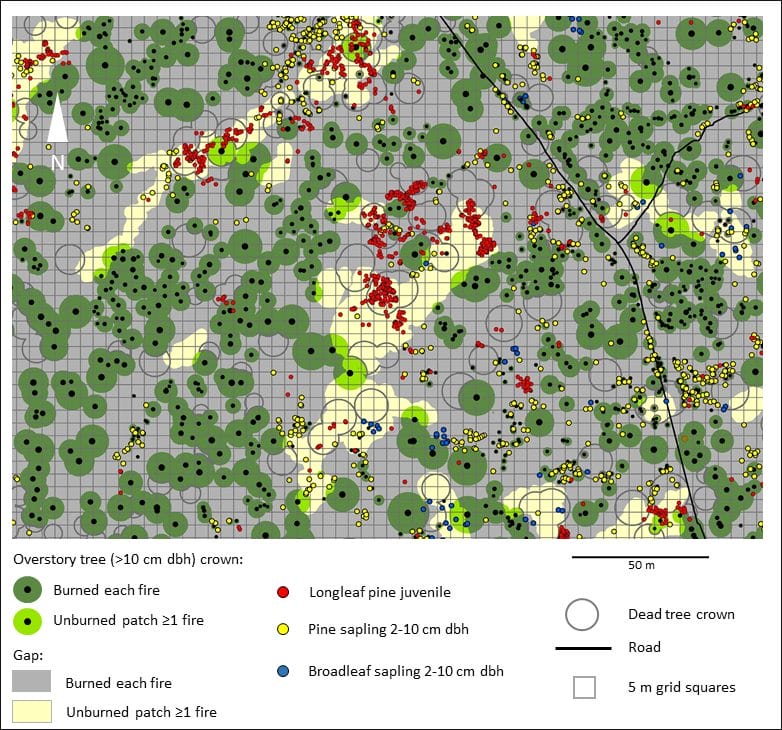
During the summer of 2018, Yale School of Forestry graduate student Charlie Faires worked with the Fire Ecology Program to test the idea that dense clusters of longleaf pine regeneration are primarily shaped by small areas that are unburned during fires, which are almost always within gaps. Since 2005, we have been mapping unburned patches following prescribed fires on the Wade Tract old-growth longleaf pine preserve near Thomasville, Georgia, and Dr. William Platt of L.S.U. has been mapping and measuring the trees since 1978. Charlie mapped the location of longleaf juveniles to see if they match up with unburned areas. We also analyzed the likelihood of longleaf juveniles being in an open gap versus under tree canopy, in the inner portion of gaps (more than 8 meters from the edge of a tree crown), or in an area where a canopy tree had died during the last few decades, where longleaf is often observed to become established.
Portion of the Wade Tract showing tendency for juveniles to be located in gaps within patches that were unburned during at least one fire from 2005-2018 and within the previous crown area of large pine trees that died (dead tree crown).
Our results showed that longleaf pine juveniles were much more likely to be in unburned patches than in other areas. It also showed that gaps, especially inner gaps, and areas where a mature tree died further increased the likelihood of there being longleaf juveniles. For example, longleaf juvenile density was 13 per hectare in areas under tree canopies that burned in each fire since 2005, compared to 415 in inner gaps where a mature tree had died, and at least one fire was missed. We interpret these combined effects through the lens of mediation of fire severity. Gaps, especially inner gaps, have lower pine needle fuel loads and are more likely to have patches that are unburned or else burned with lower severity. When canopy trees are alive, they reduce the amount of grass and woody plants beneath them by depositing heavy pine needle loads that can damage plants when they burn. When the tree dies, it leaves an area with reduced vegetation and very little pine needle litter, reducing both competition and fire severity, perfect for longleaf pine establishment. Saplings of broadleaf trees also came up in unburned patches, but they tended to be in different parts of the patches than longleaf. As the longleaf pines grow, they will probably reduce the young broadleaf trees by dropping abundant pine needles and increasing the fire severity again. This process provides a feedback mechanism by which regeneration of longleaf pines and broadleaf trees is limited beneath the canopies of longleaf, but encouraged in open areas, maintaining the savanna structure (co-existence of trees and grasses) characterizing the longleaf pine ecosystem. This model has implications for fire management for longleaf pine regeneration, suggesting that burning under conditions that allow for some patchiness following longleaf mast years (abundant seed production) is important for natural recruitment.
Results of the study are being submitted for publication to a special issue on longleaf pine in the journal Forests. The study will provide an important baseline of longleaf juvenile data for continued monitoring in the future, to further understand the role of fire in maintaining populations of this very long-lived species.
The M-CORES program, which includes the proposed Suncoast Connector Toll Road in Jefferson County, passed through the Florida Legislature at breakneck speed with little review or analysis. Tall Timbers has a number of concerns given the potential for significant and wide spread impacts. These include fragmenting public and private conservation lands, robbing business from Main Street Monticello, impacting our rivers and other water resources, and making prescribed fire more difficult and costly.
Join us in asking the Jefferson County Board of County Commissioners to OPPOSE the Suncoast Connector toll road and its path through Jefferson County.
Take action now with our easy email form.
Send an email to all five Jefferson County Board of County Commissioners with one click!
Selected Publications authored by Wildland Fire Science staff.
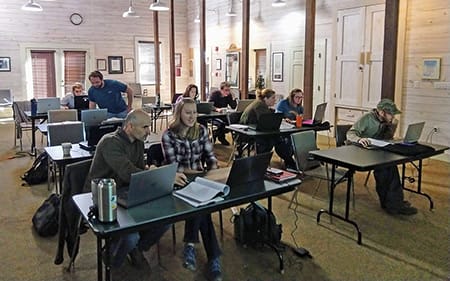
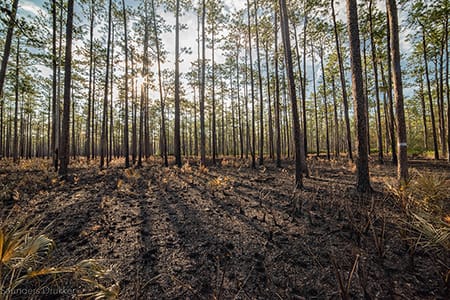
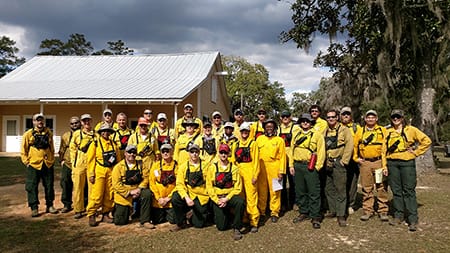
Educating and guiding the next generation of fire researchers and managers is a key goal of Wildland Fire Science and a resource for testing new ideas in fire research.
Tall Timbers hosts the Prescribed Fire Science Consortium, a national network of researchers and managers who promote integrated research and management to advance next generation tools for fire practitioners. https://arcg.is/1DSjDT
Working with partners in the Prescribed Fire Science Consortium, the program is building nexgen 3-D fuel beds using terrestrial LiDAR and novel sampling techniques to power new fire behavior models for prescribed fire managers. This work links to Tall Timbers work in wildlife habitat usage and ecological forestry.
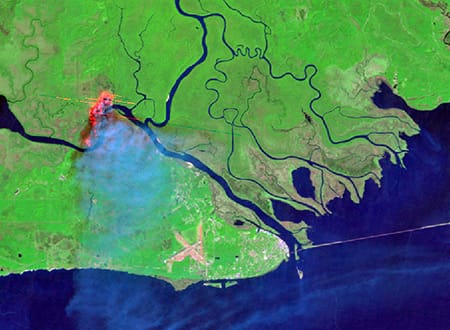
Tall Timbers is leading an effort to map fire regimes at the landscape scale. Staff work with numerous agencies to evaluate fire records and satellite imagery to build this critical conservation database. https://skfb.ly/6DqOY
We are linking physics and field observations to understand the fluid dynamics of fire behavior surface fire regimes. Our work combines field observations using advanced thermal imaging techniques, laboratory studies, and coupled fire-atmospheric modeling to help managers improve outcomes of managed fire regimes.
Burn prioritization modeling seminars and fire modeling tools are supported by Wildland Fire Science to train managers in the important planning stages of prescribed fires.
The conserved lands of the Greater Red Hills region are found on working, income-producing properties that support agriculture, forestry, and recreational hunting. These properties contribute $272 million annually to local economies and support 2,300 jobs. [link to Planning & Advocacy section] The landowners’ strong stewardship ethic preserves their working lands while replenishing drinking water supplies, protecting water quality, and providing wildlife habitat for dozens of rare and endangered species. Tall Timbers’ conservation easements on these working properties encourage landowners to retain their traditional livelihood by keeping farms in family ownership.
Home to world-class wild quail populations, the Greater Red Hills region contains the largest concentration of gamebird preserves in the United States. These preserves also support the largest community of Red-cockaded woodpeckers on private lands. Indicators of high quality habitat found here include the gopher tortoise, Bachman’s sparrow, fox squirrel, and many amphibians. Tall Timbers’ conservation easements identify and protect the critical habitats of these species.
The region also boasts outstanding aquatic resources. Large river systems, like the Flint/Apalachicola, Ochlockonee, and Aucilla, flow from Georgia and feed into the Gulf of Mexico to support some of the world’s most productive estuaries. Large disappearing sinkhole lakes, like Iamonia, Miccosukee, and Jackson, provide habitat for an array of aquatic species and migratory birds. Tall Timbers’ conservation easements protect these vital watersheds and wetlands that are the lifeblood for the ecological health of the region.
Once dominated by longleaf pine, our pine woodlands support abundant wildlife and local economies. These forests need prescribed fire to stay healthy. Herbert L. Stoddard and his associates Ed and Roy Komarek were pioneers in this emerging scientific field during the mid-20th century. Tall Timbers continues that legacy with applied research on prescribed fire and land management. Today, there is a tremendous need to expand prescribed fire use beyond the Red Hills to ensure ecosystem health and reduce wildfire risk. Additionally, Tall Timbers uses conservation easements to permanently protect private woodlands while balancing the need for economic return from selective timbering.
Tall Timbers hosts the premier fire technology transfer organization—the Southern Fire Exchange. This JFSP funded effort helps connect research to management through webinars, workshops, and support of the Prescribed Fire Science Consortium.
The Longleaf Legacy landscape prescribed fire burn team arm of Wildland Fire Science works directly with landowners and partners to effectively put fire on the ground and promote prescribed fire throughout the region.
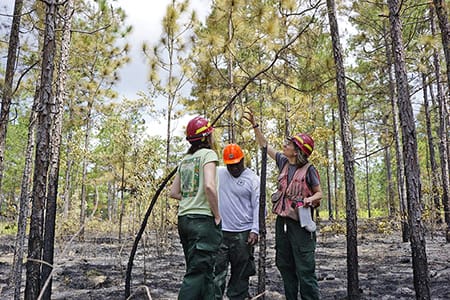
Staff and researchers support Federal fire training by serving as a cadre for NWCG training courses, ranging from basic wildland fire to advanced fire effects.
(PFTC) specializes in training fire fighters the principles and techniques of prescribed fire through practical hands-on experience. https://www.fws.gov/fire/pftc/
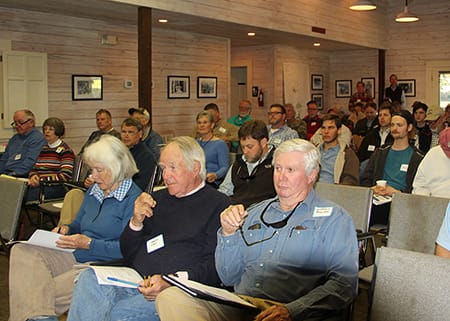
Private land owners are the largest source of prescribed fire in the country. These land owners and the culture of fire that was maintained by them during decades of suppression are a part of why Tall Timbers is a world-wide center for prescribed fire science. Workshops and fire training are a critical focus of the Longleaf Legacy Landscape Burn Team and our support of the Georgia Forestry Commission Prescribed Fire Center in Marion County.