Paul Grimes hired as full-time game bird biologist for the Carolina region
The Tall Timbers Board of Trustees approved a full-time biologist position in the Carolinas as part of the recently updated Strategic Plan. Mr. Paul Grimes was selected for this position and began working full-time on January 16, 2018.
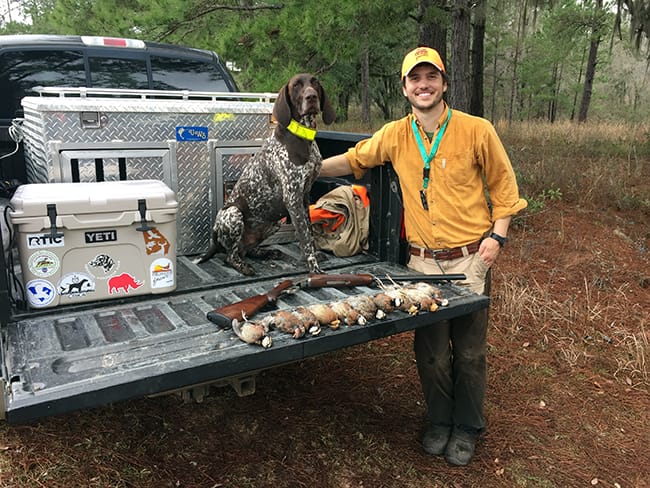
Paul grew up on the Georgia/South Carolina line and lives with his wife Rita and daughter Kathleen (Kati-Jo) near Augusta, Georgia. He earned his BS and MS Degrees in Forest Resources from the University of Georgia (UGA) in 2008 and 2012, respectively. His thesis research focused on northern bobwhite population response to habitat improvements associated with red-cockaded woodpecker restoration efforts. Paul is no newcomer to Tall Timbers having served as an intern in Central Florida as part of a bobwhite research project. Since graduating from UGA, Paul worked for seven years at Ft. Gordon Army Base and then for three years as the project leader for the Georgia Wildlife Resources Division’s Bobwhite Quail Initiative. With extensive education and field experience Paul has excellent technical skills, including GIS and mapping, and a strong practical knowledge of managing and monitoring bobwhite habitats and populations. Last but certainly not least, he is an avid quail and upland bird hunter and a proven bird dog trainer!
We are excited to have Paul join the Game Bird Program team and look forward to the future expansion of wild bobwhite lands in the Carolinas as a result. Paul can be contacted by phone at 706-825-0451 or email at dpgrimes@talltimbers.org.
By Dr. Theron M. Terhune, Game Bird Program Director
Mid-to-late February typically results in a prevalence of wild flushes and running coveys, but this year male birds are already tuning their vocal chords. Yes, that’s right, we have already heard bobwhite calling activity here at Tall Timbers, along with reports from several managers in the Red Hills region indicating the same. What does this mean?
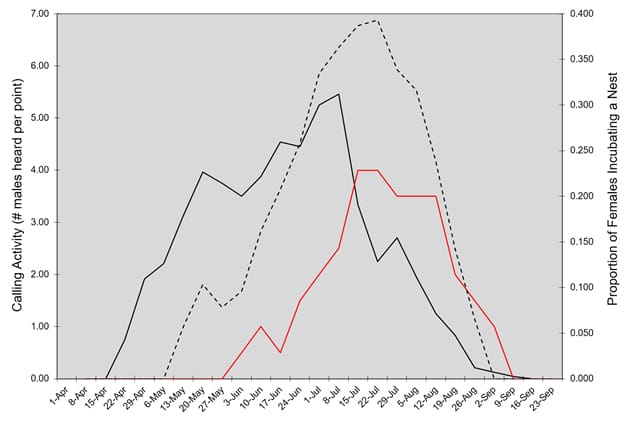
Although it is common knowledge that the bob-white call is used to attract mates, this early calling behavior does not necessarily signal the onset of breeding season. However, with global warming or climate change at the forefront of many minds, one might argue that the breeding season window is expanding at both ends—starting earlier and ending later. Historically, sporadic calling activity often begins as early as April and ramps up from there with the peak calling occurring typically in May and early June. Spring call counts can provide an index of the breeding “capital” during early spring and can also generally serve as a barometer for breeding success such that more calling often indicates more bachelor males, which implies more females sitting on nests. Our previous research has demonstrated that bob-white calling activity is most informative when identifying the peak of calling in May/June, which correlates strongly with fall abundance. In addition, distinct peaks and valleys in calling often indicate synchronized nesting and hatching (see Figure 1), respectively, but continuous calling (a plateau with not much cyclicity; see Figure 2) or erratic, rapid fluctuation in calling behavior often indicates irregular hatching caused by nest depredation followed by mating and re-nesting. However, history shows that bobwhite calling in February and March is typically sporadic and short-lived – often cold snaps in March stymie the males’ desires to get the breeding show on the road and birds remain in covey groups until spring break-up dictated by an extended photoperiod.
By Dr. Theron M. Terhune, Game Bird Program Director
At the end of quail season overwinter survival was well above average, but several cold weather events in March and April stalled the timing of hawk migration, causing hawks to hang around for a couple more weeks than expected. The extended stay of migrating raptors during this time spoiled what could have been a marvelous breeding season density going into the nesting season. Despite the late hawk influence, overwinter survival in the Red Hills region remained on par with long-term averages, compared to above average survival observed in the Albany area.
As reported in the last eNews, bobwhite calls resonated throughout the pines in the Red Hills and Albany area as early as mid-February, with hunters still afield and bird dogs still chasing coveys. Despite this early calling activity, the onset of nesting aligns perfectly with historical records; our first incubated nest in the region was found yesterday (April 30) on Dixie Plantation, and other suspected incubations are occurring at Tall Timbers. Looking back over the past 25 years, the firsts nests are typically found the last week of April or the first week of May, with the earliest nest being incubated April 19 in the Red Hills region. However, in central Florida, the first incubated nests were found a few days earlier, — even a report of a brood already seen on the ground! Over the past couple of weeks here at Tall Timbers, radio-tracking has revealed that bobwhite movements have shrunk and centralized, especially for hens, indicating that they are likely building nests or already laying and likely to begin incubating in the next several weeks.
Given that nesting activity is well underway and intensifying, the best case scenario is that burning is already completed to avoid destroying nests. But, if necessary, a small window is still open for wrapping up final burns for the season. Our research shows that burning as late as mid-May results in less than 10% of all incubated nests being destroyed, but burning much later can objectionably impact nesting efforts (see Figure 1). If a nest is destroyed by fire in late April or early May, there is still plenty of time for re-nesting, but maintaining small burn blocks among a patchy landscape of unburned areas will mitigate ill-effects on bobwhite production. It is better to burn a little late and lose a few nests than to let the cover go unburned for a third or fourth year.
Figure 1. Timing of nesting activity (initiated and incubated for >1,300 nests) for radio-tagged bobwhites on Tall Timbers. The red-shaded region highlights nesting activity through May 15 and dashed-box area indicates nesting activity through the end of May. Long-term peak in incubation occurs in late-May and early-June.
Prescribed Burn of the Wade Tract Preserve at Night — a Site to Behold
By Dr. Kevin Robertson, Fire Ecology Program Director
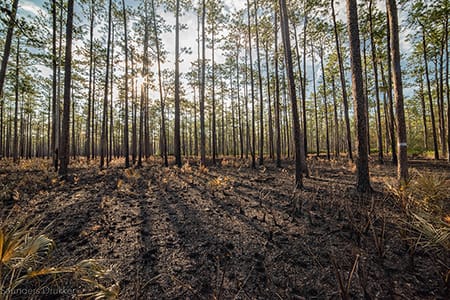
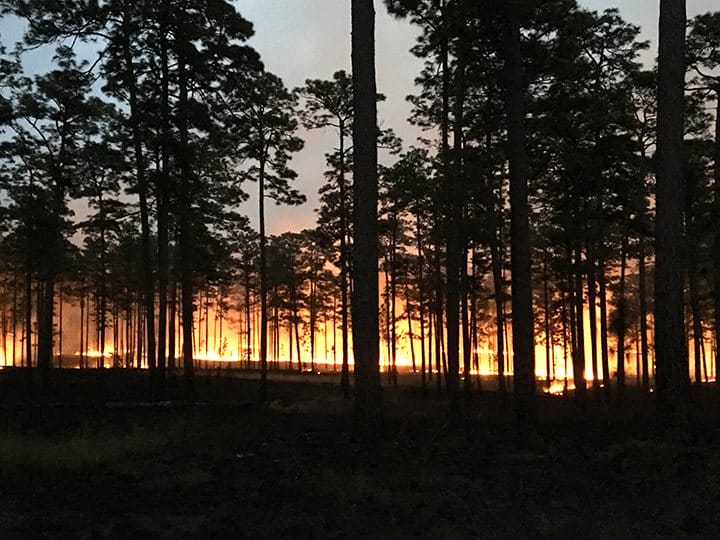
Tall Timbers conducted a night burn on the west side of the Wade Tract old-growth longleaf pine forest on Arcadia Plantation on March 26. This kind of burning is relatively mild, causing little crown scorch and resulting in some unburned patches. Since this is a longleaf pine mast year (seed dispersal year, occurring about once in a decade), we wanted to allow some of the longleaf pine seedlings to escape fire and become established in the open gaps were there are currently no trees. These areas are less likely to burn because there are fewer pine needles to provide fuel. Burning at night is the way it was typically done in the South, until a few decades ago, having the advantages listed above and leaving some unburned areas as cover for quail. They are also beautiful to behold. Arcadia manager and forester Paul Massey called to congratulate us on a burn nicely done, saying, “That burn took me back 40 years!”
Night burns have become rare because of increasing concerns about smoke management, resulting in reluctance on the part of state forestry agencies to issue burn authorizations allowing fire past 5:00 PM. Typically, when the sun goes down and stops heating the soil surface, the warm air slowly rising from the ground creates an “inversion layer” over the cooler air beneath, creating a low ceiling on rising smoke. This presents a dangerous situation for roadways where smoke may reduce visibility. Low winds and high humidity and make the situation worse, where smoke may creep down into drains and onto roadways, and water may adhere to smoke particles to make fog.
The night we burned, the night time dispersion index were unusually high, over 15 compared to the usual level of 2-4, owing to strong winds, low night time humidity, and a cool cloudy day, preventing a strong inversion. Fuels were also moist and did not smolder long after the fire went out. The result was no smoke on roads and a successful burn. However, these conditions are rare — maybe a few in a modern lifetime — as safety, including good smoke management, is priority number one.
Austin Dixon and Cinnamon Morrison were on the burn team for the Wade Tract prescribed fire. Cinnamon is refilling Austin’s water bag.
Prescribed Fire Science Consortium Secures Department of Defense Grants
Prescribed Fire Science Consortium led by Tall Timbers’ Wildland Fire Science program secures four Department of Defense SERDP grants to study 3D fuels and fire spread.
Through the Strategic Environmental Research and Development Program (SERDP) the Department of Defense periodically funds environmental research projects to address wide ranging issues from military land management and climate to weapon system use and everything in between. These extremely competitive grants generate solutions to the Department’s environmental challenges reducing costs, environmental risks, and time required to resolve environmental problems while enhancing and sustaining military readiness.
Last October, SERDP released a statement of need requesting proposals of wildland fire research to improve military land use efficiency. The research objectives requested by this statement of need included an understanding of fire processes and fuel characterization in time and space through diverse conditions. The recently organized Prescribed Fire Consortium led by Tall Timbers is uniquely poised to answer all of the objectives laid out in the statement of need, and as such, was successful in securing four grants totaling 6.4 million dollars over the next four years.
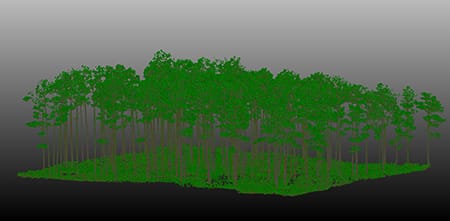
These grants include two 3D fuel characterization grants using Terrestrial LiDAR techniques, a fire pattern and processes modeling grant and a grant that ties fuel characterization to modeling and fire processes.
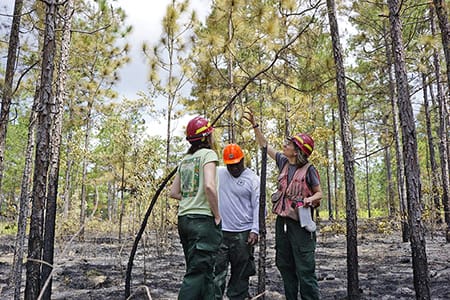
Photo: US Forest Service research scientists test a 3D fuel sampling rig that will help validate remote sensing fuel sampling techniques that will be developed by the SERDP grants.
The M-CORES program, which includes the proposed Suncoast Connector Toll Road in Jefferson County, passed through the Florida Legislature at breakneck speed with little review or analysis. Tall Timbers has a number of concerns given the potential for significant and wide spread impacts. These include fragmenting public and private conservation lands, robbing business from Main Street Monticello, impacting our rivers and other water resources, and making prescribed fire more difficult and costly.
Join us in asking the Jefferson County Board of County Commissioners to OPPOSE the Suncoast Connector toll road and its path through Jefferson County.
Take action now with our easy email form.
Send an email to all five Jefferson County Board of County Commissioners with one click!
Selected Publications authored by Wildland Fire Science staff.
Educating and guiding the next generation of fire researchers and managers is a key goal of Wildland Fire Science and a resource for testing new ideas in fire research.
Tall Timbers hosts the Prescribed Fire Science Consortium, a national network of researchers and managers who promote integrated research and management to advance next generation tools for fire practitioners. https://arcg.is/1DSjDT
Working with partners in the Prescribed Fire Science Consortium, the program is building nexgen 3-D fuel beds using terrestrial LiDAR and novel sampling techniques to power new fire behavior models for prescribed fire managers. This work links to Tall Timbers work in wildlife habitat usage and ecological forestry.
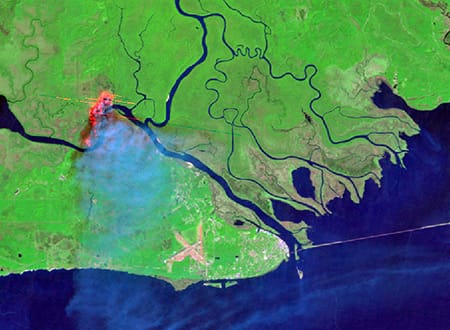
Tall Timbers is leading an effort to map fire regimes at the landscape scale. Staff work with numerous agencies to evaluate fire records and satellite imagery to build this critical conservation database. https://skfb.ly/6DqOY
We are linking physics and field observations to understand the fluid dynamics of fire behavior surface fire regimes. Our work combines field observations using advanced thermal imaging techniques, laboratory studies, and coupled fire-atmospheric modeling to help managers improve outcomes of managed fire regimes.
Burn prioritization modeling seminars and fire modeling tools are supported by Wildland Fire Science to train managers in the important planning stages of prescribed fires.
The conserved lands of the Greater Red Hills region are found on working, income-producing properties that support agriculture, forestry, and recreational hunting. These properties contribute $272 million annually to local economies and support 2,300 jobs. [link to Planning & Advocacy section] The landowners’ strong stewardship ethic preserves their working lands while replenishing drinking water supplies, protecting water quality, and providing wildlife habitat for dozens of rare and endangered species. Tall Timbers’ conservation easements on these working properties encourage landowners to retain their traditional livelihood by keeping farms in family ownership.
Home to world-class wild quail populations, the Greater Red Hills region contains the largest concentration of gamebird preserves in the United States. These preserves also support the largest community of Red-cockaded woodpeckers on private lands. Indicators of high quality habitat found here include the gopher tortoise, Bachman’s sparrow, fox squirrel, and many amphibians. Tall Timbers’ conservation easements identify and protect the critical habitats of these species.
The region also boasts outstanding aquatic resources. Large river systems, like the Flint/Apalachicola, Ochlockonee, and Aucilla, flow from Georgia and feed into the Gulf of Mexico to support some of the world’s most productive estuaries. Large disappearing sinkhole lakes, like Iamonia, Miccosukee, and Jackson, provide habitat for an array of aquatic species and migratory birds. Tall Timbers’ conservation easements protect these vital watersheds and wetlands that are the lifeblood for the ecological health of the region.
Once dominated by longleaf pine, our pine woodlands support abundant wildlife and local economies. These forests need prescribed fire to stay healthy. Herbert L. Stoddard and his associates Ed and Roy Komarek were pioneers in this emerging scientific field during the mid-20th century. Tall Timbers continues that legacy with applied research on prescribed fire and land management. Today, there is a tremendous need to expand prescribed fire use beyond the Red Hills to ensure ecosystem health and reduce wildfire risk. Additionally, Tall Timbers uses conservation easements to permanently protect private woodlands while balancing the need for economic return from selective timbering.
Tall Timbers hosts the premier fire technology transfer organization—the Southern Fire Exchange. This JFSP funded effort helps connect research to management through webinars, workshops, and support of the Prescribed Fire Science Consortium.
The Longleaf Legacy landscape prescribed fire burn team arm of Wildland Fire Science works directly with landowners and partners to effectively put fire on the ground and promote prescribed fire throughout the region.
Staff and researchers support Federal fire training by serving as a cadre for NWCG training courses, ranging from basic wildland fire to advanced fire effects.
(PFTC) specializes in training fire fighters the principles and techniques of prescribed fire through practical hands-on experience. https://www.fws.gov/fire/pftc/
Private land owners are the largest source of prescribed fire in the country. These land owners and the culture of fire that was maintained by them during decades of suppression are a part of why Tall Timbers is a world-wide center for prescribed fire science. Workshops and fire training are a critical focus of the Longleaf Legacy Landscape Burn Team and our support of the Georgia Forestry Commission Prescribed Fire Center in Marion County.


 Mid-to-late February typically results in a prevalence of wild flushes and running coveys, but this year male birds are already tuning their vocal chords. Yes, that’s right, we have already heard bobwhite calling activity here at Tall Timbers, along with reports from several managers in the Red Hills region indicating the same. What does this mean?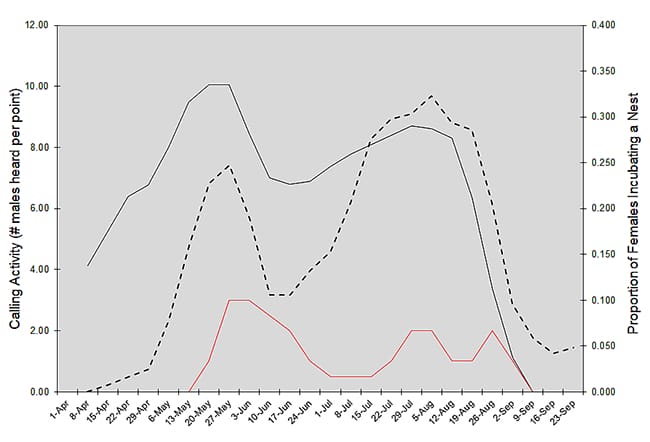
 At the end of quail season overwinter survival was well above average, but several cold weather events in March and April stalled the timing of hawk migration, causing hawks to hang around for a couple more weeks than expected. The extended stay of migrating raptors during this time spoiled what could have been a marvelous breeding season density going into the nesting season. Despite the late hawk influence, overwinter survival in the Red Hills region remained on par with long-term averages, compared to above average survival observed in the Albany area.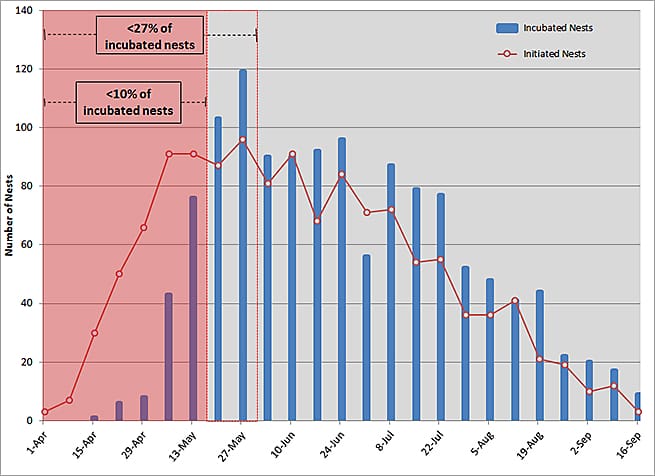

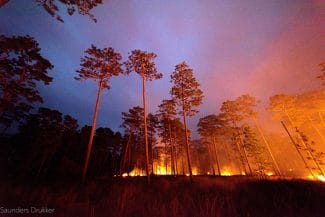
 Tall Timbers conducted a night burn on the west side of the Wade Tract old-growth longleaf pine forest on Arcadia Plantation on March 26. This kind of burning is relatively mild, causing little crown scorch and resulting in some unburned patches. Since this is a longleaf pine mast year (seed dispersal year, occurring about once in a decade), we wanted to allow some of the longleaf pine seedlings to escape fire and become established in the open gaps were there are currently no trees. These areas are less likely to burn because there are fewer pine needles to provide fuel. Burning at night is the way it was typically done in the South, until a few decades ago, having the advantages listed above and leaving some unburned areas as cover for quail. They are also beautiful to behold. Arcadia manager and forester Paul Massey called to congratulate us on a burn nicely done, saying, “That burn took me back 40 years!”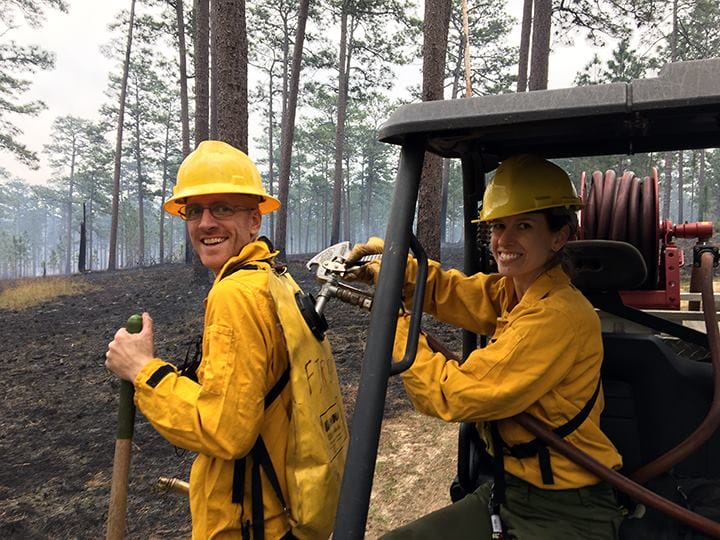


 Prescribed Fire Science Consortium led by Tall Timbers’ Wildland Fire Science program secures four Department of Defense SERDP grants to study 3D fuels and fire spread.